Short Fiction by Anton Chekhov (libby ebook reader .txt) 📕
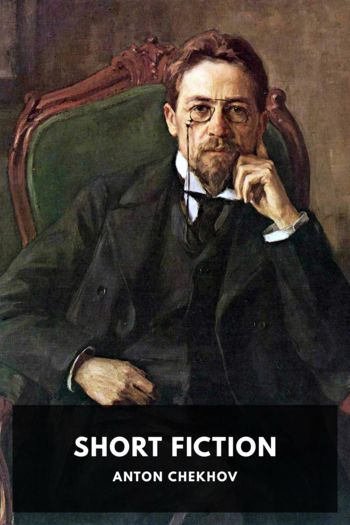
Description
Anton Chekhov is widely considered to be one of the greatest short story writers in history. A physician by day, he’s famously quoted as saying, “Medicine is my lawful wife, and literature is my mistress.” Chekhov wrote nearly 300 short stories in his long writing career; while at first he wrote mainly to make a profit, as his interest in writing—and his skill—grew, he wrote stories that heavily influenced the modern development of the form.
His stories are famous for, among other things, their ambiguous morality and their often inconclusive nature. Chekhov was a firm believer that the role of the artist was to correctly pose a question, but not necessarily to answer it.
This collection contains all of his short stories and two novellas, all translated by Constance Garnett, and arranged by the date they were originally published.
Read free book «Short Fiction by Anton Chekhov (libby ebook reader .txt) 📕» - read online or download for free at americanlibrarybooks.com
- Author: Anton Chekhov
Read book online «Short Fiction by Anton Chekhov (libby ebook reader .txt) 📕». Author - Anton Chekhov
Yulia made Fyodor lie down on the sofa and knelt beside him.
“It’s nothing,” she said, trying to comfort him. “It’s your nerves. …”
“I’m so miserable, my dear!” he said. “I am so unhappy, unhappy … but all the time I’ve been hiding it, I’ve been hiding it!”
He put his arm round her neck and whispered in her ear:
“Every night I see my sister Nina. She comes and sits in the chair near my bed. …”
When, an hour later, he put on his fur coat in the hall, he was smiling again and ashamed to face the servant. Laptev went with him to Pyatnitsky Street.
“Come and have dinner with us tomorrow,” he said on the way, holding him by the arm, “and at Easter we’ll go abroad together. You absolutely must have a change, or you’ll be getting quite morbid.”
When he got home Laptev found his wife in a state of great nervous agitation. The scene with Fyodor had upset her, and she could not recover her composure. She wasn’t crying but kept tossing on the bed, clutching with cold fingers at the quilt, at the pillows, at her husband’s hands. Her eyes looked big and frightened.
“Don’t go away from me, don’t go away,” she said to her husband. “Tell me, Alyosha, why have I left off saying my prayers? What has become of my faith? Oh, why did you talk of religion before me? You’ve shaken my faith, you and your friends. I never pray now.”
He put compresses on her forehead, chafed her hands, gave her tea to drink, while she huddled up to him in terror. …
Towards morning she was worn out and fell asleep, while Laptev sat beside her and held her hand. So that he could get no sleep. The whole day afterwards he felt shattered and dull, and wandered listlessly about the rooms without a thought in his head.
XVIThe doctor said that Fyodor’s mind was affected. Laptev did not know what to do in his father’s house, while the dark warehouse in which neither his father nor Fyodor ever appeared now seemed to him like a sepulchre. When his wife told him that he absolutely must go every day to the warehouse and also to his father’s, he either said nothing, or began talking irritably of his childhood, saying that it was beyond his power to forgive his father for his past, that the warehouse and the house in Pyatnitsky Street were hateful to him, and so on.
One Sunday morning Yulia went herself to Pyatnitsky Street. She found old Fyodor Stepanovitch in the same big drawing room in which the service had been held on her first arrival. Wearing slippers, and without a cravat, he was sitting motionless in his armchair, blinking with his sightless eyes.
“It’s I—your daughter-in-law,” she said, going up to him. “I’ve come to see how you are.”
He began breathing heavily with excitement.
Touched by his affliction and his loneliness, she kissed his hand; and he passed his hand over her face and head, and having satisfied himself that it was she, made the sign of the cross over her.
“Thank you, thank you,” he said. “You know I’ve lost my eyes and can see nothing. … I can dimly see the window and the fire, but people and things I cannot see at all. Yes, I’m going blind, and Fyodor has fallen ill, and without the master’s eye things are in a bad way now. If there is any irregularity there’s no one to look into it; and folks soon get spoiled. And why is it Fyodor has fallen ill? Did he catch cold? Here I have never ailed in my life and never taken medicine. I never saw anything of doctors.”
And, as he always did, the old man began boasting. Meanwhile the servants hurriedly laid the table and brought in lunch and bottles of wine.
Ten bottles were put on the table; one of them was in the shape of the Eiffel Tower. There was a whole dish of hot pies smelling of jam, rice, and fish.
“I beg my dear guest to have lunch,” said the old man.
She took him by the arm, led him to the table, and poured him out a glass of vodka.
“I will come to you again tomorrow,” she said, “and I’ll bring your grandchildren, Sasha and Lida. They will be sorry for you, and fondle you.”
“There’s no need. Don’t bring them. They are illegitimate.”
“Why are they illegitimate? Why, their father and mother were married.”
“Without my permission. I do not bless them, and I don’t want to know them. Let them be.”
“You speak strangely, Fyodor Stepanovitch,” said Yulia, with a sigh.
“It is written in the Gospel: children must fear and honour their parents.”
“Nothing of the sort. The Gospel tells us that we must forgive even our enemies.”
“One can’t forgive in our business. If you were to forgive everyone, you would come to ruin in three years.”
“But to forgive, to say a kind, friendly word to anyone, even a sinner, is something far above business, far above wealth.”
Yulia longed to soften the old man, to awaken a feeling of compassion in him, to move him to repentance; but he only listened condescendingly to all she said, as a grown-up person listens to a child.
“Fyodor Stepanovitch,” said Yulia resolutely, “you are an old man, and God soon will call you to Himself. He won’t ask you how you managed your business, and whether you were successful in it, but whether you were gracious to people; or whether you were harsh to those who were weaker than you, such as your servants, your clerks.”
“I was always the benefactor





Comments (0)