Short Fiction by Anton Chekhov (libby ebook reader .txt) 📕
Description
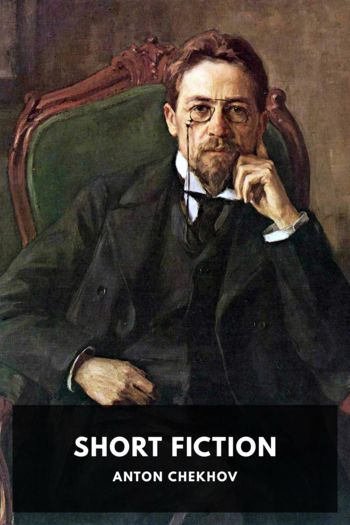
Anton Chekhov is widely considered to be one of the greatest short story writers in history. A physician by day, he’s famously quoted as saying, “Medicine is my lawful wife, and literature is my mistress.” Chekhov wrote nearly 300 short stories in his long writing career; while at first he wrote mainly to make a profit, as his interest in writing—and his skill—grew, he wrote stories that heavily influenced the modern development of the form.
His stories are famous for, among other things, their ambiguous morality and their often inconclusive nature. Chekhov was a firm believer that the role of the artist was to correctly pose a question, but not necessarily to answer it.
This collection contains all of his short stories and two novellas, all translated by Constance Garnett, and arranged by the date they were originally published.
Read free book «Short Fiction by Anton Chekhov (libby ebook reader .txt) 📕» - read online or download for free at americanlibrarybooks.com
- Author: Anton Chekhov
Read book online «Short Fiction by Anton Chekhov (libby ebook reader .txt) 📕». Author - Anton Chekhov
“How dark it is! One can’t see a bit,” said Yulia, as she went with them to the gate. “I don’t know how you’ll find your way. But, isn’t it cold?”
She wrapped herself up more closely and walked back to the porch.
“I suppose my Alexey’s playing cards somewhere,” she called to them. “Good night!”
After the lighted rooms nothing could be seen. Yartsev and Kostya groped their way like blind men to the railway embankment and crossed it.
“One can’t see a thing,” said Kostya in his bass voice, standing still and gazing at the sky. “And the stars, the stars, they are like new threepenny-bits. Gavrilitch!”
“Ah?” Yartsev responded somewhere in the darkness.
“I say, one can’t see a thing. Where are you?”
Yartsev went up to him whistling, and took his arm.
“Hi, there, you summer visitors!” Kostya shouted at the top of his voice. “We’ve caught a socialist.”
When he was exhilarated he was always very rowdy, shouting, wrangling with policemen and cabdrivers, singing, and laughing violently.
“Nature be damned,” he shouted.
“Come, come,” said Yartsev, trying to pacify him. “You mustn’t. Please don’t.”
Soon the friends grew accustomed to the darkness, and were able to distinguish the outlines of the tall pines and telegraph posts. From time to time the sound of whistles reached them from the station and the telegraph wires hummed plaintively. From the copse itself there came no sound, and there was a feeling of pride, strength, and mystery in its silence, and on the right it seemed that the tops of the pines were almost touching the sky. The friends found their path and walked along it. There it was quite dark, and it was only from the long strip of sky dotted with stars, and from the firmly trodden earth under their feet, that they could tell they were walking along a path. They walked along side by side in silence, and it seemed to both of them that people were coming to meet them. Their tipsy exhilaration passed off. The fancy came into Yartsev’s mind that perhaps that copse was haunted by the spirits of the Muscovite Tsars, boyars, and patriarchs, and he was on the point of telling Kostya about it, but he checked himself.
When they reached the town gate there was a faint light of dawn in the sky. Still in silence, Yartsev and Kotchevoy walked along the wooden pavement, by the cheap summer cottages, eating-houses, timber-stacks. Under the arch of interlacing branches, the damp air was fragrant of lime trees, and then a broad, long street opened before them, and on it not a soul, not a light. … When they reached the Red Pond, it was daylight.
“Moscow—it’s a town that will have to suffer a great deal more,” said Yartsev, looking at the Alexyevsky Monastery.
“What put that into your head?”
“I don’t know. I love Moscow.”
Both Yartsev and Kostya had been born in Moscow, and adored the town, and felt for some reason antagonistic to every other town. Both were convinced that Moscow was a remarkable town, and Russia a remarkable country. In the Crimea, in the Caucasus, and abroad, they felt dull, uncomfortable, and ill at ease, and they thought their grey Moscow weather very pleasant and healthy. And when the rain lashed at the windowpanes and it got dark early, and when the walls of the churches and houses looked a drab, dismal colour, days when one doesn’t know what to put on when one is going out—such days excited them agreeably.
At last near the station they took a cab.
“It really would be nice to write an historical play,” said Yartsev, “but not about the Lyapunovs or the Godunovs, but of the times of Yaroslav or of Monomach. … I hate all historical plays except the monologue of Pimen. When you have to do with some historical authority or even read a textbook of Russian history, you feel that everyone in Russia is exceptionally talented, gifted, and interesting; but when I see an historical play at the theatre, Russian life begins to seem stupid, morbid, and not original.”
Near Dmitrovka the friends separated, and Yartsev went on to his lodging in Nikitsky Street. He sat half dozing, swaying from side to side, and pondering on the play. He suddenly imagined a terrible din, a clanging noise, and shouts in some unknown language, that might have been Kalmuck, and a village wrapped in flames, and forests near covered with hoarfrost and soft pink in the glow of the fire, visible for miles around, and so clearly that every little fir tree could be distinguished, and savage men darting about the village on horseback and on foot, and as red as the glow in the sky.
“The Polovtsy,” thought Yartsev.
One of them, a terrible old man with a bloodstained face all scorched from the fire, binds to his saddle a young girl with a white Russian face, and the girl looks sorrowful, understanding. Yartsev flung back his head and woke up.
“My friend, my tender friend …” he hummed.
As he paid the cabman and went up his stairs, he could not shake off his dreaminess; he saw the flames catching the village, and the forest beginning to crackle and smoke. A huge, wild bear frantic with terror rushed through the village. … And the girl tied to the saddle was still looking.
When at last he went into his room it was broad daylight. Two candles were burning by some open music on the piano. On the sofa lay Polina Razsudin wearing a black dress and a sash, with a newspaper in her hand, fast asleep. She must have been playing late, waiting for Yartsev to come home, and, tired of waiting, fell asleep.
“Hullo, she’s worn out,” he thought.
Carefully taking the newspaper out of her hands, he covered her with a rug. He put out the candles and went into his bedroom. As he got into bed, he still thought of his historical play, and the tune of “My friend, my tender friend” was still ringing in his head. …
Two days later Laptev looked



Comments (0)