Short Fiction by Anton Chekhov (libby ebook reader .txt) 📕
Description
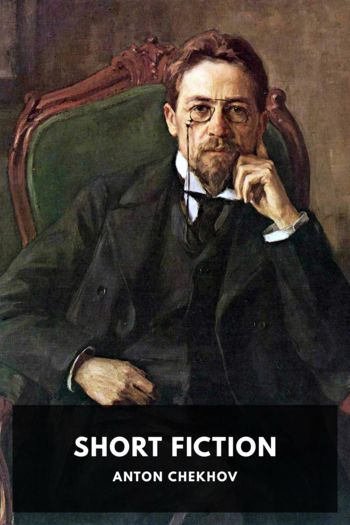
Anton Chekhov is widely considered to be one of the greatest short story writers in history. A physician by day, he’s famously quoted as saying, “Medicine is my lawful wife, and literature is my mistress.” Chekhov wrote nearly 300 short stories in his long writing career; while at first he wrote mainly to make a profit, as his interest in writing—and his skill—grew, he wrote stories that heavily influenced the modern development of the form.
His stories are famous for, among other things, their ambiguous morality and their often inconclusive nature. Chekhov was a firm believer that the role of the artist was to correctly pose a question, but not necessarily to answer it.
This collection contains all of his short stories and two novellas, all translated by Constance Garnett, and arranged by the date they were originally published.
Read free book «Short Fiction by Anton Chekhov (libby ebook reader .txt) 📕» - read online or download for free at americanlibrarybooks.com
- Author: Anton Chekhov
Read book online «Short Fiction by Anton Chekhov (libby ebook reader .txt) 📕». Author - Anton Chekhov
“Look out!” He heard behind him a loud voice.
An old lady of his acquaintance, a landowner of the neighbourhood, drove past him in a light, elegant landau. He bowed to her, and smiled all over his face. And at once he caught himself in that smile, which was so out of keeping with his gloomy mood. Where did it come from if his whole heart was full of vexation and misery? And he thought nature itself had given man this capacity for lying, that even in difficult moments of spiritual strain he might be able to hide the secrets of his nest as the fox and the wild duck do. Every family has its joys and its horrors, but however great they may be, it’s hard for an outsider’s eye to see them; they are a secret. The father of the old lady who had just driven by, for instance, had for some offence lain for half his lifetime under the ban of the wrath of Tsar Nicolas I; her husband had been a gambler; of her four sons, not one had turned out well. One could imagine how many terrible scenes there must have been in her life, how many tears must have been shed. And yet the old lady seemed happy and satisfied, and she had answered his smile by smiling too. The student thought of his comrades, who did not like talking about their families; he thought of his mother, who almost always lied when she had to speak of her husband and children. …
Pyotr walked about the roads far from home till dusk, abandoning himself to dreary thoughts. When it began to drizzle with rain he turned homewards. As he walked back he made up his mind at all costs to talk to his father, to explain to him, once and for all, that it was dreadful and oppressive to live with him.
He found perfect stillness in the house. His sister Varvara was lying behind a screen with a headache, moaning faintly. His mother, with a look of amazement and guilt upon her face, was sitting beside her on a box, mending Arhipka’s trousers. Yevgraf Ivanovitch was pacing from one window to another, scowling at the weather. From his walk, from the way he cleared his throat, and even from the back of his head, it was evident he felt himself to blame.
“I suppose you have changed your mind about going today?” he asked.
The student felt sorry for him, but immediately suppressing that feeling, he said:
“Listen … I must speak to you seriously … yes, seriously. I have always respected you, and … and have never brought myself to speak to you in such a tone, but your behaviour … your last action …”
The father looked out of the window and did not speak. The student, as though considering his words, rubbed his forehead and went on in great excitement:
“Not a dinner or tea passes without your making an uproar. Your bread sticks in our throat … nothing is more bitter, more humiliating, than bread that sticks in one’s throat. … Though you are my father, no one, neither God nor nature, has given you the right to insult and humiliate us so horribly, to vent your ill-humour on the weak. You have worn my mother out and made a slave of her, my sister is hopelessly crushed, while I …”
“It’s not your business to teach me,” said his father.
“Yes, it is my business! You can quarrel with me as much as you like, but leave my mother in peace! I will not allow you to torment my mother!” the student went on, with flashing eyes. “You are spoilt because no one has yet dared to oppose you. They tremble and are mute towards you, but now that is over! Coarse, ill-bred man! You are coarse … do you understand? You are coarse, ill-humoured, unfeeling. And the peasants can’t endure you!”
The student had by now lost his thread, and was not so much speaking as firing off detached words. Yevgraf Ivanovitch listened in silence, as though stunned; but suddenly his neck turned crimson, the colour crept up his face, and he made a movement.
“Hold your tongue!” he shouted.
“That’s right!” the son persisted; “you don’t like to hear the truth! Excellent! Very good! begin shouting! Excellent!”
“Hold your tongue, I tell you!” roared Yevgraf Ivanovitch.
Fedosya Semyonovna appeared in the doorway, very pale, with an astonished face; she tried to say something, but she could not, and could only move her fingers.
“It’s all your fault!” Shiryaev shouted at her. “You have brought him up like this!”
“I don’t want to go on living in this house!” shouted the student, crying, and looking angrily at his mother. “I don’t want to live with you!”
Varvara uttered a shriek behind the screen and broke into loud sobs. With a wave of his hand, Shiryaev ran out of the house.
The student went to his own room and quietly lay down. He lay till midnight without moving or opening his eyes. He felt neither anger nor shame, but a vague ache in his soul. He neither blamed his father nor pitied his mother, nor was he tormented by stings of conscience; he realized that everyone in the house was feeling the same ache, and God only knew which was most to blame, which was suffering most. …
At midnight he woke the labourer, and told him to have the horse ready at five o’clock in the morning for him to drive to the station; he undressed and got into bed, but could not get to sleep. He heard how his father, still awake, paced slowly from window to window, sighing, till early morning. No one was asleep; they spoke rarely, and only in whispers. Twice his mother came to him behind the screen. Always with the same look of vacant wonder, she slowly made the cross over him, shaking nervously.
At five o’clock in the morning he said goodbye to them all affectionately,



Comments (0)