Short Fiction by Anton Chekhov (libby ebook reader .txt) 📕
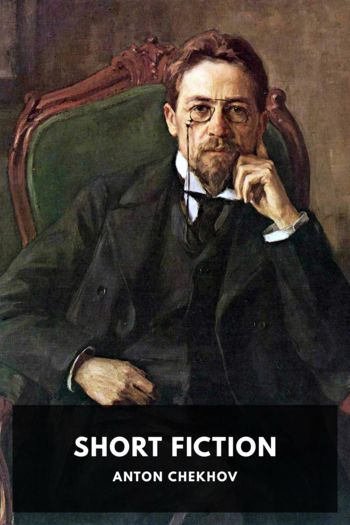
Description
Anton Chekhov is widely considered to be one of the greatest short story writers in history. A physician by day, he’s famously quoted as saying, “Medicine is my lawful wife, and literature is my mistress.” Chekhov wrote nearly 300 short stories in his long writing career; while at first he wrote mainly to make a profit, as his interest in writing—and his skill—grew, he wrote stories that heavily influenced the modern development of the form.
His stories are famous for, among other things, their ambiguous morality and their often inconclusive nature. Chekhov was a firm believer that the role of the artist was to correctly pose a question, but not necessarily to answer it.
This collection contains all of his short stories and two novellas, all translated by Constance Garnett, and arranged by the date they were originally published.
Read free book «Short Fiction by Anton Chekhov (libby ebook reader .txt) 📕» - read online or download for free at americanlibrarybooks.com
- Author: Anton Chekhov
Read book online «Short Fiction by Anton Chekhov (libby ebook reader .txt) 📕». Author - Anton Chekhov
At first the prisoner turned pale and coughed nervously into his sleeve, but soon the stillness, the general monotony and boredom infected him too. He looked with dull-witted respectfulness at the judges’ uniforms, at the weary faces of the jurymen, and blinked calmly. The surroundings and procedure of the court, the expectation of which had so weighed on his soul while he was awaiting them in prison, now had the most soothing effect on him. What he met here was not at all what he could have expected. The charge of murder hung over him, and yet here he met with neither threatening faces nor indignant looks nor loud phrases about retribution nor sympathy for his extraordinary fate; not one of those who were judging him looked at him with interest or for long. … The dingy windows and walls, the voice of the secretary, the attitude of the prosecutor were all saturated with official indifference and produced an atmosphere of frigidity, as though the murderer were simply an official property, or as though he were not being judged by living men, but by some unseen machine, set going, goodness knows how or by whom. …
The peasant, reassured, did not understand that the men here were as accustomed to the dramas and tragedies of life and were as blunted by the sight of them as hospital attendants are at the sight of death, and that the whole horror and hopelessness of his position lay just in this mechanical indifference. It seemed that if he were not to sit quietly but to get up and begin beseeching, appealing with tears for their mercy, bitterly repenting, that if he were to die of despair—it would all be shattered against blunted nerves and the callousness of custom, like waves against a rock.
When the secretary finished, the president for some reason passed his hands over the table before him, looked for some time with his eyes screwed up towards the prisoner, and then asked, speaking languidly:
“Prisoner at the bar, do you plead guilty to having murdered your wife on the evening of the ninth of June?”
“No, sir,” answered the prisoner, getting up and holding his gown over his chest.
After this the court proceeded hurriedly to the examination of witnesses. Two peasant women and five men and the village policeman who had made the enquiry were questioned. All of them, mud-bespattered, exhausted with their long walk and waiting in the witnesses’ room, gloomy and dispirited, gave the same evidence. They testified that Harlamov lived “well” with his old woman, like anyone else; that he never beat her except when he had had a drop; that on the ninth of June when the sun was setting the old woman had been found in the porch with her skull broken; that beside her in a pool of blood lay an axe. When they looked for Nikolay to tell him of the calamity he was not in his hut or in the streets. They ran all over the village, looking for him. They went to all the pothouses and huts, but could not find him. He had disappeared, and two days later came of his own accord to the police office, pale, with his clothes torn, trembling all over. He was bound and put in the lockup.
“Prisoner,” said the president, addressing Harlamov, “cannot you explain to the court where you were during the three days following the murder?”
“I was wandering about the fields. … Neither eating nor drinking. …”
“Why did you hide yourself, if it was not you that committed the murder?”
“I was frightened. … I was afraid I might be judged guilty. …”
“Aha! … Good, sit down!”
The last to be examined was the district doctor who had made a postmortem on the old woman. He told the court all that he remembered of his report at the postmortem and all that he had succeeded in thinking of on his way to the court that morning. The president screwed up his eyes at his new glossy black suit, at his foppish cravat, at his moving lips; he listened and in his mind the languid thought seemed to spring up of itself:
“Everyone wears a short jacket nowadays, why has he had his made long? Why long and not short?”
The circumspect creak of boots was audible behind the president’s back. It was the assistant prosecutor going up to the table to take some papers.
“Mihail Vladimirovitch,” said the assistant prosecutor, bending down to the president’s ear, “amazingly slovenly the way that Koreisky conducted the investigation. The prisoner’s brother was not examined, the village elder was not examined, there’s no making anything out of his description of the hut. …”
“It can’t be helped, it can’t be helped,” said the president, sinking back in his chair. “He’s a wreck … dropping to bits!”
“By the way,” whispered the assistant prosecutor, “look at the audience, in the front row, the third from the right … a face like an actor’s … that’s the local Croesus. He has a fortune of something like fifty thousand.”
“Really? You wouldn’t guess it from his appearance. … Well, dear boy, shouldn’t we have a break?”
“We will finish the case for the prosecution, and then. …”
“As you think best. … Well?” the president raised his eyes to the doctor. “So you consider that death was instantaneous?”
“Yes, in consequence of the extent of the injury to the brain substance. …”
When the doctor had finished, the president gazed into the space between



Comments (0)