Short Fiction by Anton Chekhov (libby ebook reader .txt) 📕
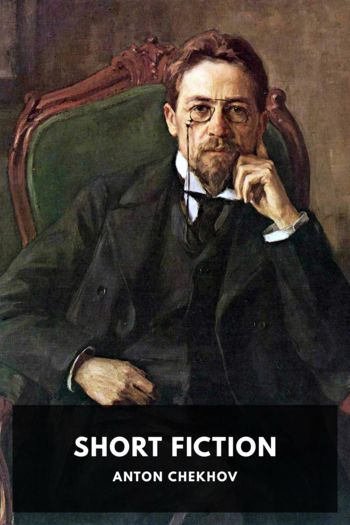
Description
Anton Chekhov is widely considered to be one of the greatest short story writers in history. A physician by day, he’s famously quoted as saying, “Medicine is my lawful wife, and literature is my mistress.” Chekhov wrote nearly 300 short stories in his long writing career; while at first he wrote mainly to make a profit, as his interest in writing—and his skill—grew, he wrote stories that heavily influenced the modern development of the form.
His stories are famous for, among other things, their ambiguous morality and their often inconclusive nature. Chekhov was a firm believer that the role of the artist was to correctly pose a question, but not necessarily to answer it.
This collection contains all of his short stories and two novellas, all translated by Constance Garnett, and arranged by the date they were originally published.
Read free book «Short Fiction by Anton Chekhov (libby ebook reader .txt) 📕» - read online or download for free at americanlibrarybooks.com
- Author: Anton Chekhov
Read book online «Short Fiction by Anton Chekhov (libby ebook reader .txt) 📕». Author - Anton Chekhov
Verotchka had a good figure, a regular profile, and beautiful curly hair. Ognev, who had seen few women in his life, thought her a beauty.
“I am going away,” he said as he took leave of her at the gate. “Don’t remember evil against me! Thank you for everything!”
In the same singing divinity student’s voice in which he had talked to her father, with the same blinking and twitching of his shoulders, he began thanking Vera for her hospitality, kindness, and friendliness.
“I’ve written about you in every letter to my mother,” he said. “If everyone were like you and your dad, what a jolly place the world would be! You are such a splendid set of people! All such genuine, friendly people with no nonsense about you.”
“Where are you going to now?” asked Vera.
“I am going now to my mother’s at Oryol; I shall be a fortnight with her, and then back to Petersburg and work.”
“And then?”
“And then? I shall work all the winter and in the spring go somewhere into the provinces again to collect material. Well, be happy, live a hundred years … don’t remember evil against me. We shall not see each other again.”
Ognev stooped down and kissed Vera’s hand. Then, in silent emotion, he straightened his cape, shifted his bundle of books to a more comfortable position, paused, and said:
“What a lot of mist!”
“Yes. Have you left anything behind?”
“No, I don’t think so. …”
For some seconds Ognev stood in silence, then he moved clumsily towards the gate and went out of the garden.
“Stay; I’ll see you as far as our wood,” said Vera, following him out.
They walked along the road. Now the trees did not obscure the view, and one could see the sky and the distance. As though covered with a veil all nature was hidden in a transparent, colourless haze through which her beauty peeped gaily; where the mist was thicker and whiter it lay heaped unevenly about the stones, stalks, and bushes or drifted in coils over the road, clung close to the earth and seemed trying not to conceal the view. Through the haze they could see all the road as far as the wood, with dark ditches at the sides and tiny bushes which grew in the ditches and caught the straying wisps of mist. Half a mile from the gate they saw the dark patch of Kuznetsov’s wood.
“Why has she come with me? I shall have to see her back,” thought Ognev, but looking at her profile he gave a friendly smile and said: “One doesn’t want to go away in such lovely weather. It’s quite a romantic evening, with the moon, the stillness, and all the etceteras. Do you know, Vera Gavrilovna, here I have lived twenty-nine years in the world and never had a romance. No romantic episode in my whole life, so that I only know by hearsay of rendezvous, ‘avenues of sighs,’ and kisses. It’s not normal! In town, when one sits in one’s lodgings, one does not notice the blank, but here in the fresh air one feels it. … One resents it!”
“Why is it?”
“I don’t know. I suppose I’ve never had time, or perhaps it was I have never met women who. … In fact, I have very few acquaintances and never go anywhere.”
For some three hundred paces the young people walked on in silence. Ognev kept glancing at Verotchka’s bare head and shawl, and days of spring and summer rose to his mind one after another. It had been a period when far from his grey Petersburg lodgings, enjoying the friendly warmth of kind people, nature, and the work he loved, he had not had time to notice how the sunsets followed the glow of dawn, and how, one after another foretelling the end of summer, first the nightingale ceased singing, then the quail, then a little later the landrail. The days slipped by unnoticed, so that life must have been happy and easy. He began calling aloud how reluctantly he, poor and unaccustomed to change of scene and society, had come at the end of April to the N⸺ District, where he had expected dreariness, loneliness, and indifference to statistics, which he considered was now the foremost among the sciences. When he arrived on an April morning at the little town of N⸺ he had put up at the inn kept by Ryabuhin, the Old Believer, where for twenty kopecks a day they had given him a light, clean room on condition that he should not smoke indoors. After resting and finding who was the president of the District Zemstvo, he had set off at once on foot to Kuznetsov. He had to walk three miles through lush meadows and young copses. Larks were hovering in the clouds, filling the air with silvery notes, and rooks flapping their wings with sedate dignity floated over the green cornland.
“Good heavens!” Ognev had thought in wonder; “can it be that there’s always air like this to breathe here, or



Comments (0)