Short Fiction by Anton Chekhov (libby ebook reader .txt) 📕
Description
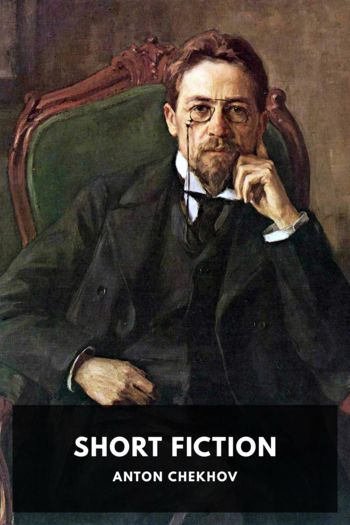
Anton Chekhov is widely considered to be one of the greatest short story writers in history. A physician by day, he’s famously quoted as saying, “Medicine is my lawful wife, and literature is my mistress.” Chekhov wrote nearly 300 short stories in his long writing career; while at first he wrote mainly to make a profit, as his interest in writing—and his skill—grew, he wrote stories that heavily influenced the modern development of the form.
His stories are famous for, among other things, their ambiguous morality and their often inconclusive nature. Chekhov was a firm believer that the role of the artist was to correctly pose a question, but not necessarily to answer it.
This collection contains all of his short stories and two novellas, all translated by Constance Garnett, and arranged by the date they were originally published.
Read free book «Short Fiction by Anton Chekhov (libby ebook reader .txt) 📕» - read online or download for free at americanlibrarybooks.com
- Author: Anton Chekhov
Read book online «Short Fiction by Anton Chekhov (libby ebook reader .txt) 📕». Author - Anton Chekhov
“But what have I sown, Father Fyodor?” the deacon asked softly, looking up at his Reverence.
“Why, who is to blame if not you? You’re his father, he is your offspring! You ought to have admonished him, have instilled the fear of God into him. A child must be taught! You have brought him into the world, but you haven’t trained him up in the right way. It’s a sin! It’s wrong! It’s a shame!”
His Reverence forgot his exhaustion, paced to and fro and went on talking. Drops of perspiration came out on the deacon’s bald head and forehead. He raised his eyes to his Reverence with a look of guilt, and said:
“But didn’t I train him, Father Fyodor? Lord have mercy on us, haven’t I been a father to my children? You know yourself I spared nothing for his good; I have prayed and done my best all my life to give him a thorough education. He went to the high school and I got him tutors, and he took his degree at the University. And as to my not being able to influence his mind, Father Fyodor, why, you can judge for yourself that I am not qualified to do so! Sometimes when he used to come here as a student, I would begin admonishing him in my way, and he wouldn’t heed me. I’d say to him, ‘Go to church,’ and he would answer, ‘What for?’ I would begin explaining, and he would say, ‘Why? what for?’ Or he would slap me on the shoulder and say, ‘Everything in this world is relative, approximate and conditional. I don’t know anything, and you don’t know anything either, dad.’ ”
Father Anastasy laughed huskily, cleared his throat and waved his fingers in the air as though preparing to say something. His Reverence glanced at him and said sternly:
“Don’t interfere, Father Anastasy.”
The old man laughed, beamed, and evidently listened with pleasure to the deacon as though he were glad there were other sinful persons in this world besides himself. The deacon spoke sincerely, with an aching heart, and tears actually came into his eyes. Father Fyodor felt sorry for him.
“You are to blame, deacon, you are to blame,” he said, but not so sternly and heatedly as before. “If you could beget him, you ought to know how to instruct him. You ought to have trained him in his childhood; it’s no good trying to correct a student.”
A silence followed; the deacon clasped his hands and said with a sigh:
“But you know I shall have to answer for him!”
“To be sure you will!”
After a brief silence his Reverence yawned and sighed at the same moment and asked:
“Who is reading the Acts?”
“Yevstrat. Yevstrat always reads them.”
The deacon got up and, looking imploringly at his Reverence, asked:
“Father Fyodor, what am I to do now?”
“Do as you please; you are his father, not I. You ought to know best.”
“I don’t know anything, Father Fyodor! Tell me what to do, for goodness’ sake! Would you believe it, I am sick at heart! I can’t sleep now, nor keep quiet, and the holiday will be no holiday to me. Tell me what to do, Father Fyodor!”
“Write him a letter.”
“What am I to write to him?”
“Write that he mustn’t go on like that. Write shortly, but sternly and circumstantially, without softening or smoothing away his guilt. It is your parental duty; if you write, you will have done your duty and will be at peace.”
“That’s true. But what am I to write to him, to what effect? If I write to him, he will answer, ‘Why? what for? Why is it a sin?’ ”
Father Anastasy laughed hoarsely again, and brandished his fingers.
“Why? what for? why is it a sin?” he began shrilly. “I was once confessing a gentleman, and I told him that excessive confidence in the Divine Mercy is a sin; and he asked, ‘Why?’ I tried to answer him, but—” Anastasy slapped himself on the forehead. “I had nothing here. He-he-he-he! …”
Anastasy’s words, his hoarse jangling laugh at what was not laughable, had an unpleasant effect on his Reverence and on the deacon. The former was on the point of saying, “Don’t interfere” again, but he did not say it, he only frowned.
“I can’t write to him,” sighed the deacon.
“If you can’t, who can?”
“Father Fyodor!” said the deacon, putting his head on one side and pressing his hand to his heart. “I am an uneducated slow-witted man, while the Lord has vouchsafed you judgment and wisdom. You know everything and understand everything. You can master anything, while I don’t know how to put my words together sensibly. Be generous. Instruct me how to write the letter. Teach me what to say and how to say it. …”
“What is there to teach? There is nothing to teach. Sit down and write.”
“Oh, do me the favour, Father Fyodor! I beseech you! I know he will be frightened and will attend to your letter, because, you see, you are a cultivated man too. Do be so good! I’ll sit down, and you’ll dictate to me. It will be a sin to write tomorrow, but now would be the very time; my mind would be set at rest.”
His Reverence looked at the deacon’s imploring face, thought of the disagreeable Pyotr, and consented to dictate. He made the deacon sit down to his table and began.
“Well, write … ‘Christ is risen, dear son …’ exclamation mark. ‘Rumours have reached me, your father,’ then in parenthesis, ‘from what source is no concern of yours …’ close the parenthesis. … Have you written it? ‘That you are leading a life inconsistent with the laws both of God and of man. Neither the luxurious comfort, nor the worldly splendour, nor the culture with which you seek outwardly to disguise it, can hide your heathen manner of life. In name you are a Christian, but in your real nature a heathen as pitiful and wretched as all other heathens—more




Comments (0)