Short Fiction by Anton Chekhov (libby ebook reader .txt) 📕
Description
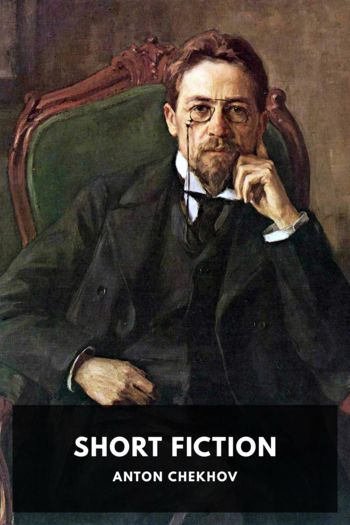
Anton Chekhov is widely considered to be one of the greatest short story writers in history. A physician by day, he’s famously quoted as saying, “Medicine is my lawful wife, and literature is my mistress.” Chekhov wrote nearly 300 short stories in his long writing career; while at first he wrote mainly to make a profit, as his interest in writing—and his skill—grew, he wrote stories that heavily influenced the modern development of the form.
His stories are famous for, among other things, their ambiguous morality and their often inconclusive nature. Chekhov was a firm believer that the role of the artist was to correctly pose a question, but not necessarily to answer it.
This collection contains all of his short stories and two novellas, all translated by Constance Garnett, and arranged by the date they were originally published.
Read free book «Short Fiction by Anton Chekhov (libby ebook reader .txt) 📕» - read online or download for free at americanlibrarybooks.com
- Author: Anton Chekhov
Read book online «Short Fiction by Anton Chekhov (libby ebook reader .txt) 📕». Author - Anton Chekhov
When they had driven three-quarters of a mile from the Crooked Ravine, Tortchakov looked round and stared intently into the distance.
“I can’t see the Cossack,” he said. “Poor, dear fellow, to take it into his head to fall ill on the road. There couldn’t be a worse misfortune, to have to travel and not have the strength. … I shouldn’t wonder if he dies by the roadside. We didn’t give him any Easter cake, Lizaveta, and we ought to have given it. I’ll be bound he wants to break his fast too.”
The sun had risen, but whether it was dancing or not Tortchakov did not see. He remained silent all the way home, thinking and keeping his eyes fixed on the horse’s black tail. For some unknown reason he felt overcome by depression, and not a trace of the holiday gladness was left in his heart. When he had arrived home and said, “Christ is risen” to his workmen, he grew cheerful again and began talking, but when he had sat down to break the fast and had taken a bite from his piece of Easter cake, he looked regretfully at his wife, and said:
“It wasn’t right of us, Lizaveta, not to give that Cossack something to eat.”
“You are a queer one, upon my word,” said Lizaveta, shrugging her shoulders in surprise. “Where did you pick up such a fashion as giving away the holy Easter cake on the high road? Is it an ordinary loaf? Now that it is cut and lying on the table, let anyone eat it that likes—your Cossack too! Do you suppose I grudge it?”
“That’s all right, but we ought to have given the Cossack some. … Why, he was worse off than a beggar or an orphan. On the road, and far from home, and sick too.”
Tortchakov drank half a glass of tea, and neither ate nor drank anything more. He had no appetite, the tea seemed to choke him, and he felt depressed again. After breaking their fast, his wife and he lay down to sleep. When Lizaveta woke two hours later, he was standing by the window, looking into the yard.
“Are you up already?” asked his wife.
“I somehow can’t sleep. … Ah, Lizaveta,” he sighed. “We were unkind, you and I, to that Cossack!”
“Talking about that Cossack again!” yawned his wife. “You have got him on the brain.”
“He has served his Tsar, shed his blood maybe, and we treated him as though he were a pig. We ought to have brought the sick man home and fed him, and we did not even give him a morsel of bread.”
“Catch me letting you spoil the Easter cake for nothing! And one that has been blessed too! You would have cut it on the road, and shouldn’t I have looked a fool when I got home?”
Without saying anything to his wife, Maxim went into the kitchen, wrapped a piece of cake up in a napkin, together with half a dozen eggs, and went to the labourers in the barn.
“Kuzma, put down your concertina,” he said to one of them. “Saddle the bay, or Ivantchik, and ride briskly to the Crooked Ravine. There you will see a sick Cossack with a horse, so give him this. Maybe he hasn’t ridden away yet.”
Maxim felt cheerful again, but after waiting for Kuzma for some hours, he could bear it no longer, so he saddled a horse and went off to meet him. He met him just at the Ravine.
“Well, have you seen the Cossack?”
“I can’t find him anywhere, he must have ridden on.”
“H’m … a queer business.”
Tortchakov took the bundle from Kuzma, and galloped on farther. When he reached Shustrovo he asked the peasants:
“Friends, have you seen a sick Cossack with a horse? Didn’t he ride by here? A redheaded fellow on a bay horse.”
The peasants looked at one another, and said they had not seen the Cossack.
“The returning postman drove by, it’s true, but as for a Cossack or anyone else, there has been no such.”
Maxim got home at dinner time.
“I can’t get that Cossack out of my head, do what you will!” he said to his wife. “He gives me no peace. I keep thinking: what if God meant to try us, and sent some saint or angel in the form of a Cossack? It does happen, you know. It’s bad, Lizaveta; we were unkind to the man!”
“What do you keep pestering me with that Cossack for?” cried Lizaveta, losing patience at last. “You stick to it like tar!”
“You are not kind, you know …” said Maxim, looking into his wife’s face.
And for the first time since his marriage he perceived that he wife was not kind.
“I may be unkind,” cried Lizaveta, tapping angrily with her spoon, “but I am not going to give away the holy Easter cake to every drunken man in the road.”
“The Cossack wasn’t drunk!”
“He was drunk!”
“Well, you are a fool then!”
Maxim got up from the table and began reproaching his young wife for hardheartedness and stupidity. She, getting angry too, answered his reproaches with reproaches, burst into tears, and went away into their bedroom, declaring she would go home to her father’s. This was the first matrimonial squabble that had happened in the Tortchakov’s married life. He walked about the yard till the evening, picturing his wife’s face, and it seemed to him now spiteful and ugly. And as though to torment him the Cossack haunted his brain, and Maxim seemed to see now his sick eyes, now his unsteady walk.
“Ah, we were unkind to the man,” he muttered.
When it got dark, he was overcome by an insufferable depression such as he had never felt before. Feeling so dreary, and being angry with his wife, he got drunk, as he had sometimes done before he was married. In his drunkenness he used bad language and shouted to his wife that she had a spiteful, ugly face, and



Comments (0)