Short Fiction by Anton Chekhov (libby ebook reader .txt) 📕
Description
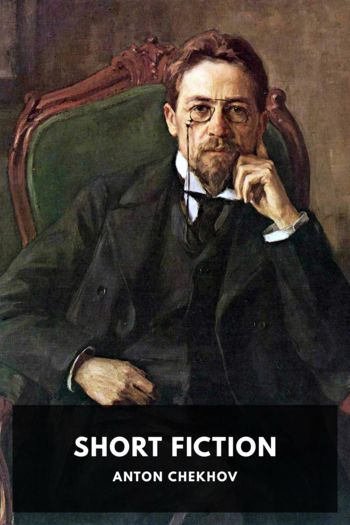
Anton Chekhov is widely considered to be one of the greatest short story writers in history. A physician by day, he’s famously quoted as saying, “Medicine is my lawful wife, and literature is my mistress.” Chekhov wrote nearly 300 short stories in his long writing career; while at first he wrote mainly to make a profit, as his interest in writing—and his skill—grew, he wrote stories that heavily influenced the modern development of the form.
His stories are famous for, among other things, their ambiguous morality and their often inconclusive nature. Chekhov was a firm believer that the role of the artist was to correctly pose a question, but not necessarily to answer it.
This collection contains all of his short stories and two novellas, all translated by Constance Garnett, and arranged by the date they were originally published.
Read free book «Short Fiction by Anton Chekhov (libby ebook reader .txt) 📕» - read online or download for free at americanlibrarybooks.com
- Author: Anton Chekhov
Read book online «Short Fiction by Anton Chekhov (libby ebook reader .txt) 📕». Author - Anton Chekhov
The priest’s voice is audible: “And I, unworthy priest …”
Now I too move behind the screen. I do not feel the ground under my feet, it is as though I were walking on air. … I go up to the lectern which is taller than I am. For a minute I have a glimpse of the indifferent, exhausted face of the priest. But after that I see nothing but his sleeve with its blue lining, the cross, and the edge of the lectern. I am conscious of the close proximity of the priest, the smell of his cassock; I hear his stern voice, and my cheek turned towards him begins to burn. … I am so troubled that I miss a great deal that he says, but I answer his questions sincerely in an unnatural voice, not my own. I think of the forlorn figures of the Holy Mother and St. John the Divine, the crucifix, my mother, and I want to cry and beg forgiveness.
“What is your name?” the priest asks me, covering my head with the soft stole.
How lighthearted I am now, with joy in my soul!
I have no sins now, I am holy, I have the right to enter Paradise! I fancy that I already smell like the cassock. I go from behind the screen to the deacon to enter my name, and sniff at my sleeves. The dusk of the church no longer seems gloomy, and I look indifferently, without malice, at Mitka.
“What is your name?” the deacon asks.
“Fedya.”
“And your name from your father?”
“I don’t know.”
“What is your papa’s name?”
“Ivan Petrovitch.”
“And your surname?”
I make no answer.
“How old are you?”
“Nearly nine.”
When I get home I go to bed quickly, that I may not see them eating supper; and, shutting my eyes, dream of how fine it would be to endure martyrdom at the hands of some Herod or Dioskorus, to live in the desert, and, like St. Serafim, feed the bears, live in a cell, and eat nothing but holy bread, give my property to the poor, go on a pilgrimage to Kiev. I hear them laying the table in the dining room—they are going to have supper, they will eat salad, cabbage pies, fried and baked fish. How hungry I am! I would consent to endure any martyrdom, to live in the desert without my mother, to feed bears out of my own hands, if only I might first eat just one cabbage pie!
“Lord, purify me a sinner,” I pray, covering my head over. “Guardian angel, save me from the unclean spirit.”
The next day, Thursday, I wake up with my heart as pure and clean as a fine spring day. I go gaily and boldly into the church, feeling that I am a communicant, that I have a splendid and expensive shirt on, made out of a silk dress left by my grandmother. In the church everything has an air of joy, happiness, and spring. The faces of the Mother of God and St. John the Divine are not so sorrowful as yesterday. The faces of the communicants are radiant with hope, and it seems as though all the past is forgotten, all is forgiven. Mitka, too, has combed his hair, and is dressed in his best. I look gaily at his protruding ears, and to show that I have nothing against him, I say:
“You look nice today, and if your hair did not stand up so, and you weren’t so poorly dressed, everybody would think that your mother was not a washerwoman but a lady. Come to me at Easter, we will play knuckle-bones.”
Mitka looks at me mistrustfully, and shakes his fist at me on the sly.
And the lady I saw yesterday looks lovely. She is wearing a light blue dress, and a big sparkling brooch in the shape of a horseshoe. I admire her, and think that, when I am grownup, I will certainly marry a woman like that, but remembering that getting married is shameful, I leave off thinking about it, and go into the choir where the deacon is already reading the “hours.”
A MysteryOn the evening of Easter Sunday the actual Civil Councillor, Navagin, on his return from paying calls, picked up the sheet of paper on which visitors had inscribed their names in the hall, and went with it into his study. After taking off his outer garments and drinking some seltzer water, he settled himself comfortably on a couch and began reading the signatures in the list. When his eyes reached the middle of the long list of signatures, he started, gave an ejaculation of astonishment and snapped his fingers, while his face expressed the utmost perplexity.
“Again!” he said, slapping his knee. “It’s extraordinary! Again! Again there is the signature of that fellow, goodness knows who he is! Fedyukov! Again!”
Among the numerous signatures on the paper was the signature of a certain Fedyukov. Who the devil this Fedyukov was, Navagin had not a notion. He went over in his memory all his acquaintances, relations and subordinates in the service, recalled his remote past but could recollect no name like Fedyukov. What was so strange was that this incognito Fedyukov, had signed his name regularly every Christmas and Easter for the last thirteen years. Neither Navagin, his wife, nor his house porter knew who he was, where he came from or what he was like.
“It’s extraordinary!” Navagin thought in perplexity, as he paced about the study. “It’s strange and incomprehensible! It’s like sorcery!”
“Call the porter here!” he shouted.
“It’s devilish queer! But I will find out who he is!”
“I say, Grigory,” he said, addressing the porter as he entered, “that Fedyukov




Comments (0)