Short Fiction by Anton Chekhov (libby ebook reader .txt) 📕
Description
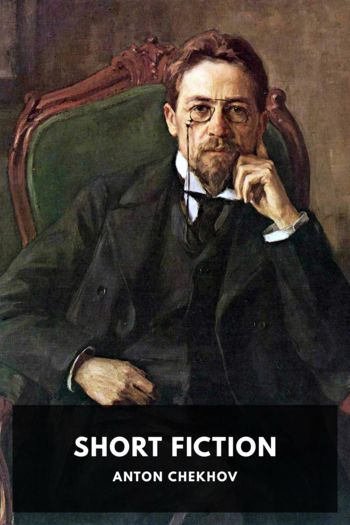
Anton Chekhov is widely considered to be one of the greatest short story writers in history. A physician by day, he’s famously quoted as saying, “Medicine is my lawful wife, and literature is my mistress.” Chekhov wrote nearly 300 short stories in his long writing career; while at first he wrote mainly to make a profit, as his interest in writing—and his skill—grew, he wrote stories that heavily influenced the modern development of the form.
His stories are famous for, among other things, their ambiguous morality and their often inconclusive nature. Chekhov was a firm believer that the role of the artist was to correctly pose a question, but not necessarily to answer it.
This collection contains all of his short stories and two novellas, all translated by Constance Garnett, and arranged by the date they were originally published.
Read free book «Short Fiction by Anton Chekhov (libby ebook reader .txt) 📕» - read online or download for free at americanlibrarybooks.com
- Author: Anton Chekhov
Read book online «Short Fiction by Anton Chekhov (libby ebook reader .txt) 📕». Author - Anton Chekhov
The young man discreetly takes hold of the fur of Malahin’s coat with two pink fingers and, shifting from one foot to the other, explains affably and convincingly that such and such numbers have gone already, and that such and such are going, and that he is ready to do for Malahin everything in his power. And from his face it is evident that he is ready to do anything to please not only Malahin, but the whole world—he is so happy, so pleased, and so delighted! The old man listens, and though he can make absolutely nothing of the intricate system of numbering the trains, he nods his head approvingly, and he, too, puts two fingers on the soft wool of the rough coat. He enjoys seeing and hearing the polite and genial young man. To show goodwill on his side also, he takes out a ten-rouble note and, after a moment’s thought, adds a couple of rouble notes to it, and gives them to the stationmaster. The latter takes them, puts his finger to his cap, and gracefully thrusts them into his pocket.
“Well, gentlemen, can’t we arrange it like this?” he says, kindled by a new idea that has flashed on him. “The troop train is late, … as you see, it is not here, … so why shouldn’t you go as the troop train?2 And I will let the troop train go as twenty-eight. Eh?”
“If you like,” agrees the guard.
“Excellent!” the stationmaster says, delighted. “In that case there is no need for you to wait here; you can set off at once. I’ll dispatch you immediately. Excellent!”
He salutes Malahin and runs off to his room, reading forms as he goes. The old man is very much pleased by the conversation that has just taken place; he smiles and looks about the room as though looking for something else agreeable.
“We’ll have a drink, though,” he says, taking the guard’s arm.
“It seems a little early for drinking.”
“No, you must let me treat you to a glass in a friendly way.”
They both go to the refreshment bar. After having a drink the guard spends a long time selecting something to eat.
He is a very stout, elderly man, with a puffy and discolored face. His fatness is unpleasant, flabby-looking, and he is sallow as people are who drink too much and sleep irregularly.
“And now we might have a second glass,” says Malahin. “It’s cold now, it’s no sin to drink. Please take some. So I can rely upon you, Mr. Guard, that there will be no hindrance or unpleasantness for the rest of the journey. For you know in moving cattle every hour is precious. Today meat is one price; and tomorrow, look you, it will be another. If you are a day or two late and don’t get your price, instead of a profit you get home—excuse my saying it—without your breeches. Pray take a little. … I rely on you, and as for standing you something or what you like, I shall be pleased to show you my respect at any time.”
After having fed the guard, Malahin goes back to the van.
“I have just got hold of the troop train,” he says to his son. “We shall go quickly. The guard says if we go all the way with that number we shall arrive at eight o’clock tomorrow evening. If one does not bestir oneself, my boy, one gets nothing. … That’s so. … So you watch and learn. …”
After the first bell a man with a face black with soot, in a blouse and filthy frayed trousers hanging very slack, comes to the door of the van. This is the oiler, who had been creeping under the carriages and tapping the wheels with a hammer.
“Are these your vans of cattle?” he asks.
“Yes. Why?”
“Why, because two of the vans are not safe. They can’t go on, they must stay here to be repaired.”
“Oh, come, tell us another! You simply want a drink, to get something out of me. … You should have said so.”
“As you please, only it is my duty to report it at once.”
Without indignation or protest, simply, almost mechanically, the old man takes two twenty-kopeck pieces out of his pocket and gives them to the oiler. He takes them very calmly, too, and looking good-naturedly at the old man enters into conversation.
“You are going to sell your cattle, I suppose. … It’s good business!”
Malahin sighs and, looking calmly at the oiler’s black face, tells him that trading in cattle used certainly to be profitable, but now it has become a risky and losing business.
“I have a mate here,” the oiler interrupts him. “You merchant gentlemen might make him a little present. …”
Malahin gives something to the mate too. The troop train goes quickly and the waits at the stations are comparatively short. The old man is pleased. The pleasant impression made by the young man in the rough overcoat has gone deep, the vodka he has drunk slightly clouds his brain, the weather is magnificent, and everything seems to be going well. He talks without ceasing, and at every stopping place runs to the refreshment bar. Feeling the need of a listener, he takes with him first the guard, and then the engine-driver, and does not simply drink, but makes a long business of it, with suitable remarks and clinking of glasses.
“You have your job and we have ours,” he says with an affable smile. “May God prosper us and you, and not our will but His be done.”
The vodka gradually excites him and he is worked up to a great pitch of energy. He wants to bestir himself, to fuss about, to make inquiries, to talk incessantly. At one minute he fumbles in his pockets and bundles and looks for some form. Then he thinks of something and cannot remember it; then takes out his pocketbook, and with no sort of object counts over his money. He bustles about, sighs and groans, clasps his hands. … Laying out before




Comments (0)