Short Fiction by Anton Chekhov (libby ebook reader .txt) 📕
Description
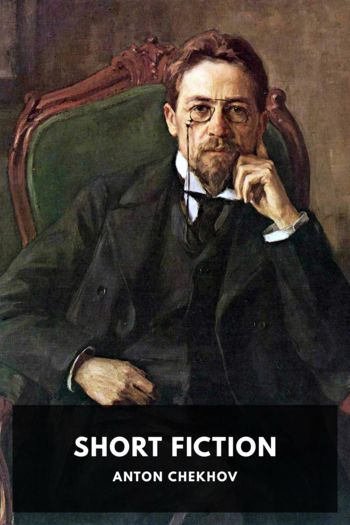
Anton Chekhov is widely considered to be one of the greatest short story writers in history. A physician by day, he’s famously quoted as saying, “Medicine is my lawful wife, and literature is my mistress.” Chekhov wrote nearly 300 short stories in his long writing career; while at first he wrote mainly to make a profit, as his interest in writing—and his skill—grew, he wrote stories that heavily influenced the modern development of the form.
His stories are famous for, among other things, their ambiguous morality and their often inconclusive nature. Chekhov was a firm believer that the role of the artist was to correctly pose a question, but not necessarily to answer it.
This collection contains all of his short stories and two novellas, all translated by Constance Garnett, and arranged by the date they were originally published.
Read free book «Short Fiction by Anton Chekhov (libby ebook reader .txt) 📕» - read online or download for free at americanlibrarybooks.com
- Author: Anton Chekhov
Read book online «Short Fiction by Anton Chekhov (libby ebook reader .txt) 📕». Author - Anton Chekhov
“Take him,” says her mistress, buttoning up her chemise over her bosom; “he is crying. He must be bewitched.”
Varka takes the baby, puts him in the cradle and begins rocking it again. The green patch and the shadows gradually disappear, and now there is nothing to force itself on her eyes and cloud her brain. But she is as sleepy as before, fearfully sleepy! Varka lays her head on the edge of the cradle, and rocks her whole body to overcome her sleepiness, but yet her eyes are glued together, and her head is heavy.
“Varka, heat the stove!” she hears the master’s voice through the door.
So it is time to get up and set to work. Varka leaves the cradle, and runs to the shed for firewood. She is glad. When one moves and runs about, one is not so sleepy as when one is sitting down. She brings the wood, heats the stove, and feels that her wooden face is getting supple again, and that her thoughts are growing clearer.
“Varka, set the samovar!” shouts her mistress.
Varka splits a piece of wood, but has scarcely time to light the splinters and put them in the samovar, when she hears a fresh order:
“Varka, clean the master’s goloshes!”
She sits down on the floor, cleans the goloshes, and thinks how nice it would be to put her head into a big deep golosh, and have a little nap in it. … And all at once the golosh grows, swells, fills up the whole room. Varka drops the brush, but at once shakes her head, opens her eyes wide, and tries to look at things so that they may not grow big and move before her eyes.
“Varka, wash the steps outside; I am ashamed for the customers to see them!”
Varka washes the steps, sweeps and dusts the rooms, then heats another stove and runs to the shop. There is a great deal of work: she hasn’t one minute free.
But nothing is so hard as standing in the same place at the kitchen table peeling potatoes. Her head droops over the table, the potatoes dance before her eyes, the knife tumbles out of her hand while her fat, angry mistress is moving about near her with her sleeves tucked up, talking so loud that it makes a ringing in Varka’s ears. It is agonising, too, to wait at dinner, to wash, to sew, there are minutes when she longs to flop on to the floor regardless of everything, and to sleep.
The day passes. Seeing the windows getting dark, Varka presses her temples that feel as though they were made of wood, and smiles, though she does not know why. The dusk of evening caresses her eyes that will hardly keep open, and promises her sound sleep soon. In the evening visitors come.
“Varka, set the samovar!” shouts her mistress. The samovar is a little one, and before the visitors have drunk all the tea they want, she has to heat it five times. After tea Varka stands for a whole hour on the same spot, looking at the visitors, and waiting for orders.
“Varka, run and buy three bottles of beer!”
She starts off, and tries to run as quickly as she can, to drive away sleep.
“Varka, fetch some vodka! Varka, where’s the corkscrew? Varka, clean a herring!”
But now, at last, the visitors have gone; the lights are put out, the master and mistress go to bed.
“Varka, rock the baby!” she hears the last order.
The cricket churrs in the stove; the green patch on the ceiling and the shadows from the trousers and the baby-clothes force themselves on Varka’s half-opened eyes again, wink at her and cloud her mind.
“Hush-a-bye, my baby wee,” she murmurs, “and I will sing a song to thee.”
And the baby screams, and is worn out with screaming. Again Varka sees the muddy high road, the people with wallets, her mother Pelageya, her father Yefim. She understands everything, she recognises everyone, but through her half sleep she cannot understand the force which binds her, hand and foot, weighs upon her, and prevents her from living. She looks round, searches for that force that she may escape from it, but she cannot find it. At last, tired to death, she does her very utmost, strains her eyes, looks up at the flickering green patch, and listening to the screaming, finds the foe who will not let her live.
That foe is the baby.
She laughs. It seems strange to her that she has failed to grasp such a simple thing before. The green patch, the shadows, and the cricket seem to laugh and wonder too.
The hallucination takes possession of Varka. She gets up from her stool, and with a broad smile on her face and wide unblinking eyes, she walks up and down the room. She feels pleased and tickled at the thought that she will be rid directly of the baby that binds her hand and foot. … Kill the baby and then sleep, sleep, sleep. …
Laughing and winking and shaking her fingers at the green patch, Varka steals up to the cradle and bends over the baby. When she has strangled him, she quickly lies down on the floor, laughs with delight that she can sleep, and in a minute is sleeping as sound as the dead.
The Steppe The Story of a Journey IEarly one morning in July a shabby covered chaise, one of those antediluvian chaises without springs in which no one travels in Russia nowadays, except merchant’s



Comments (0)