Short Fiction by Anton Chekhov (libby ebook reader .txt) 📕
Description
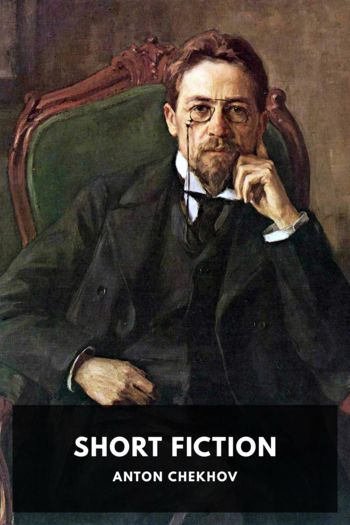
Anton Chekhov is widely considered to be one of the greatest short story writers in history. A physician by day, he’s famously quoted as saying, “Medicine is my lawful wife, and literature is my mistress.” Chekhov wrote nearly 300 short stories in his long writing career; while at first he wrote mainly to make a profit, as his interest in writing—and his skill—grew, he wrote stories that heavily influenced the modern development of the form.
His stories are famous for, among other things, their ambiguous morality and their often inconclusive nature. Chekhov was a firm believer that the role of the artist was to correctly pose a question, but not necessarily to answer it.
This collection contains all of his short stories and two novellas, all translated by Constance Garnett, and arranged by the date they were originally published.
Read free book «Short Fiction by Anton Chekhov (libby ebook reader .txt) 📕» - read online or download for free at americanlibrarybooks.com
- Author: Anton Chekhov
Read book online «Short Fiction by Anton Chekhov (libby ebook reader .txt) 📕». Author - Anton Chekhov
“How are things at home?” she asked rapidly, and her pale face quivered. “How is mother?”
“You know mother …” said Pyotr Mihalitch, not looking at her.
“Petrusha, you’ve thought a great deal about what has happened,” she said, taking hold of her brother’s sleeve, and he knew how hard it was for her to speak. “You’ve thought a great deal: tell me, can we reckon on mother’s accepting Grigory … and the whole position, one day?”
She stood close to her brother, face to face with him, and he was astonished that she was so beautiful, and that he seemed not to have noticed it before. And it seemed to him utterly absurd that his sister, so like his mother, pampered, elegant, should be living with Vlassitch and in Vlassitch’s house, with the petrified servant, and the table with six legs—in the house where a man had been flogged to death, and that she was not going home with him, but was staying here to sleep.
“You know mother,” he said, not answering her question. “I think you ought to have … to do something, to ask her forgiveness or something. …”
“But to ask her forgiveness would mean pretending we had done wrong. I’m ready to tell a lie to comfort mother, but it won’t lead anywhere. I know mother. Well, what will be, must be!” said Zina, growing more cheerful now that the most unpleasant had been said. “We’ll wait for five years, ten years, and be patient, and then God’s will be done.”
She took her brother’s arm, and when she walked through the dark hall she squeezed close to him. They went out on the steps. Pyotr Mihalitch said goodbye, got on his horse, and set off at a walk; Zina and Vlassitch walked a little way with him. It was still and warm, with a delicious smell of hay; stars were twinkling brightly between the clouds. Vlassitch’s old garden, which had seen so many gloomy stories in its time, lay slumbering in the darkness, and for some reason it was mournful riding through it.
“Zina and I today after dinner spent some really exalted moments,” said Vlassitch. “I read aloud to her an excellent article on the question of emigration. You must read it, brother! You really must. It’s remarkable for its lofty tone. I could not resist writing a letter to the editor to be forwarded to the author. I wrote only a single line: ‘I thank you and warmly press your noble hand.’ ”
Pyotr Mihalitch was tempted to say, “Don’t meddle in what does not concern you,” but he held his tongue.
Vlassitch walked by his right stirrup and Zina by the left; both seemed to have forgotten that they had to go home. It was damp, and they had almost reached Koltovitch’s copse. Pyotr Mihalitch felt that they were expecting something from him, though they hardly knew what it was, and he felt unbearably sorry for them. Now as they walked by the horse with submissive faces, lost in thought, he had a deep conviction that they were unhappy, and could not be happy, and their love seemed to him a melancholy, irreparable mistake. Pity and the sense that he could do nothing to help them reduced him to that state of spiritual softening when he was ready to make any sacrifice to get rid of the painful feeling of sympathy.
“I’ll come over sometimes for a night,” he said.
But it sounded as though he were making a concession, and did not satisfy him. When they stopped near Koltovitch’s copse to say goodbye, he bent down to Zina, touched her shoulder, and said:
“You are right, Zina! You have done well.” To avoid saying more and bursting into tears, he lashed his horse and galloped into the wood. As he rode into the darkness, he looked round and saw Vlassitch and Zina walking home along the road—he taking long strides, while she walked with a hurried, jerky step beside him—talking eagerly about something.
“I am an old woman!” thought Pyotr Mihalitch. “I went to solve the question and I have only made it more complicated—there it is!”
He was heavy at heart. When he got out of the copse he rode at a walk and then stopped his horse near the pond. He wanted to sit and think without moving. The moon was rising and was reflected in a streak of red on the other side of the pond. There were low rumbles of thunder in the distance. Pyotr Mihalitch looked steadily at the water and imagined his sister’s despair, her martyr-like pallor, the tearless eyes with which she would conceal her humiliation from others. He imagined her with child, imagined the death of their mother, her funeral, Zina’s horror. … The proud, superstitious old woman would be sure to die of grief. Terrible pictures of the future rose before him on the background of smooth, dark water, and among pale feminine figures he saw himself, a weak, cowardly man with a guilty face.
A hundred paces off on the right bank of the pond, something dark was standing motionless: was it a man or a tall post? Pyotr Mihalitch thought of the divinity student who had been killed and thrown into the pond.
“Olivier behaved inhumanly, but one way or another he did settle the question, while I have settled nothing and have only made it worse,” he thought, gazing at the dark figure that looked like a ghost. “He said and did what he thought right while I say and do what I don’t think right; and I don’t know really what I do think. …”
He rode up to the dark figure: it was an old rotten post, the relic of some shed.
From Koltovitch’s copse and garden there came a strong fragrant scent of lilies of the valley and honey-laden flowers. Pyotr Mihalitch



Comments (0)