Short Fiction by Anton Chekhov (libby ebook reader .txt) 📕
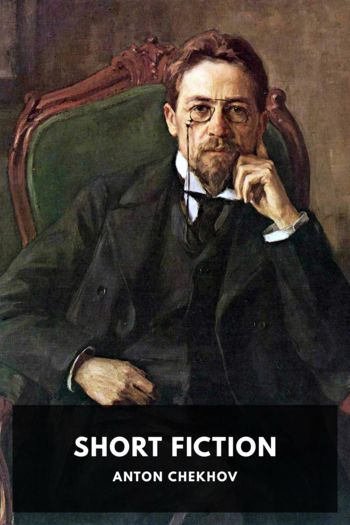
Description
Anton Chekhov is widely considered to be one of the greatest short story writers in history. A physician by day, he’s famously quoted as saying, “Medicine is my lawful wife, and literature is my mistress.” Chekhov wrote nearly 300 short stories in his long writing career; while at first he wrote mainly to make a profit, as his interest in writing—and his skill—grew, he wrote stories that heavily influenced the modern development of the form.
His stories are famous for, among other things, their ambiguous morality and their often inconclusive nature. Chekhov was a firm believer that the role of the artist was to correctly pose a question, but not necessarily to answer it.
This collection contains all of his short stories and two novellas, all translated by Constance Garnett, and arranged by the date they were originally published.
Read free book «Short Fiction by Anton Chekhov (libby ebook reader .txt) 📕» - read online or download for free at americanlibrarybooks.com
- Author: Anton Chekhov
Read book online «Short Fiction by Anton Chekhov (libby ebook reader .txt) 📕». Author - Anton Chekhov
“It’s you!” he said, smiling. “That’s nice.”
“Yes, I’ve come, as you see,” said Pyotr Mihalitch, brushing the rain off himself with both hands.
“Well, that’s capital! I’m very glad,” said Vlassitch, but he did not hold out his hand: evidently he did not venture, but waited for Pyotr Mihalitch to hold out his. “It will do the oats good,” he said, looking at the sky.
“Yes.”
They went into the house in silence. To the right of the hall was a door leading to another hall and then to the drawing room, and on the left was a little room which in winter was used by the steward. Pyotr Mihalitch and Vlassitch went into this little room.
“Where were you caught in the rain?”
“Not far off, quite close to the house.”
Pyotr Mihalitch sat down on the bed. He was glad of the noise of the rain and the darkness of the room. It was better: it made it less dreadful, and there was no need to see his companion’s face. There was no anger in his heart now, nothing but fear and vexation with himself. He felt he had made a bad beginning, and that nothing would come of this visit.
Both were silent for some time and affected to be listening to the rain.
“Thank you, Petrusha,” Vlassitch began, clearing his throat. “I am very grateful to you for coming. It’s generous and noble of you. I understand it, and, believe me, I appreciate it. Believe me.”
He looked out of the window and went on, standing in the middle of the room:
“Everything happened so secretly, as though we were concealing it all from you. The feeling that you might be wounded and angry has been a blot on our happiness all these days. But let me justify myself. We kept it secret not because we did not trust you. To begin with, it all happened suddenly, by a kind of inspiration; there was no time to discuss it. Besides, it’s such a private, delicate matter, and it was awkward to bring a third person in, even someone as intimate as you. Above all, in all this we reckoned on your generosity. You are a very noble and generous person. I am infinitely grateful to you. If you ever need my life, come and take it.”
Vlassitch talked in a quiet, hollow bass, always on the same droning note; he was evidently agitated. Pyotr Mihalitch felt it was his turn to speak, and that to listen and keep silent would really mean playing the part of a generous and noble simpleton, and that had not been his idea in coming. He got up quickly and said, breathlessly in an undertone:
“Listen, Grigory. You know I liked you and could have desired no better husband for my sister; but what has happened is awful! It’s terrible to think of it!”
“Why is it terrible?” asked Vlassitch, with a quiver in his voice. “It would be terrible if we had done wrong, but that isn’t so.”
“Listen, Grigory. You know I have no prejudices; but, excuse my frankness, to my mind you have both acted selfishly. Of course, I shan’t say so to my sister—it will distress her; but you ought to know: mother is miserable beyond all description.”
“Yes, that’s sad,” sighed Vlassitch. “We foresaw that, Petrusha, but what could we have done? Because one’s actions hurt other people, it doesn’t prove that they are wrong. What’s to be done! Every important step one takes is bound to distress somebody. If you went to fight for freedom, that would distress your mother, too. What’s to be done! Anyone who puts the peace of his family before everything has to renounce the life of ideas completely.”
There was a vivid flash of lightning at the window, and the lightning seemed to change the course of Vlassitch’s thoughts. He sat down beside Pyotr Mihalitch and began saying what was utterly beside the point.
“I have such a reverence for your sister, Petrusha,” he said. “When I used to come and see you, I felt as though I were going to a holy shrine, and I really did worship Zina. Now my reverence for her grows every day. For me she is something higher than a wife—yes, higher!” Vlassitch waved his hands. “She is my holy of holies. Since she is living with me, I enter my house as though it were a temple. She is an extraordinary, rare, most noble woman!”
“Well, he’s off now!” thought Pyotr Mihalitch; he disliked the word “woman.”
“Why shouldn’t you be married properly?” he asked. “How much does your wife want for a divorce?”
“Seventy-five thousand.”
“It’s rather a lot. But if we were to negotiate with her?”
“She won’t take a farthing less. She is an awful woman, brother,” sighed Vlassitch. “I’ve never talked to you about her before—it was unpleasant to think of her; but now that the subject has come up, I’ll tell you about her. I married her on the impulse of the moment—a fine, honourable impulse. An officer in command of a battalion of our regiment—if you care to hear the details—had an affair with a girl of eighteen; that is, to put it plainly, he seduced her, lived with her for two months, and abandoned her. She was in an awful position, brother. She was ashamed to go home to her parents; besides, they wouldn’t have received her. Her lover had abandoned her; there was nothing left for her but to go to the barracks and sell herself. The other officers in the regiment were indignant. They were by no means saints themselves, but the baseness of it was so striking. Besides, no one in the regiment could endure the man. And to spite him, you understand, the indignant lieutenants and ensigns began getting up a subscription for the unfortunate girl. And when we subalterns met together and began to subscribe five or ten





Comments (0)