Short Fiction by Anton Chekhov (libby ebook reader .txt) 📕
Description
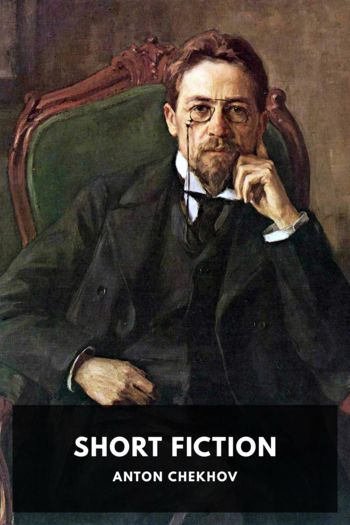
Anton Chekhov is widely considered to be one of the greatest short story writers in history. A physician by day, he’s famously quoted as saying, “Medicine is my lawful wife, and literature is my mistress.” Chekhov wrote nearly 300 short stories in his long writing career; while at first he wrote mainly to make a profit, as his interest in writing—and his skill—grew, he wrote stories that heavily influenced the modern development of the form.
His stories are famous for, among other things, their ambiguous morality and their often inconclusive nature. Chekhov was a firm believer that the role of the artist was to correctly pose a question, but not necessarily to answer it.
This collection contains all of his short stories and two novellas, all translated by Constance Garnett, and arranged by the date they were originally published.
Read free book «Short Fiction by Anton Chekhov (libby ebook reader .txt) 📕» - read online or download for free at americanlibrarybooks.com
- Author: Anton Chekhov
Read book online «Short Fiction by Anton Chekhov (libby ebook reader .txt) 📕». Author - Anton Chekhov
“That’s an actual fact,” said Vlassitch, and he looked with wide-open eyes at Pyotr Mihalitch. “Sometime in the forties this place was let to a Frenchman called Olivier. The portrait of his daughter is lying in an attic now—a very pretty girl. This Olivier, so my father told me, despised Russians for their ignorance and treated them with cruel derision. Thus, for instance, he insisted on the priest walking without his hat for half a mile round his house, and on the church bells being rung when the Olivier family drove through the village. The serfs and altogether the humble of this world, of course, he treated with even less ceremony. Once there came along this road one of the simple-hearted sons of wandering Russia, somewhat after the style of Gogol’s divinity student, Homa Brut. He asked for a night’s lodging, pleased the bailiffs, and was given a job at the office of the estate. There are many variations of the story. Some say the divinity student stirred up the peasants, others that Olivier’s daughter fell in love with him. I don’t know which is true, only one fine evening Olivier called him in here and cross-examined him, then ordered him to be beaten. Do you know, he sat here at this table drinking claret while the stable-boys beat the man. He must have tried to wring something out of him. Towards morning the divinity student died of the torture and his body was hidden. They say it was thrown into Koltovitch’s pond. There was an inquiry, but the Frenchman paid some thousands to someone in authority and went away to Alsace. His lease was up just then, and so the matter ended.”
“What scoundrels!” said Zina, shuddering.
“My father remembered Olivier and his daughter well. He used to say she was remarkably beautiful and eccentric. I imagine the divinity student had done both—stirred up the peasants and won the daughter’s heart. Perhaps he wasn’t a divinity student at all, but someone travelling incognito.”
Zina grew thoughtful; the story of the divinity student and the beautiful French girl had evidently carried her imagination far away. It seemed to Pyotr Mihalitch that she had not changed in the least during the last week, except that she was a little paler. She looked calm and just as usual, as though she had come with her brother to visit Vlassitch. But Pyotr Mihalitch felt that some change had taken place in himself. Before, when she was living at home, he could have spoken to her about anything, and now he did not feel equal to asking her the simple question, “How do you like being here?” The question seemed awkward and unnecessary. Probably the same change had taken place in her. She was in no haste to turn the conversation to her mother, to her home, to her relations with Vlassitch; she did not defend herself, she did not say that free unions are better than marriages in the church; she was not agitated, and calmly brooded over the story of Olivier. … And why had they suddenly begun talking of Olivier?
“You are both of you wet with the rain,” said Zina, and she smiled joyfully; she was touched by this point of resemblance between her brother and Vlassitch.
And Pyotr Mihalitch felt all the bitterness and horror of his position. He thought of his deserted home, the closed piano, and Zina’s bright little room into which no one went now; he thought there were no prints of little feet on the garden-paths, and that before tea no one went off, laughing gaily, to bathe. What he had clung to more and more from his childhood upwards, what he had loved thinking about when he used to sit in the stuffy classroom or the lecture theatre—brightness, purity, and joy, everything that filled the house with life and light, had gone never to return, had vanished, and was mixed up with a coarse, clumsy story of some battalion officer, a chivalrous lieutenant, a depraved woman and a grandfather who had shot himself. … And to begin to talk about his mother or to think that the past could ever return would mean not understanding what was clear.
Pyotr Mihalitch’s eyes filled with tears and his hand began to tremble as it lay on the table. Zina guessed what he was thinking about, and her eyes, too, glistened and looked red.
“Grigory, come here,” she said to Vlassitch.
They walked away to the window and began talking of something in a whisper. From the way that Vlassitch stooped down to her and the way she looked at him, Pyotr Mihalitch realised again that everything was irreparably over, and that it was no use to talk of anything. Zina went out of the room.
“Well, brother!” Vlassitch began, after a brief silence, rubbing his hands and smiling. “I called our life happiness just now, but that was, so to speak, poetical license. In reality, there has not been a sense of happiness so far. Zina has been thinking all the time of you, of her mother, and has been worrying; looking at her, I, too, felt worried. Hers is a bold, free nature, but, you know, it’s difficult when you’re not used to it, and she is young, too. The servants call her ‘Miss’; it seems a trifle, but it upsets her. There it is, brother.”
Zina brought in a plateful of strawberries. She was followed by a little maidservant, looking crushed and humble, who set a jug of milk on the table and made a very low bow: she had something about her that was in keeping with the old furniture, something petrified and dreary.
The sound of the rain had ceased. Pyotr Mihalitch ate strawberries while Vlassitch and Zina looked at him in silence. The moment of the inevitable but useless conversation was approaching, and all three felt the burden of it. Pyotr Mihalitch’s eyes filled with tears again; he pushed away his plate and said




Comments (0)