Short Fiction by Anton Chekhov (libby ebook reader .txt) 📕
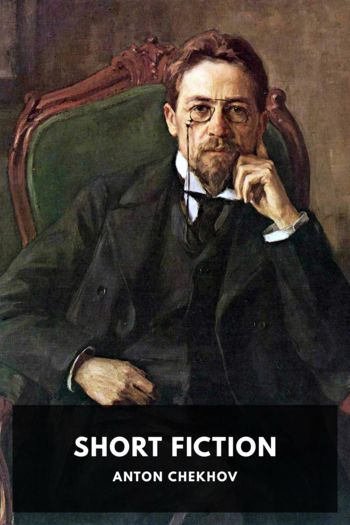
Description
Anton Chekhov is widely considered to be one of the greatest short story writers in history. A physician by day, he’s famously quoted as saying, “Medicine is my lawful wife, and literature is my mistress.” Chekhov wrote nearly 300 short stories in his long writing career; while at first he wrote mainly to make a profit, as his interest in writing—and his skill—grew, he wrote stories that heavily influenced the modern development of the form.
His stories are famous for, among other things, their ambiguous morality and their often inconclusive nature. Chekhov was a firm believer that the role of the artist was to correctly pose a question, but not necessarily to answer it.
This collection contains all of his short stories and two novellas, all translated by Constance Garnett, and arranged by the date they were originally published.
Read free book «Short Fiction by Anton Chekhov (libby ebook reader .txt) 📕» - read online or download for free at americanlibrarybooks.com
- Author: Anton Chekhov
Read book online «Short Fiction by Anton Chekhov (libby ebook reader .txt) 📕». Author - Anton Chekhov
Pyotr Mihalitch listened to Vlassitch and wondered in perplexity what it was in this man that had so charmed his sister. He was not young—he was forty-one—lean and lanky, narrow-chested, with a long nose, and grey hairs in his beard. He talked in a droning voice, had a sickly smile, and waved his hands awkwardly as he talked. He had neither health, nor pleasant, manly manners, nor savoir-faire, nor gaiety, and in all his exterior there was something colourless and indefinite. He dressed without taste, his surroundings were depressing, he did not care for poetry or painting because “they have no answer to give to the questions of the day”—that is, he did not understand them; music did not touch him. He was a poor farmer.
His estate was in a wretched condition and was mortgaged; he was paying twelve percent on the second mortgage and owed ten thousand on personal securities as well. When the time came to pay the interest on the mortgage or to send money to his wife, he asked everyone to lend him money with as much agitation as though his house were on fire, and, at the same time losing his head, he would sell the whole of his winter store of fuel for five roubles and a stack of straw for three roubles, and then have his garden fence or old cucumber-frames chopped up to heat his stoves. His meadows were ruined by pigs, the peasants’ cattle strayed in the undergrowth in his woods, and every year the old trees were fewer and fewer: beehives and rusty pails lay about in his garden and kitchen-garden. He had neither talents nor abilities, nor even ordinary capacity for living like other people. In practical life he was a weak, naive man, easy to deceive and to cheat, and the peasants with good reason called him “simple.”
He was a Liberal, and in the district was regarded as a “Red,” but even his progressiveness was a bore. There was no originality nor moving power about his independent views: he was revolted, indignant, and delighted always on the same note; it was always spiritless and ineffective. Even in moments of strong enthusiasm he never raised his head or stood upright. But the most tiresome thing of all was that he managed to express even his best and finest ideas so that they seemed in him commonplace and out of date. It reminded one of something old one had read long ago, when slowly and with an air of profundity he would begin discoursing of his noble, lofty moments, of his best years; or when he went into raptures over the younger generation, which has always been, and still is, in advance of society; or abused Russians for donning their dressing-gowns at thirty and forgetting the principles of their alma mater. If you stayed the night with him, he would put Pissarev or Darwin on your bedroom table; if you said you had read it, he would go and bring Dobrolubov.
In the district this was called freethinking, and many people looked upon this freethinking as an innocent and harmless eccentricity; it made him profoundly unhappy, however. It was for him the maggot of which he had just been speaking; it had fastened upon him and was sucking his lifeblood. In his past there had been the strange marriage in the style of Dostoevsky; long letters and copies written in a bad, unintelligible handwriting, but with great feeling, endless misunderstandings, explanations, disappointments, then debts, a second mortgage, the allowance to his wife, the



Comments (0)