Short Fiction by Anton Chekhov (libby ebook reader .txt) 📕
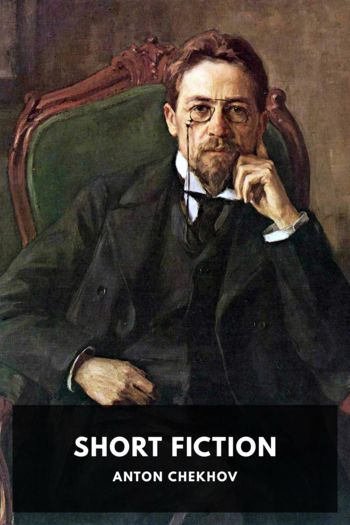
Description
Anton Chekhov is widely considered to be one of the greatest short story writers in history. A physician by day, he’s famously quoted as saying, “Medicine is my lawful wife, and literature is my mistress.” Chekhov wrote nearly 300 short stories in his long writing career; while at first he wrote mainly to make a profit, as his interest in writing—and his skill—grew, he wrote stories that heavily influenced the modern development of the form.
His stories are famous for, among other things, their ambiguous morality and their often inconclusive nature. Chekhov was a firm believer that the role of the artist was to correctly pose a question, but not necessarily to answer it.
This collection contains all of his short stories and two novellas, all translated by Constance Garnett, and arranged by the date they were originally published.
Read free book «Short Fiction by Anton Chekhov (libby ebook reader .txt) 📕» - read online or download for free at americanlibrarybooks.com
- Author: Anton Chekhov
Read book online «Short Fiction by Anton Chekhov (libby ebook reader .txt) 📕». Author - Anton Chekhov
“What is it? What is it?”
“This has come …” said her son, giving her the letter.
Zina’s name, and even the pronoun “she” was not uttered in the house. Zina was spoken of impersonally: “this has come,” “Gone away,” and so on. … The mother recognised her daughter’s handwriting, and her face grew ugly and unpleasant, and her grey hair escaped again from her cap.
“No!” she said, with a motion of her hands, as though the letter scorched her fingers. “No, no, never! Nothing would induce me!”
The mother broke into hysterical sobs of grief and shame; she evidently longed to read the letter, but her pride prevented her. Pyotr Mihalitch realised that he ought to open the letter himself and read it aloud, but he was overcome by anger such as he had never felt before; he ran out into the yard and shouted to the messenger:
“Say there will be no answer! There will be no answer! Tell them that, you beast!”
And he tore up the letter; then tears came into his eyes, and feeling that he was cruel, miserable, and to blame, he went out into the fields.
He was only twenty-seven, but he was already stout. He dressed like an old man in loose, roomy clothes, and suffered from asthma. He already seemed to be developing the characteristics of an elderly country bachelor. He never fell in love, never thought of marriage, and loved no one but his mother, his sister, his old nurse, and the gardener, Vassilitch. He was fond of good fare, of his nap after dinner, and of talking about politics and exalted subjects. He had in his day taken his degree at the university, but he now looked upon his studies as though in them he had discharged a duty incumbent upon young men between the ages of eighteen and twenty-five; at any rate, the ideas which now strayed every day through his mind had nothing in common with the university or the subjects he had studied there.
In the fields it was hot and still, as though rain were coming. It was steaming in the wood, and there was a heavy fragrant scent from the pines and rotting leaves. Pyotr Mihalitch stopped several times and wiped his wet brow. He looked at his winter corn and his spring oats, walked round the clover-field, and twice drove away a partridge with its chicks which had strayed in from the wood. And all the while he was thinking that this insufferable state of things could not go on forever, and that he must end it one way or another. End it stupidly, madly, but he must end it.
“But how? What can I do?” he asked himself, and looked imploringly at the sky and at the trees, as though begging for their help.
But the sky and the trees were mute. His noble ideas were no help, and his common sense whispered that the agonising question could have no solution but a stupid one, and that today’s scene with the messenger was not the last one of its kind. It was terrible to think what was in store for him!
As he returned home the sun was setting. By now it seemed to him that the problem was incapable of solution. He could not accept the accomplished fact, and he could not refuse to accept it, and there was no intermediate course. When, taking off his hat and fanning himself with his handkerchief, he was walking along the road, and had only another mile and a half to go before he would reach home, he heard bells behind him. It was a very choice and successful combination of bells, which gave a clear crystal note. No one had such bells on his horses but the police captain, Medovsky, formerly an officer in the hussars, a man in broken-down health, who had been a great rake and spendthrift, and was a distant relation of Pyotr Mihalitch. He was like one of the family at the Ivashins’ and had a tender, fatherly affection for Zina, as well as a great admiration for her.
“I was coming to see you,” he said, overtaking Pyotr Mihalitch. “Get in; I’ll give you a lift.”
He was smiling and looked cheerful. Evidently he did not yet know that Zina had gone to live with Vlassitch; perhaps he had been told of it already, but did not believe it. Pyotr Mihalitch felt in a difficult position.
“You are very welcome,” he muttered, blushing till the tears came into his eyes, and not knowing how to lie or what to say. “I am delighted,” he went on, trying to smile, “but … Zina is away and mother is ill.”
“How annoying!” said the police captain, looking pensively at Pyotr Mihalitch. “And I was meaning to spend the evening with you. Where has Zinaida Mihalovna gone?”
“To the Sinitskys’, and I believe she meant to go from there to the monastery. I don’t quite know.”
The police captain talked a little longer and then turned back. Pyotr Mihalitch walked home, and thought with horror what the police captain’s feelings would be when he learned the truth. And Pyotr Mihalitch imagined his feelings, and actually experiencing them himself, went into the house.
“Lord help us,” he thought, “Lord help us!”
At evening tea the only one at the table was his aunt. As usual, her face wore the expression that seemed to say that though she was a weak, defenceless woman, she would allow no one to insult her. Pyotr Mihalitch sat down at the other end of the table (he did not like his aunt) and began drinking tea in silence.
“Your mother has had no dinner again today,” said his aunt. “You ought to do something about it, Petrusha. Starving oneself is no help in sorrow.”
It struck Pyotr Mihalitch as absurd that his aunt should meddle in other people’s business and should make her departure depend on Zina’s having gone away.



Comments (0)