Short Fiction by Anton Chekhov (libby ebook reader .txt) 📕
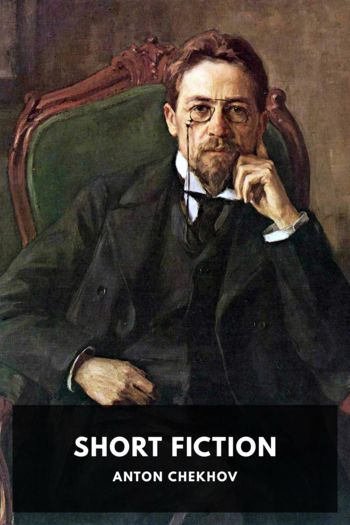
Description
Anton Chekhov is widely considered to be one of the greatest short story writers in history. A physician by day, he’s famously quoted as saying, “Medicine is my lawful wife, and literature is my mistress.” Chekhov wrote nearly 300 short stories in his long writing career; while at first he wrote mainly to make a profit, as his interest in writing—and his skill—grew, he wrote stories that heavily influenced the modern development of the form.
His stories are famous for, among other things, their ambiguous morality and their often inconclusive nature. Chekhov was a firm believer that the role of the artist was to correctly pose a question, but not necessarily to answer it.
This collection contains all of his short stories and two novellas, all translated by Constance Garnett, and arranged by the date they were originally published.
Read free book «Short Fiction by Anton Chekhov (libby ebook reader .txt) 📕» - read online or download for free at americanlibrarybooks.com
- Author: Anton Chekhov
Read book online «Short Fiction by Anton Chekhov (libby ebook reader .txt) 📕». Author - Anton Chekhov
On a spring evening towards the end of March, when there was no snow left on the ground and the starlings were singing in the hospital garden, the doctor went out to see his friend the postmaster as far as the gate. At that very moment the Jew Moiseika, returning with his booty, came into the yard. He had no cap on, and his bare feet were thrust into goloshes; in his hand he had a little bag of coppers.
“Give me a kopeck!” he said to the doctor, smiling, and shivering with cold. Andrey Yefimitch, who could never refuse anyone anything, gave him a ten-kopeck piece.
“How bad that is!” he thought, looking at the Jew’s bare feet with their thin red ankles. “Why, it’s wet.”
And stirred by a feeling akin both to pity and disgust, he went into the lodge behind the Jew, looking now at his bald head, now at his ankles. As the doctor went in, Nikita jumped up from his heap of litter and stood at attention.
“Good day, Nikita,” Andrey Yefimitch said mildly. “That Jew should be provided with boots or something, he will catch cold.”
“Certainly, your honour. I’ll inform the superintendent.”
“Please do; ask him in my name. Tell him that I asked.”
The door into the ward was open. Ivan Dmitritch, lying propped on his elbow on the bed, listened in alarm to the unfamiliar voice, and suddenly recognized the doctor. He trembled all over with anger, jumped up, and with a red and wrathful face, with his eyes starting out of his head, ran out into the middle of the road.
“The doctor has come!” he shouted, and broke into a laugh. “At last! Gentlemen, I congratulate you. The doctor is honouring us with a visit! Cursed reptile!” he shrieked, and stamped in a frenzy such as had never been seen in the ward before. “Kill the reptile! No, killing’s too good. Drown him in the midden-pit!”
Andrey Yefimitch, hearing this, looked into the ward from the entry and asked gently: “What for?”
“What for?” shouted Ivan Dmitritch, going up to him with a menacing air and convulsively wrapping himself in his dressing-gown. “What for? Thief!” he said with a look of repulsion, moving his lips as though he would spit at him. “Quack! hangman!”
“Calm yourself,” said Andrey Yefimitch, smiling guiltily. “I assure you I have never stolen anything; and as to the rest, most likely you greatly exaggerate. I see you are angry with me. Calm yourself, I beg, if you can, and tell me coolly what are you angry for?”
“What are you keeping me here for?”
“Because you are ill.”
“Yes, I am ill. But you know dozens, hundreds of madmen are walking about in freedom because your ignorance is incapable of distinguishing them from the sane. Why am I and these poor wretches to be shut up here like scapegoats for all the rest? You, your assistant, the superintendent, and all your hospital rabble, are immeasurably inferior to every one of us morally; why then are we shut up and you not? Where’s the logic of it?”
“Morality and logic don’t come in, it all depends on chance. If anyone is shut up he has to stay, and if anyone is not shut up he can walk about, that’s all. There is neither morality nor logic in my being a doctor and your being a mental patient, there is nothing but idle chance.”
“That twaddle I don’t understand …” Ivan Dmitritch brought out in a hollow voice, and he sat down on his bed.
Moiseika, whom Nikita did not venture to search in the presence of the doctor, laid out on his bed pieces of bread, bits of paper, and little bones, and, still shivering with cold, began rapidly in a singsong voice saying something in Yiddish. He most likely imagined that he had opened a shop.
“Let me out,” said Ivan Dmitritch, and his voice quivered.
“I cannot.”
“But why, why?”
“Because it is not in my power. Think, what use will it be to you if I do let you out? Go. The townspeople or the police will detain you or bring you back.”
“Yes, yes, that’s true,” said Ivan Dmitritch, and he rubbed his forehead. “It’s awful! But what am I to do, what?”
Andrey Yefimitch liked Ivan Dmitritch’s voice and his intelligent young face with its grimaces. He longed to be kind to the young man and soothe him; he sat down on the bed beside him, thought, and said:
“You ask me what to do. The very best thing in your position would be to run away. But, unhappily, that is useless. You would be taken up. When society protects itself from the criminal, mentally deranged, or otherwise inconvenient people, it is invincible. There is only one thing left for you: to resign yourself to the thought that your presence here is inevitable.”
“It is no use to anyone.”
“So long as prisons and madhouses exist someone must be shut up in them. If not you, I. If not I, some third person. Wait till in the distant future prisons and madhouses no longer exist, and there will be neither bars on the windows nor hospital gowns. Of course, that time will come sooner or later.”
Ivan Dmitritch smiled ironically.
“You are jesting,” he said, screwing up his eyes. “Such gentlemen as you and your assistant Nikita have nothing to do with the future, but you may be sure, sir, better days will come! I may express myself cheaply, you may laugh, but the dawn of a new life is at hand; truth and justice will triumph, and—our turn will come! I shall not live to see it, I shall perish, but some people’s great-grandsons will see it. I greet them with all my heart and rejoice, rejoice with them! Onward!



Comments (0)