Short Fiction by Anton Chekhov (libby ebook reader .txt) 📕
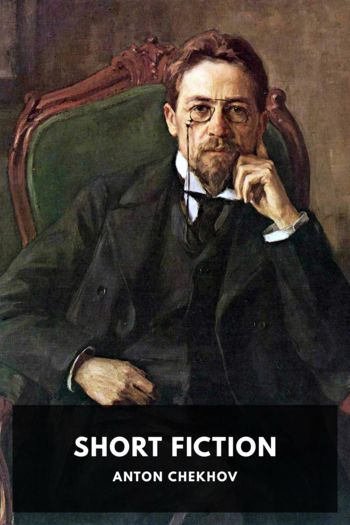
Description
Anton Chekhov is widely considered to be one of the greatest short story writers in history. A physician by day, he’s famously quoted as saying, “Medicine is my lawful wife, and literature is my mistress.” Chekhov wrote nearly 300 short stories in his long writing career; while at first he wrote mainly to make a profit, as his interest in writing—and his skill—grew, he wrote stories that heavily influenced the modern development of the form.
His stories are famous for, among other things, their ambiguous morality and their often inconclusive nature. Chekhov was a firm believer that the role of the artist was to correctly pose a question, but not necessarily to answer it.
This collection contains all of his short stories and two novellas, all translated by Constance Garnett, and arranged by the date they were originally published.
Read free book «Short Fiction by Anton Chekhov (libby ebook reader .txt) 📕» - read online or download for free at americanlibrarybooks.com
- Author: Anton Chekhov
Read book online «Short Fiction by Anton Chekhov (libby ebook reader .txt) 📕». Author - Anton Chekhov
“I meant to say something important, but I have lost it,” he said. “What was I saying? Oh, yes! This is what I mean: one of the Stoics sold himself into slavery to redeem his neighbour, so, you see, even a Stoic did react to stimulus, since, for such a generous act as the destruction of oneself for the sake of one’s neighbour, he must have had a soul capable of pity and indignation. Here in prison I have forgotten everything I have learned, or else I could have recalled something else. Take Christ, for instance: Christ responded to reality by weeping, smiling, being sorrowful and moved to wrath, even overcome by misery. He did not go to meet His sufferings with a smile, He did not despise death, but prayed in the Garden of Gethsemane that this cup might pass Him by.”
Ivan Dmitritch laughed and sat down.
“Granted that a man’s peace and contentment lie not outside but in himself,” he said, “granted that one must despise suffering and not be surprised at anything, yet on what ground do you preach the theory? Are you a sage? A philosopher?”
“No, I am not a philosopher, but everyone ought to preach it because it is reasonable.”
“No, I want to know how it is that you consider yourself competent to judge of ‘comprehension,’ contempt for suffering, and so on. Have you ever suffered? Have you any idea of suffering? Allow me to ask you, were you ever thrashed in your childhood?”
“No, my parents had an aversion for corporal punishment.”
“My father used to flog me cruelly; my father was a harsh, sickly government clerk with a long nose and a yellow neck. But let us talk of you. No one has laid a finger on you all your life, no one has scared you nor beaten you; you are as strong as a bull. You grew up under your father’s wing and studied at his expense, and then you dropped at once into a sinecure. For more than twenty years you have lived rent free with heating, lighting, and service all provided, and had the right to work how you pleased and as much as you pleased, even to do nothing. You were naturally a flabby, lazy man, and so you have tried to arrange your life so that nothing should disturb you or make you move. You have handed over your work to the assistant and the rest of the rabble while you sit in peace and warmth, save money, read, amuse yourself with reflections, with all sorts of lofty nonsense, and” (Ivan Dmitritch looked at the doctor’s red nose) “with boozing; in fact, you have seen nothing of life, you know absolutely nothing of it, and are only theoretically acquainted with reality; you despise suffering and are surprised at nothing for a very simple reason: vanity of vanities, the external and the internal, contempt for life, for suffering and for death, comprehension, true happiness—that’s the philosophy that suits the Russian sluggard best. You see a peasant beating his wife, for instance. Why interfere? Let him beat her, they will both die sooner or later, anyway; and, besides, he who beats injures by his blows, not the person he is beating, but himself. To get drunk is stupid and unseemly, but if you drink you die, and if you don’t drink you die. A peasant woman comes with toothache … well, what of it? Pain is the idea of pain, and besides ‘there is no living in this world without illness; we shall all die, and so, go away, woman, don’t hinder me from thinking and drinking vodka.’ A young man asks advice, what he is to do, how he is to live; anyone else would think before answering, but you have got the answer ready: strive for ‘comprehension’ or for true happiness. And what is that fantastic ‘true happiness’? There’s no answer, of course. We are kept here behind barred windows, tortured, left to rot; but that is very good and reasonable, because there is no difference at all between this ward and a warm, snug study. A convenient philosophy. You can do nothing, and your conscience is clear, and you feel you are wise. … No, sir, it is not philosophy, it’s not thinking, it’s not breadth of vision, but laziness, fakirism, drowsy stupefaction. Yes,” cried Ivan Dmitritch, getting angry again, “you despise suffering, but I’ll be bound if you pinch your finger in the door you will howl at the top of your voice.”
“And perhaps I shouldn’t howl,” said Andrey Yefimitch, with a gentle smile.
“Oh, I dare say! Well, if you had a stroke of paralysis, or supposing some fool or bully took advantage of his position and rank to insult you in public, and if you knew he could do it with impunity, then you would understand what it means to put people off with comprehension and true happiness.”
“That’s original,” said Andrey Yefimitch, laughing with pleasure and rubbing his hands. “I am agreeably struck by your inclination for drawing generalizations, and the sketch of my character you have just drawn is simply brilliant. I must confess that talking to you gives me great pleasure. Well, I’ve listened to you, and now you must graciously listen to me.”
XIThe conversation went on for about an hour longer, and apparently made a deep impression on Andrey Yefimitch. He began going to the ward every day. He went there in the mornings and after dinner, and often the dusk of evening found him in conversation with Ivan Dmitritch. At first Ivan Dmitritch held aloof from him, suspected him of evil designs, and openly expressed his hostility. But afterwards he got used to him, and his abrupt manner changed to one of condescending irony.
Soon it was all over the hospital that the doctor, Andrey Yefimitch, had taken to visiting Ward No. 6. No one—neither Sergey Sergevitch, nor Nikita, nor the nurses—could conceive why he went there, why





Comments (0)