Short Fiction by Anton Chekhov (libby ebook reader .txt) 📕
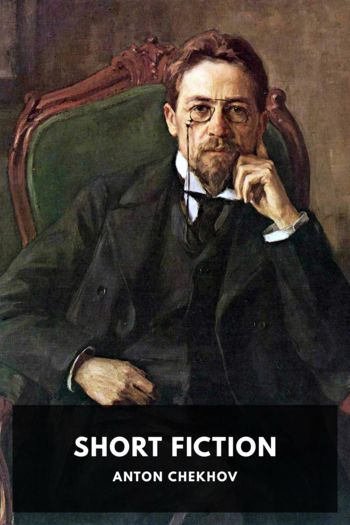
Description
Anton Chekhov is widely considered to be one of the greatest short story writers in history. A physician by day, he’s famously quoted as saying, “Medicine is my lawful wife, and literature is my mistress.” Chekhov wrote nearly 300 short stories in his long writing career; while at first he wrote mainly to make a profit, as his interest in writing—and his skill—grew, he wrote stories that heavily influenced the modern development of the form.
His stories are famous for, among other things, their ambiguous morality and their often inconclusive nature. Chekhov was a firm believer that the role of the artist was to correctly pose a question, but not necessarily to answer it.
This collection contains all of his short stories and two novellas, all translated by Constance Garnett, and arranged by the date they were originally published.
Read free book «Short Fiction by Anton Chekhov (libby ebook reader .txt) 📕» - read online or download for free at americanlibrarybooks.com
- Author: Anton Chekhov
Read book online «Short Fiction by Anton Chekhov (libby ebook reader .txt) 📕». Author - Anton Chekhov
“Doctors talk nonsense,” said the accountant. They all laughed. “Don’t you believe them,” he went on, flattered by the laughing; “last year a tooth flew out of a cylinder and hit old Kalmykov such a crack on the head that you could see his brains, and the doctor said he would die; but he is alive and working to this day, only he has taken to stammering since that mishap.”
“Doctors do talk nonsense, they do, but not so much,” sighed Auntie. “Pyotr Andreyitch, poor dear, lost his sight. Just like you, he used to work day in day out at the factory near the hot furnace, and he went blind. The eyes don’t like heat. But what are we talking about?” she said, rousing herself. “Come and have a drink. My best wishes for Christmas, my dears. I never drink with anyone else, but I drink with you, sinful woman as I am. Please God!”
Anna Akimovna fancied that after yesterday Pimenov despised her as a philanthropist, but was fascinated by her as a woman. She looked at him and thought that he behaved very charmingly and was nicely dressed. It is true that the sleeves of his coat were not quite long enough, and the coat itself seemed short-waisted, and his trousers were not wide and fashionable, but his tie was tied carelessly and with taste and was not as gaudy as the others’. And he seemed to be a good-natured man, for he ate submissively whatever Auntie put on his plate. She remembered how black he had been the day before, and how sleepy, and the thought of it for some reason touched her.
When the men were preparing to go, Anna Akimovna put out her hand to Pimenov. She wanted to ask him to come in sometimes to see her, without ceremony, but she did not know how to—her tongue would not obey her; and that they might not think she was attracted by Pimenov, she shook hands with his companions, too.
Then the boys from the school of which she was a patroness came. They all had their heads closely cropped and all wore grey blouses of the same pattern. The teacher—a tall, beardless young man with patches of red on his face—was visibly agitated as he formed the boys into rows; the boys sang in tune, but with harsh, disagreeable voices. The manager of the factory, Nazaritch, a bald, sharp-eyed Old Believer, could never get on with the teachers, but the one who was now anxiously waving his hands he despised and hated, though he could not have said why. He behaved rudely and condescendingly to the young man, kept back his salary, meddled with the teaching, and had finally tried to dislodge him by appointing, a fortnight before Christmas, as porter to the school a drunken peasant, a distant relation of his wife’s, who disobeyed the teacher and said rude things to him before the boys.
Anna Akimovna was aware of all this, but she could be of no help, for she was afraid of Nazaritch herself. Now she wanted at least to be very nice to the schoolmaster, to tell him she was very much pleased with him; but when after the singing he began apologizing for something in great confusion, and Auntie began to address him familiarly as she drew him without ceremony to the table, she felt, for some reason, bored and awkward, and giving orders that the children should be given sweets, went upstairs.
“In reality there is something cruel in these Christmas customs,” she said a little while afterwards, as it were to herself, looking out of window at the boys, who were flocking from the house to the gates and shivering with cold, putting their coats on as they ran. “At Christmas one wants to rest, to sit at home with one’s own people, and the poor boys, the teacher, and the clerks and foremen, are obliged for some reason to go through the frost, then to offer their greetings, show their respect, be put to confusion …”
Mishenka, who was standing at the door of the drawing room and overheard this, said:
“It has not come from us, and it will not end with us. Of course, I am not an educated man, Anna Akimovna, but I do understand that the poor must always respect the rich. It is well said, ‘God marks the rogue.’ In prisons, night refuges, and pothouses you never see any but the poor, while decent people, you may notice, are always rich. It has been said of the rich, ‘Deep calls to deep.’ ”
“You always express yourself so tediously and incomprehensibly,” said Anna Akimovna, and she walked to the other end of the big drawing room.
It was only just past eleven. The stillness of the big room, only broken by the singing that floated up from below, made her yawn. The bronzes, the albums, and the pictures on the walls, representing a ship at sea, cows in a meadow, and views of the Rhine, were so absolutely stale that her eyes simply glided over them without observing them. The holiday mood was already growing tedious. As before, Anna Akimovna felt that she was beautiful, good-natured, and wonderful, but now it seemed to her that that was of no use to anyone; it seemed to her that she did not know for whom and for what she had put on this expensive dress, too, and, as always happened on all holidays, she began to be fretted by loneliness and the persistent thought that her beauty, her health, and her wealth, were a mere cheat, since she was not wanted, was of no use to anyone, and nobody loved her. She walked through all the rooms, humming and looking out of window; stopping in the drawing room, she could not resist beginning to talk to Mishenka.
“I don’t know what you think of yourself, Misha,” she said, and heaved a sigh. “Really, God might punish you for it.”
“What do you





Comments (0)