Short Fiction by Anton Chekhov (libby ebook reader .txt) 📕
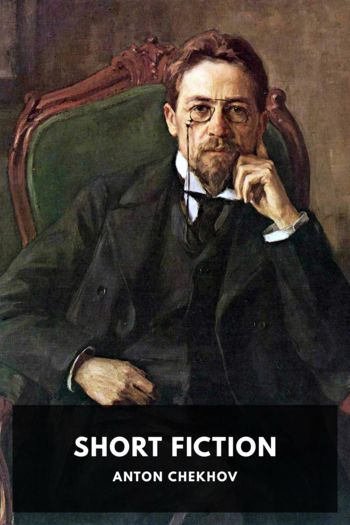
Description
Anton Chekhov is widely considered to be one of the greatest short story writers in history. A physician by day, he’s famously quoted as saying, “Medicine is my lawful wife, and literature is my mistress.” Chekhov wrote nearly 300 short stories in his long writing career; while at first he wrote mainly to make a profit, as his interest in writing—and his skill—grew, he wrote stories that heavily influenced the modern development of the form.
His stories are famous for, among other things, their ambiguous morality and their often inconclusive nature. Chekhov was a firm believer that the role of the artist was to correctly pose a question, but not necessarily to answer it.
This collection contains all of his short stories and two novellas, all translated by Constance Garnett, and arranged by the date they were originally published.
Read free book «Short Fiction by Anton Chekhov (libby ebook reader .txt) 📕» - read online or download for free at americanlibrarybooks.com
- Author: Anton Chekhov
Read book online «Short Fiction by Anton Chekhov (libby ebook reader .txt) 📕». Author - Anton Chekhov
Yakov Ivanitch was ten years older than Matvey—he was a very handsome tall old man with a big grey beard almost to his waist, and bushy eyebrows which gave his face a stern, even ill-natured expression. He wore a long jerkin of good cloth or a black sheepskin coat, and altogether tried to be clean and neat in dress; he wore goloshes even in dry weather. He did not go to church, because, to his thinking, the services were not properly celebrated and because the priests drank wine at unlawful times and smoked tobacco. Every day he read and sang the service at home with Aglaia. At Vedenyapino they left out the “Praises” at early matins, and had no evening service even on great holidays, but he used to read through at home everything that was laid down for every day, without hurrying or leaving out a single line, and even in his spare time read aloud the Lives of the Saints. And in everyday life he adhered strictly to the rules of the church; thus, if wine were allowed on some day in Lent “for the sake of the vigil,” then he never failed to drink wine, even if he were not inclined.
He read, sang, burned incense and fasted, not for the sake of receiving blessings of some sort from God, but for the sake of good order. Man cannot live without religion, and religion ought to be expressed from year to year and from day to day in a certain order, so that every morning and every evening a man might turn to God with exactly those words and thoughts that were befitting that special day and hour. One must live, and, therefore, also pray as is pleasing to God, and so every day one must read and sing what is pleasing to God—that is, what is laid down in the rule of the church. Thus the first chapter of St. John must only be read on Easter Day, and “It is most meet” must not be sung from Easter to Ascension, and so on. The consciousness of this order and its importance afforded Yakov Ivanitch great gratification during his religious exercises. When he was forced to break this order by some necessity—to drive to town or to the bank, for instance his conscience was uneasy and he felt miserable.
When his cousin Matvey had returned unexpectedly from the factory and settled in the tavern as though it were his home, he had from the very first day disturbed his settled order. He refused to pray with them, had meals and drank tea at wrong times, got up late, drank milk on Wednesdays and Fridays on the pretext of weak health; almost every day he went into the prayer room while they were at prayers and cried: “Think what you are doing, brother! Repent, brother!” These words threw Yakov into a fury, while Aglaia could not refrain from beginning to scold; or at night Matvey would steal into the prayer room and say softly: “Cousin, your prayer is not pleasing to God. For it is written, First be reconciled with thy brother and then offer thy gift. You lend money at usury, you deal in vodka—repent!”
In Matvey’s words Yakov saw nothing but the usual evasions of empty-headed and careless people who talk of loving your neighbour, of being reconciled with your brother, and so on, simply to avoid praying, fasting and reading holy books, and who talk contemptuously of profit and interest simply because they don’t like working. Of course, to be poor, save nothing, and put by nothing was a great deal easier than being rich.
But yet he was troubled and could not pray as before. As soon as he went into the prayer room and opened the book he began to be afraid his cousin would come in and hinder him; and, in fact, Matvey did soon appear and cry in a trembling voice: “Think what you are doing, brother! Repent, brother!” Aglaia stormed and Yakov, too, flew into a passion and shouted: “Go out of my house!” while Matvey answered him: “The house belongs to both of us.”
Yakov would begin singing and reading again, but he could not regain his calm, and unconsciously fell to dreaming over his book. Though he regarded his cousin’s words as nonsense, yet for some reason it had of late haunted his memory that it is hard for a rich man to enter the kingdom of heaven, that the year before last he had made a very good bargain over buying a stolen horse, that one day when his wife was alive a drunkard had died of vodka in his tavern. …
He slept badly at nights now and woke easily, and he could hear that Matvey, too, was awake, and continually sighing and pining for his tile factory. And while Yakov turned over from one side to another at night he thought of the stolen horse and the drunken man, and what was said in the gospels about the camel.
It looked as though his dreaminess were coming over him again. And as ill-luck would have it, although it was the end of March, every day it kept snowing, and the forest roared as though it were winter, and there was no believing that spring would ever come. The weather disposed one to depression, and to quarrelling and to hatred and in the night, when the wind droned over the ceiling, it





Comments (0)