Short Fiction by Anton Chekhov (libby ebook reader .txt) 📕
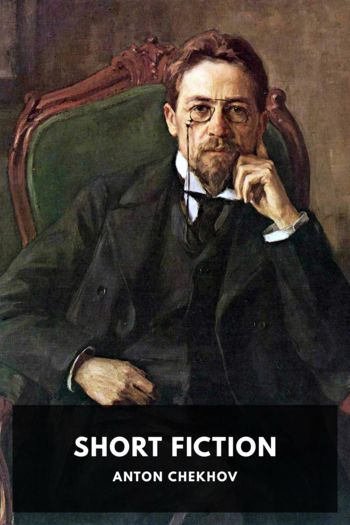
Description
Anton Chekhov is widely considered to be one of the greatest short story writers in history. A physician by day, he’s famously quoted as saying, “Medicine is my lawful wife, and literature is my mistress.” Chekhov wrote nearly 300 short stories in his long writing career; while at first he wrote mainly to make a profit, as his interest in writing—and his skill—grew, he wrote stories that heavily influenced the modern development of the form.
His stories are famous for, among other things, their ambiguous morality and their often inconclusive nature. Chekhov was a firm believer that the role of the artist was to correctly pose a question, but not necessarily to answer it.
This collection contains all of his short stories and two novellas, all translated by Constance Garnett, and arranged by the date they were originally published.
Read free book «Short Fiction by Anton Chekhov (libby ebook reader .txt) 📕» - read online or download for free at americanlibrarybooks.com
- Author: Anton Chekhov
Read book online «Short Fiction by Anton Chekhov (libby ebook reader .txt) 📕». Author - Anton Chekhov
Matvey’s story evidently made no impression whatever. Sergey Nikanoritch said nothing, but began clearing the refreshments off the counter, while the policeman began talking of how rich Matvey’s cousin was.
“He must have thirty thousand at least,” he said.
Zhukov the policeman, a sturdy, well-fed, red-haired man with a full face (his cheeks quivered when he walked), usually sat lolling and crossing his legs when not in the presence of his superiors. As he talked he swayed to and fro and whistled carelessly, while his face had a self-satisfied replete air, as though he had just had dinner. He was making money, and he always talked of it with the air of a connoisseur. He undertook jobs as an agent, and when anyone wanted to sell an estate, a horse or a carriage, they applied to him.
“Yes, it will be thirty thousand, I dare say,” Sergey Nikanoritch assented. “Your grandfather had an immense fortune,” he said, addressing Matvey. “Immense it was; all left to your father and your uncle. Your father died as a young man and your uncle got hold of it all, and afterwards, of course, Yakov Ivanitch. While you were going pilgrimages with your mama and singing tenor in the factory, they didn’t let the grass grow under their feet.”
“Fifteen thousand comes to your share,” said the policeman swaying from side to side. “The tavern belongs to you in common, so the capital is in common. Yes. If I were in your place I should have taken it into court long ago. I would have taken it into court for one thing, and while the case was going on I’d have knocked his face to a jelly.”
Yakov Ivanitch was disliked because, when anyone believes differently from others, it upsets even people who are indifferent to religion. The policeman disliked him also because he, too, sold horses and carriages.
“You don’t care about going to law with your cousin because you have plenty of money of your own,” said the waiter to Matvey, looking at him with envy. “It is all very well for anyone who has means, but here I shall die in this position, I suppose. …”
Matvey began declaring that he hadn’t any money at all, but Sergey Nikanoritch was not listening. Memories of the past and of the insults which he endured every day came showering upon him. His bald head began to perspire; he flushed and blinked.
“A cursed life!” he said with vexation, and he banged the sausage on the floor.
IIIThe story ran that the tavern had been built in the time of Alexander I, by a widow who had settled here with her son; her name was Avdotya Terehov. The dark roofed-in courtyard and the gates always kept locked excited, especially on moonlight nights, a feeling of depression and unaccountable uneasiness in people who drove by with posting-horses, as though sorcerers or robbers were living in it; and the driver always looked back after he passed, and whipped up his horses. Travellers did not care to put up here, as the people of the house were always unfriendly and charged heavily. The yard was muddy even in summer; huge fat pigs used to lie there in the mud, and the horses in which the Terehovs dealt wandered about untethered, and often it happened that they ran out of the yard and dashed along the road like mad creatures, terrifying the pilgrim women. At that time there was a great deal of traffic on the road; long trains of loaded wagons trailed by, and all sorts of adventures happened, such as, for instance, that thirty years ago some wagoners got up a quarrel with a passing merchant and killed him, and a slanting cross is standing to this day half a mile from the tavern; posting-chaises with bells and the heavy dormeuses of country gentlemen drove by; and herds of horned cattle passed bellowing and stirring up clouds of dust.
When the railway came there was at first at this place only a platform, which was called simply a halt; ten years afterwards the present station, Progonnaya, was built. The traffic on the old posting-road almost ceased, and only local landowners and peasants drove along it now, but the working people walked there in crowds in spring and autumn. The posting-inn was transformed into a restaurant; the upper storey was destroyed by fire, the roof had grown yellow with rust, the roof over the yard had fallen by degrees, but huge fat pigs, pink and revolting, still wallowed in the mud in the yard. As before, the horses sometimes ran away and, lashing their tails dashed madly along the road. In the tavern they sold tea, hay oats and flour, as well as vodka and beer, to be drunk on the premises and also to be taken away; they sold spirituous liquors warily, for they had never taken out a licence.
The Terehovs had always been distinguished by their piety, so much so that they had even been given the nickname of the “Godlies.” But perhaps because they lived apart like bears, avoided people and thought out all their ideas for themselves, they were given to dreams and to doubts and to changes of faith and almost each generation had a peculiar faith of its own. The grandmother Avdotya, who had built the inn, was an Old Believer; her son and both her grandsons (the fathers of Matvey and Yakov) went to the Orthodox church, entertained the clergy, and worshipped before the new icons as devoutly as they had done before the old. The son in old age refused to eat meat and imposed upon himself the rule of silence, considering all conversation as sin; it was the peculiarity of the grandsons that they interpreted the Scripture not simply, but sought in it a hidden meaning, declaring that every sacred word must contain a mystery.
Avdotya’s great-grandson Matvey had struggled from early childhood with





Comments (0)