Short Fiction by Anton Chekhov (libby ebook reader .txt) 📕
Description
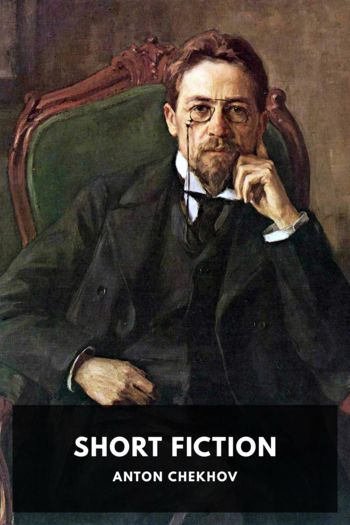
Anton Chekhov is widely considered to be one of the greatest short story writers in history. A physician by day, he’s famously quoted as saying, “Medicine is my lawful wife, and literature is my mistress.” Chekhov wrote nearly 300 short stories in his long writing career; while at first he wrote mainly to make a profit, as his interest in writing—and his skill—grew, he wrote stories that heavily influenced the modern development of the form.
His stories are famous for, among other things, their ambiguous morality and their often inconclusive nature. Chekhov was a firm believer that the role of the artist was to correctly pose a question, but not necessarily to answer it.
This collection contains all of his short stories and two novellas, all translated by Constance Garnett, and arranged by the date they were originally published.
Read free book «Short Fiction by Anton Chekhov (libby ebook reader .txt) 📕» - read online or download for free at americanlibrarybooks.com
- Author: Anton Chekhov
Read book online «Short Fiction by Anton Chekhov (libby ebook reader .txt) 📕». Author - Anton Chekhov
The waiter, Sergey Nikanoritch, had once had money of his own, and had kept a buffet at a first-class station, which was a junction, in the principal town of a province. There he had worn a swallowtail coat and a gold chain. But things had gone ill with him; he had squandered all his own money over expensive fittings and service; he had been robbed by his staff, and getting gradually into difficulties, had moved to another station less bustling. Here his wife had left him, taking with her all the silver, and he moved to a third station of a still lower class, where no hot dishes were served. Then to a fourth. Frequently changing his situation and sinking lower and lower, he had at last come to Progonnaya, and here he used to sell nothing but tea and cheap vodka, and for lunch hard-boiled eggs and dry sausages, which smelt of tar, and which he himself sarcastically said were only fit for the orchestra. He was bald all over the top of his head, and had prominent blue eyes and thick bushy whiskers, which he often combed out, looking into the little looking-glass. Memories of the past haunted him continually; he could never get used to sausage “only fit for the orchestra,” to the rudeness of the stationmaster, and to the peasants who used to haggle over the prices, and in his opinion it was as unseemly to haggle over prices in a refreshment room as in a chemist’s shop. He was ashamed of his poverty and degradation, and that shame was now the leading interest of his life.
“Spring is late this year,” said Matvey, listening. “It’s a good job; I don’t like spring. In spring it is very muddy, Sergey Nikanoritch. In books they write: Spring, the birds sing, the sun is setting, but what is there pleasant in that? A bird is a bird, and nothing more. I am fond of good company, of listening to folks, of talking of religion or singing something agreeable in chorus; but as for nightingales and flowers—bless them, I say!”
He began again about the tile factory, about the choir, but Sergey Nikanoritch could not get over his mortification, and kept shrugging his shoulders and muttering. Matvey said goodbye and went home.
There was no frost, and the snow was already melting on the roofs, though it was still falling in big flakes; they were whirling rapidly round and round in the air and chasing one another in white clouds along the railway line. And the oak forest on both sides of the line, in the dim light of the moon which was hidden somewhere high up in the clouds, resounded with a prolonged sullen murmur. When a violent storm shakes the trees, how terrible they are! Matvey walked along the causeway beside the line, covering his face and his hands, while the wind beat on his back. All at once a little nag, plastered all over with snow, came into sight; a sledge scraped along the bare stones of the causeway, and a peasant, white all over, too, with his head muffled up, cracked his whip. Matvey looked round after him, but at once, as though it had been a vision, there was neither sledge nor peasant to be seen, and he hastened his steps, suddenly scared, though he did not know why.
Here was the crossing and the dark little house where the signalman lived. The barrier was raised, and by it perfect mountains had drifted and clouds of snow were whirling round like witches on broomsticks. At that point the line was crossed by an old highroad, which was still called “the track.” On the right, not far from the crossing, by the roadside stood Terehov’s tavern, which had been a posting inn. Here there was always a light twinkling at night.
When Matvey reached home there was a strong smell of incense in all the rooms and even in the entry. His cousin Yakov Ivanitch was still reading the evening service. In the prayer room where this was going on, in the corner opposite the door, there stood a shrine of old-fashioned ancestral icons in gilt settings, and both walls to right and to left were decorated with icons of ancient and modern fashion, in shrines and without them. On the table, which was draped to the floor, stood an icon of the Annunciation, and close by a cyprus-wood cross and the censer; wax candles were burning. Beside the table was a reading desk. As he passed by the prayer room, Matvey stopped and glanced in at the door. Yakov Ivanitch was reading at the desk at that moment, his sister Aglaia, a tall lean old woman in a dark-blue dress and white kerchief, was praying with him. Yakov Ivanitch’s daughter Dashutka, an ugly freckled girl of eighteen, was there, too, barefoot as usual, and wearing the dress in which she had at nightfall taken water to the cattle.
“Glory to Thee Who hast shown us the light!” Yakov Ivanitch boomed out in a chant, bowing low.
Aglaia propped her chin on her hand and chanted in a thin, shrill, drawling voice. And upstairs, above the ceiling, there was the sound of vague voices which seemed menacing or ominous of evil. No one had lived on the storey above since a fire there a long time ago. The windows were boarded up, and empty bottles lay about on the floor between the beams. Now the wind was banging and droning, and it seemed as though someone were running and stumbling over the beams.
Half of the lower storey was used as a tavern, while Terehov’s family lived in the other half, so that when drunken visitors were noisy in the tavern every word they said could be heard in the rooms. Matvey lived in a room next to the kitchen, with a big stove,




Comments (0)