Short Fiction by Anton Chekhov (libby ebook reader .txt) 📕
Description
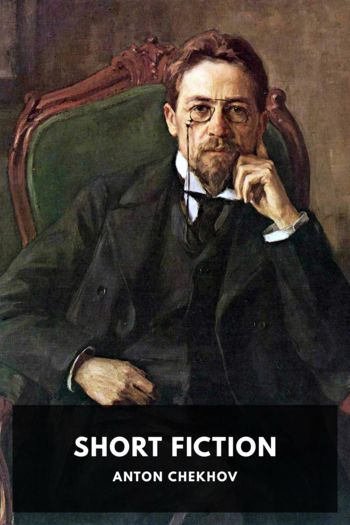
Anton Chekhov is widely considered to be one of the greatest short story writers in history. A physician by day, he’s famously quoted as saying, “Medicine is my lawful wife, and literature is my mistress.” Chekhov wrote nearly 300 short stories in his long writing career; while at first he wrote mainly to make a profit, as his interest in writing—and his skill—grew, he wrote stories that heavily influenced the modern development of the form.
His stories are famous for, among other things, their ambiguous morality and their often inconclusive nature. Chekhov was a firm believer that the role of the artist was to correctly pose a question, but not necessarily to answer it.
This collection contains all of his short stories and two novellas, all translated by Constance Garnett, and arranged by the date they were originally published.
Read free book «Short Fiction by Anton Chekhov (libby ebook reader .txt) 📕» - read online or download for free at americanlibrarybooks.com
- Author: Anton Chekhov
Read book online «Short Fiction by Anton Chekhov (libby ebook reader .txt) 📕». Author - Anton Chekhov
The little girls came down from upstairs to say good night. Deliberately and in silence, Panaurov made the sign of the cross over them several times, and gave them his hand to kiss. They dropped curtsies, and then went up to Laptev, who had to make the sign of the cross and give them his hand to kiss also. This ceremony with the hand-kissing and curtsying was repeated every evening.
When the children had gone out Panaurov laid aside the newspaper and said:
“It’s not very lively in our God-fearing town! I must confess, my dear fellow,” he added with a sigh, “I’m very glad that at last you’ve found some distraction.”
“What do you mean?” asked Laptev.
“I saw you coming out of Dr. Byelavin’s just now. I expect you don’t go there for the sake of the papa.”
“Of course not,” said Laptev, and he blushed.
“Well, of course not. And by the way, you wouldn’t find such another old brute as that papa if you hunted by daylight with a candle. You can’t imagine what a foul, stupid, clumsy beast he is! You cultured people in the capitals are still interested in the provinces only on the lyrical side, only from the paysage and Poor Anton point of view, but I can assure you, my boy, there’s nothing logical about it; there’s nothing but barbarism, meanness, and nastiness—that’s all. Take the local devotees of science—the local intellectuals, so to speak. Can you imagine there are here in this town twenty-eight doctors? They’ve all made their fortunes, and they are living in houses of their own, and meanwhile the population is in just as helpless a condition as ever. Here, Nina had to have an operation, quite an ordinary one really, yet we were obliged to get a surgeon from Moscow; not one doctor here would undertake it. It’s beyond all conception. They know nothing, they understand nothing. They take no interest in anything. Ask them, for instance, what cancer is—what it is, what it comes from.”
And Panaurov began to explain what cancer was. He was a specialist on all scientific subjects, and explained from a scientific point of view everything that was discussed. But he explained it all in his own way. He had a theory of his own about the circulation of the blood, about chemistry, about astronomy. He talked slowly, softly, convincingly.
“It’s beyond all conception,” he pronounced in an imploring voice, screwing up his eyes, sighing languidly, and smiling as graciously as a king, and it was evident that he was very well satisfied with himself, and never gave a thought to the fact that he was fifty.
“I am rather hungry,” said Laptev. “I should like something savoury.”
“Well, that can easily be managed.”
Not long afterwards Laptev and his brother-in-law were sitting upstairs in the dining room having supper. Laptev had a glass of vodka, and then began drinking wine. Panaurov drank nothing. He never drank, and never gambled, yet in spite of that he had squandered all his own and his wife’s property, and had accumulated debts. To squander so much in such a short time, one must have, not passions, but a special talent. Panaurov liked dainty fare, liked a handsome dinner service, liked music after dinner, speeches, bowing footmen, to whom he would carelessly fling tips of ten, even twenty-five roubles. He always took part in all lotteries and subscriptions, sent bouquets to ladies of his acquaintance on their birthdays, bought cups, stands for glasses, studs, ties, walking-sticks, scents, cigarette-holders, pipes, lapdogs, parrots, Japanese bric-a-brac, antiques; he had silk nightshirts, and a bedstead made of ebony inlaid with mother-of-pearl. His dressing-gown was a genuine Bokhara, and everything was to correspond; and on all this there went every day, as he himself expressed, “a deluge” of money.
At supper he kept sighing and shaking his head.
“Yes, everything on this earth has an end,” he said softly, screwing up his dark eyes. “You will fall in love and suffer. You will fall out of love; you’ll be deceived, for there is no woman who will not deceive; you will suffer, will be brought to despair, and will be faithless too. But the time will come when all this will be a memory, and when you will reason about it coldly and look upon it as utterly trivial. …”
Laptev, tired, a little drunk, looked at his handsome head, his clipped black beard, and seemed to understand why women so loved this pampered, conceited, and physically handsome creature.
After supper Panaurov did not stay in the house, but went off to his other lodgings. Laptev went out to see him on his way. Panaurov was the only man in the town who wore a top-hat, and his elegant, dandified figure, his top-hat and tan gloves, beside the grey fences, the pitiful little houses, with their three windows and the thickets of nettles, always made a strange and mournful impression.
After saying goodbye to him Laptev returned home without hurrying. The moon was shining brightly; one could distinguish every straw on the ground, and Laptev felt as though the moonlight were caressing his bare head, as though someone were passing a feather over his hair.
“I love!” he pronounced aloud, and he had a sudden longing to run to overtake Panaurov, to embrace him, to forgive him, to make him a present of a lot of money, and then to run off into the open country, into a wood, to run on and on without looking back.
At home he saw lying on the chair the parasol Yulia Sergeyevna had forgotten; he snatched it up and kissed it greedily.



Comments (0)