Short Fiction by Anton Chekhov (libby ebook reader .txt) 📕
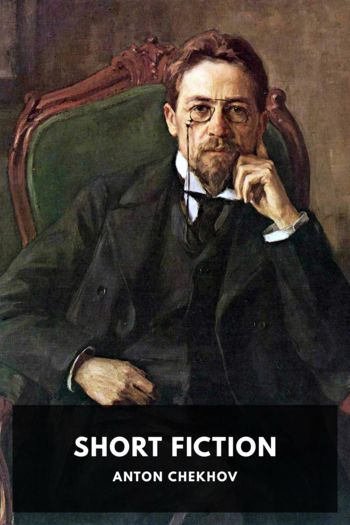
Description
Anton Chekhov is widely considered to be one of the greatest short story writers in history. A physician by day, he’s famously quoted as saying, “Medicine is my lawful wife, and literature is my mistress.” Chekhov wrote nearly 300 short stories in his long writing career; while at first he wrote mainly to make a profit, as his interest in writing—and his skill—grew, he wrote stories that heavily influenced the modern development of the form.
His stories are famous for, among other things, their ambiguous morality and their often inconclusive nature. Chekhov was a firm believer that the role of the artist was to correctly pose a question, but not necessarily to answer it.
This collection contains all of his short stories and two novellas, all translated by Constance Garnett, and arranged by the date they were originally published.
Read free book «Short Fiction by Anton Chekhov (libby ebook reader .txt) 📕» - read online or download for free at americanlibrarybooks.com
- Author: Anton Chekhov
Read book online «Short Fiction by Anton Chekhov (libby ebook reader .txt) 📕». Author - Anton Chekhov
He settled himself more comfortably in his chair, and still keeping hold of the parasol, began writing to Moscow to one of his friends:
“Dear Precious Kostya,
“Here is news for you: I’m in love again! I say again, because six years ago I fell in love with a Moscow actress, though I didn’t even succeed in making her acquaintance, and for the last year and a half I have been living with a certain person you know—a woman neither young nor good-looking. Ah, my dear boy, how unlucky I am in love. I’ve never had any success with women, and if I say again it’s simply because it’s rather sad and mortifying to acknowledge even to myself that my youth has passed entirely without love, and that I’m in love in a real sense now for the first time in my life, at thirty-four. Let it stand that I love again.
“If only you knew what a girl she was! She couldn’t be called a beauty—she has a broad face, she is very thin, but what a wonderful expression of goodness she has when she smiles! When she speaks, her voice is as clear as a bell. She never carries on a conversation with me—I don’t know her; but when I’m beside her I feel she’s a striking, exceptional creature, full of intelligence and lofty aspirations. She is religious, and you cannot imagine how deeply this touches me and exalts her in my eyes. On that point I am ready to argue with you endlessly. You may be right, to your thinking; but, still, I love to see her praying in church. She is a provincial, but she was educated in Moscow. She loves our Moscow; she dresses in the Moscow style, and I love her for that—love her, love her. … I see you frowning and getting up to read me a long lecture on what love is, and what sort of woman one can love, and what sort one cannot, and so on, and so on. But, dear Kostya, before I was in love I, too, knew quite well what love was.
“My sister thanks you for your message. She often recalls how she used to take Kostya Kotchevoy to the preparatory class, and never speaks of you except as poor Kostya, as she still thinks of you as the little orphan boy she remembers. And so, poor orphan, I’m in love. While it’s a secret, don’t say anything to a ‘certain person.’ I think it will all come right of itself, or, as the footman says in Tolstoy, will ‘come round.’ ”
When he had finished his letter Laptev went to bed. He was so tired that he couldn’t keep his eyes open, but for some reason he could not get to sleep; the noise in the street seemed to prevent him. The cattle were driven by to the blowing of a horn, and soon afterwards the bells began ringing for early mass. At one minute a cart drove by creaking; at the next, he heard the voice of some woman going to market. And the sparrows twittered the whole time.
IIThe next morning was a cheerful one; it was a holiday. At ten o’clock Nina Fyodorovna, wearing a brown dress and with her hair neatly arranged, was led into the drawing room, supported on each side. There she walked about a little and stood by the open window, and her smile was broad and naive, and, looking at her, one recalled a local artist, a great drunkard, who wanted her to sit to him for a picture of the Russian carnival. And all of them—the children, the servants, her brother, Alexey Fyodorovitch, and she herself—were suddenly convinced, that she was certainly going to get well. With shrieks of laughter the children ran after their uncle, chasing him and catching him, and filling the house with noise.
People called to ask how she was, brought her holy bread, told her that in almost all the churches they were offering up prayers for her that day. She had been conspicuous for her benevolence in the town, and was liked. She was very ready with her charity, like her brother Alexey, who gave away his money freely, without considering whether it was necessary to give it or not. Nina Fyodorovna used to pay the school fees for poor children; used to give away tea, sugar, and jam to old women; used to provide trousseaux for poor brides; and if she picked up a newspaper, she always looked first of all to see if there were any appeals for charity or a paragraph about somebody’s being in a destitute condition.
She was holding now in her hand a bundle of notes, by means of which various poor people, her protégés, had procured goods from a grocer’s shop.
They had been sent her the evening before by the shopkeeper with a request for the payment of the total—eighty-two roubles.
“My goodness, what a lot they’ve had! They’ve no conscience!” she said, deciphering with difficulty her ugly handwriting. “It’s no joke! Eighty-two roubles! I declare I won’t pay it.”
“I’ll pay it today,” said Laptev.
“Why should you? Why should you?” cried Nina Fyodorovna in agitation. “It’s quite enough for me to take two hundred and fifty every month from you and our brother. God bless you!” she added, speaking softly, so as not to be overheard by the servants.
“Well, but I spend two thousand five hundred a month,” he said. “I tell you again, dear: you have just as much right to spend it as I or Fyodor. Do understand that, once for all. There are three of us, and of every three kopecks of our father’s money, one belongs to you.”
But Nina Fyodorovna did not understand, and




Comments (0)