Short Fiction by Anton Chekhov (libby ebook reader .txt) 📕
Description
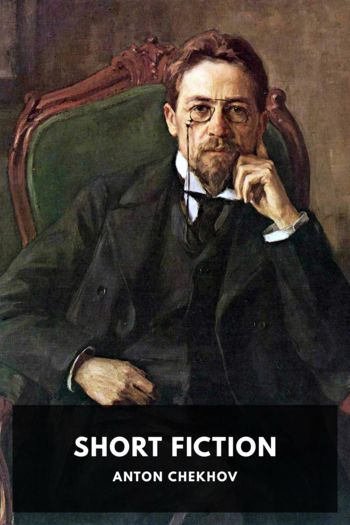
Anton Chekhov is widely considered to be one of the greatest short story writers in history. A physician by day, he’s famously quoted as saying, “Medicine is my lawful wife, and literature is my mistress.” Chekhov wrote nearly 300 short stories in his long writing career; while at first he wrote mainly to make a profit, as his interest in writing—and his skill—grew, he wrote stories that heavily influenced the modern development of the form.
His stories are famous for, among other things, their ambiguous morality and their often inconclusive nature. Chekhov was a firm believer that the role of the artist was to correctly pose a question, but not necessarily to answer it.
This collection contains all of his short stories and two novellas, all translated by Constance Garnett, and arranged by the date they were originally published.
Read free book «Short Fiction by Anton Chekhov (libby ebook reader .txt) 📕» - read online or download for free at americanlibrarybooks.com
- Author: Anton Chekhov
Read book online «Short Fiction by Anton Chekhov (libby ebook reader .txt) 📕». Author - Anton Chekhov
Then came the sound of footsteps and heavy breathing; it was the doctor coming up the stairs, dishevelled and unkempt as usual.
“Ru-ru-ru,” he was humming. “Ru-ru.”
To avoid meeting him, Laptev went into the dining room, and then went downstairs to his own room. It was clear to him that to get on with the doctor and to drop in at his house without formalities was impossible; and to meet the “old brute,” as Panaurov called him, was distasteful. That was why he so rarely saw Yulia. He reflected now that the father was not at home, that if he were to take Yulia Sergeyevna her parasol, he would be sure to find her at home alone, and his heart ached with joy. Haste, haste!
He took the parasol and, violently agitated, flew on the wings of love. It was hot in the street. In the big courtyard of the doctor’s house, overgrown with coarse grass and nettles, some twenty urchins were playing ball. These were all the children of working-class families who tenanted the three disreputable-looking lodges, which the doctor was always meaning to have done up, though he put it off from year to year. The yard resounded with ringing, healthy voices. At some distance on one side, Yulia Sergeyevna was standing at her porch, her hands folded, watching the game.
“Good morning!” Laptev called to her.
She looked round. Usually he saw her indifferent, cold, or tired as she had been the evening before. Now her face looked full of life and frolic, like the faces of the boys who were playing ball.
“Look, they never play so merrily in Moscow,” she said, going to meet him. “There are no such big yards there, though; they’ve no place to run there. Papa has only just gone to you,” she added, looking round at the children.
“I know; but I’ve not come to see him, but to see you,” said Laptev, admiring her youthfulness, which he had not noticed till then, and seemed only that day to have discovered in her; it seemed to him as though he were seeing her slender white neck with the gold chain for the first time. “I’ve come to see you …” he repeated. “My sister has sent you your parasol; you forgot it yesterday.”
She put out her hand to take the parasol, but he pressed it to his bosom and spoke passionately, without restraint, yielding again to the sweet ecstasy he had felt the night before, sitting under the parasol.
“I entreat you, give it me. I shall keep it in memory of you … of our acquaintance. It’s so wonderful!”
“Take it,” she said, and blushed; “but there’s nothing wonderful about it.”
He looked at her in ecstasy, in silence, not knowing what to say.
“Why am I keeping you here in the heat?” she said after a brief pause, laughing. “Let us go indoors.”
“I am not disturbing you?”
They went into the hall. Yulia Sergeyevna ran upstairs, her white dress with blue flowers on it rustling as she went.
“I can’t be disturbed,” she answered, stopping on the landing. “I never do anything. Every day is a holiday for me, from morning till night.”
“What you say is inconceivable to me,” he said, going up to her. “I grew up in a world in which everyone without exception, men and women alike, worked hard every day.”
“But if one has nothing to do?” she asked.
“One has to arrange one’s life under such conditions, that work is inevitable. There can be no clean and happy life without work.”
Again he pressed the parasol to his bosom, and to his own surprise spoke softly, in a voice unlike his own:
“If you would consent to be my wife I would give everything—I would give everything. There’s no price I would not pay, no sacrifice I would not make.”
She started and looked at him with wonder and alarm.
“What are you saying!” she brought out, turning pale. “It’s impossible, I assure you. Forgive me.”
Then with the same rustle of her skirts she went up higher, and vanished through the doorway.
Laptev grasped what this meant, and his mood was transformed, completely, abruptly, as though a light in his soul had suddenly been extinguished. Filled with the shame of a man humiliated, of a man who is disdained, who is not liked, who is distasteful, perhaps disgusting, who is shunned, he walked out of the house.
“I would give everything,” he thought, mimicking himself as he went home through the heat and recalled the details of his declaration. “I would give everything—like a regular tradesman. As though she wanted your everything!”
All he had just said seemed to him repulsively stupid. Why had he lied, saying that he had grown up in a world where everyone worked, without exception? Why had he talked to her in a lecturing tone about a clean and happy life? It was not clever, not interesting; it was false—false in the Moscow style. But by degrees there followed that mood of indifference into which criminals sink after a severe sentence. He began thinking that, thank God! everything was at an end and that the terrible uncertainty was over; that now there was no need to spend whole days in anticipation, in pining, in thinking always of the same thing. Now everything was clear; he must give up all hope of personal happiness, live without desires, without hopes, without dreams, or expectations, and to escape that dreary sadness which he was so sick of trying to soothe, he could busy himself with other people’s affairs, other people’s happiness, and old age would come on imperceptibly, and life would reach its end—and nothing more was wanted. He did not care, he wished for nothing, and could reason about it coolly, but there was a sort



Comments (0)