Short Fiction by Anton Chekhov (libby ebook reader .txt) 📕
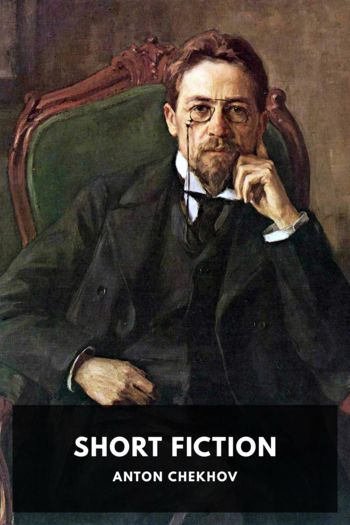
Description
Anton Chekhov is widely considered to be one of the greatest short story writers in history. A physician by day, he’s famously quoted as saying, “Medicine is my lawful wife, and literature is my mistress.” Chekhov wrote nearly 300 short stories in his long writing career; while at first he wrote mainly to make a profit, as his interest in writing—and his skill—grew, he wrote stories that heavily influenced the modern development of the form.
His stories are famous for, among other things, their ambiguous morality and their often inconclusive nature. Chekhov was a firm believer that the role of the artist was to correctly pose a question, but not necessarily to answer it.
This collection contains all of his short stories and two novellas, all translated by Constance Garnett, and arranged by the date they were originally published.
Read free book «Short Fiction by Anton Chekhov (libby ebook reader .txt) 📕» - read online or download for free at americanlibrarybooks.com
- Author: Anton Chekhov
Read book online «Short Fiction by Anton Chekhov (libby ebook reader .txt) 📕». Author - Anton Chekhov
Laptev was conscious that only, perhaps, those among them who had been corrupted by the old man’s training could seriously regard him as their benefactor; the others must have looked on him as an enemy and a “planter.” Now, after six months’ absence, he saw no change for the better; there was indeed something new which boded nothing good. His brother Fyodor, who had always been quiet, thoughtful, and extremely refined, was now running about the warehouse with a pencil behind his ear making a show of being very busy and businesslike, slapping customers on the shoulder and shouting “Friends!” to the clerks. Apparently he had taken up a new role, and Alexey did not recognise him in the part.
The old man’s voice boomed unceasingly. Having nothing to do, he was laying down the law to a customer, telling him how he should order his life and his business, always holding himself up as an example. That boastfulness, that aggressive tone of authority, Laptev had heard ten, fifteen, twenty years ago. The old man adored himself; from what he said it always appeared that he had made his wife and all her relations happy, that he had been munificent to his children, and a benefactor to his clerks and employees and that everyone in the street and all his acquaintances remembered him in their prayers. Whatever he did was always right, and if things went wrong with people it was because they did not take his advice; without his advice nothing could succeed. In church he stood in the foremost place, and even made observations to the priests, if in his opinion they were not conducting the service properly, and believed that this was pleasing God because God loved him.
At two o’clock everyone in the warehouse was hard at work, except the old man, who still went on booming in his deep voice. To avoid standing idle, Laptev took some trimmings from a workgirl and let her go; then listened to a customer, a merchant from Vologda, and told a clerk to attend to him.
“T.V.A.!” resounded on all sides (prices were denoted by letters in the warehouse and goods by numbers). “R.I.T.!” As he went away, Laptev said goodbye to no one but Fyodor.
“I shall come to Pyatnitsky Street with my wife tomorrow,” he said; “but I warn you, if father says a single rude thing to her, I shall not stay there another minute.”
“You’re the same as ever,” sighed Fyodor. “Marriage has not changed you. You must be patient with the old man. So till eleven o’clock, then. We shall expect you impatiently. Come directly after mass, then.”
“I don’t go to mass.”
“That does not matter. The great thing is not to be later than eleven, so you may be in time to pray to God and to lunch with us. Give my greetings to my little sister and kiss her hand for me. I have a presentiment that I shall like her,” Fyodor added with perfect sincerity. “I envy you, brother!” he shouted after him as Alexey went downstairs.
“And why does he shrink into himself in that shy way as though he fancied he was naked?” thought Laptev, as he walked along Nikolsky Street, trying to understand the change that had come over his brother. “And his language is new, too: ‘Brother, dear brother, God has sent us joy; to pray to God’—just like Iudushka in Shtchedrin.”
VIAt eleven o’clock the next day, which was Sunday, he was driving with his wife along Pyatnitsky Street in a light, one-horse carriage. He was afraid of his father’s doing something outrageous, and was already ill at ease. After two nights in her husband’s house Yulia Sergeyevna considered her marriage a mistake and a calamity, and if she had had to live with her husband in any other town but Moscow, it seemed to her that she could not have endured the horror of it. Moscow entertained her—she was delighted with the streets, the churches; and if it had been possible to drive about Moscow in those splendid sledges with expensive horses, to drive the whole day from morning till night, and with the swift motion to feel the cold autumn air blowing upon her, she would perhaps not have felt herself so unhappy.
Near a white, lately stuccoed two-storey house the coachman pulled up his horse, and began to turn to the right. They were expected, and near the gate stood two policemen and the porter in a new full-skirted coat, high boots, and goloshes. The whole space, from the middle of the street to the gates and all over the yard from the porch, was strewn with fresh sand. The porter took off his hat, the policemen saluted. Near the entrance Fyodor met them with a very serious face.
“Very glad to make your acquaintance, little sister,” he said, kissing Yulia’s hand. “You’re very welcome.”
He led her upstairs on his arm, and then along a corridor through a crowd of men and women. The anteroom was crowded too, and smelt of incense.
“I will introduce you to our father directly,” whispered Fyodor in the midst of a solemn, deathly silence. “A venerable old man, paterfamilias.”
In the big drawing room, by a table prepared for service, Fyodor Stepanovitch stood, evidently waiting




Comments (0)