Short Fiction by Anton Chekhov (libby ebook reader .txt) 📕
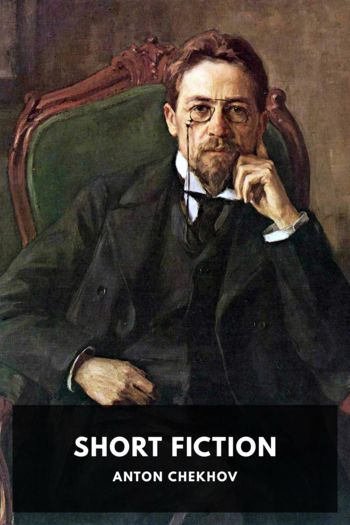
Description
Anton Chekhov is widely considered to be one of the greatest short story writers in history. A physician by day, he’s famously quoted as saying, “Medicine is my lawful wife, and literature is my mistress.” Chekhov wrote nearly 300 short stories in his long writing career; while at first he wrote mainly to make a profit, as his interest in writing—and his skill—grew, he wrote stories that heavily influenced the modern development of the form.
His stories are famous for, among other things, their ambiguous morality and their often inconclusive nature. Chekhov was a firm believer that the role of the artist was to correctly pose a question, but not necessarily to answer it.
This collection contains all of his short stories and two novellas, all translated by Constance Garnett, and arranged by the date they were originally published.
Read free book «Short Fiction by Anton Chekhov (libby ebook reader .txt) 📕» - read online or download for free at americanlibrarybooks.com
- Author: Anton Chekhov
Read book online «Short Fiction by Anton Chekhov (libby ebook reader .txt) 📕». Author - Anton Chekhov
“You’ll never go,” said Laptev. “To begin with, you’ll never save the money; and, besides, you’d grudge spending it. Forgive me, I repeat again: surely it’s quite as humiliating to collect the money by farthings from idle people who have music lessons to while away their time, as to borrow it from your friends.”
“I haven’t any friends,” she said irritably. “And please don’t talk nonsense. The working class to which I belong has one privilege: the consciousness of being incorruptible—the right to refuse to be indebted to wretched little shopkeepers, and to treat them with scorn. No, indeed, you don’t buy me! I’m not a Yulitchka!”
Laptev did not attempt to pay the driver, knowing that it would call forth a perfect torrent of words, such as he had often heard before. She paid herself.
She had a little furnished room in the flat of a solitary lady who provided her meals. Her big Becker piano was for the time at Yartsev’s in Great Nikitsky Street, and she went there every day to play on it. In her room there were armchairs in loose covers, a bed with a white summer quilt, and flowers belonging to the landlady; there were oleographs on the walls, and there was nothing that would have suggested that there was a woman, and a woman of university education, living in it. There was no toilet table; there were no books; there was not even a writing-table. It was evident that she went to bed as soon as she got home, and went out as soon as she got up in the morning.
The cook brought in the samovar. Polina Nikolaevna made tea, and, still shivering—the room was cold—began abusing the singers who had sung in the ninth symphony. She was so tired she could hardly keep her eyes open. She drank one glass of tea, then a second, and then a third.
“And so you are married,” she said. “But don’t be uneasy; I’m not going to pine away. I shall be able to tear you out of my heart. Only it’s annoying and bitter to me that you are just as contemptible as everyone else; that what you want in a woman is not brains or intellect, but simply a body, good looks, and youth. … Youth!” she pronounced through her nose, as though mimicking someone, and she laughed. “Youth! You must have purity, reinheit! reinheit!” she laughed, throwing herself back in her chair. “Reinheit!”
When she left off laughing her eyes were wet with tears.
“You’re happy, at any rate?” she asked.
“No.”
“Does she love you?”
Laptev, agitated, and feeling miserable, stood up and began walking about the room.
“No,” he repeated. “If you want to know, Polina, I’m very unhappy. There’s no help for it; I’ve done the stupid thing, and there’s no correcting it now. I must look at it philosophically. She married me without love, stupidly, perhaps with mercenary motives, but without understanding, and now she evidently sees her mistake and is miserable. I see it. At night we sleep together, but by day she is afraid to be left alone with me for five minutes, and tries to find distraction, society. With me she feels ashamed and frightened.”
“And yet she takes money from you?”
“That’s stupid, Polina!” cried Laptev. “She takes money from me because it makes absolutely no difference to her whether she has it or not. She is an honest, pure girl. She married me simply because she wanted to get away from her father, that’s all.”
“And are you sure she would have married you if you had not been rich?” asked Polina.
“I’m not sure of anything,” said Laptev dejectedly. “Not of anything. I don’t understand anything. For God’s sake, Polina, don’t let us talk about it.”
“Do you love her?”
“Desperately.”
A silence followed. She drank a fourth glass, while he paced up and down, thinking that by now his wife was probably having supper at the doctors’ club.
“But is it possible to love without knowing why?” asked Polina, shrugging her shoulders. “No; it’s the promptings of animal passion! You are poisoned, intoxicated by that beautiful body, that reinheit! Go away from me; you are unclean! Go to her!”
She brandished her hand at him, then took up his hat and hurled it at him. He put on his fur coat without speaking and went out, but she ran after him into the passage, clutched his arm above the elbow, and broke into sobs.
“Hush, Polina! Don’t!” he said, and could not unclasp her fingers. “Calm yourself, I entreat you.”
She shut her eyes and turned pale, and her long nose became an unpleasant waxy colour like a corpse’s, and Laptev still could not unclasp her fingers. She had fainted. He lifted her up carefully, laid her on her bed, and sat by her for ten minutes till she came to herself. Her hands were cold, her pulse was weak and uneven.
“Go home,” she said, opening her eyes. “Go away, or I shall begin howling again. I must take myself in hand.”
When he came out, instead of going to the doctors’ club where his friends were expecting him, he went home. All the way home he was asking himself reproachfully why he had not settled down to married life with that woman who loved him so much, and was in reality his wife and friend. She was the one human being who was devoted to him; and, besides, would it not have been a grateful and worthy task to give happiness, peace, and a home to that proud, clever, overworked creature? Was it for



Comments (0)