Short Fiction by Anton Chekhov (libby ebook reader .txt) 📕
Description
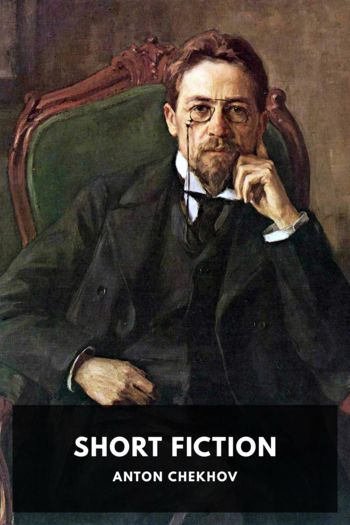
Anton Chekhov is widely considered to be one of the greatest short story writers in history. A physician by day, he’s famously quoted as saying, “Medicine is my lawful wife, and literature is my mistress.” Chekhov wrote nearly 300 short stories in his long writing career; while at first he wrote mainly to make a profit, as his interest in writing—and his skill—grew, he wrote stories that heavily influenced the modern development of the form.
His stories are famous for, among other things, their ambiguous morality and their often inconclusive nature. Chekhov was a firm believer that the role of the artist was to correctly pose a question, but not necessarily to answer it.
This collection contains all of his short stories and two novellas, all translated by Constance Garnett, and arranged by the date they were originally published.
Read free book «Short Fiction by Anton Chekhov (libby ebook reader .txt) 📕» - read online or download for free at americanlibrarybooks.com
- Author: Anton Chekhov
Read book online «Short Fiction by Anton Chekhov (libby ebook reader .txt) 📕». Author - Anton Chekhov
“Have you seen Yartsev?”
And without waiting for an answer she went striding on impetuously as though someone were pushing her on from behind.
She was very thin and plain, with a long nose; her face always looked tired, and exhausted, and it seemed as though it were an effort to her to keep her eyes open, and not to fall down. She had fine, dark eyes, and an intelligent, kind, sincere expression, but her movements were awkward and abrupt. It was hard to talk to her, because she could not talk or listen quietly. Loving her was not easy. Sometimes when she was alone with Laptev she would go on laughing for a long time, hiding her face in her hands, and would declare that love was not the chief thing in life for her, and would be as whimsical as a girl of seventeen; and before kissing her he would have to put out all the candles. She was thirty. She was married to a schoolmaster, but had not lived with her husband for years. She earned her living by giving music lessons and playing in quartettes.
During the ninth symphony she passed again as though by accident, but the crowd of men standing like a thick wall behind the columns prevented her going further, and she remained beside him. Laptev saw that she was wearing the same little velvet blouse she had worn at concerts last year and the year before. Her gloves were new, and her fan, too, was new, but it was a common one. She was fond of fine clothes, but she did not know how to dress, and grudged spending money on it. She dressed so badly and untidily that when she was going to her lessons striding hurriedly down the street, she might easily have been taken for a young monk.
The public applauded and shouted encore.
“You’ll spend the evening with me,” said Polina Nikolaevna, going up to Laptev and looking at him severely. “When this is over we’ll go and have tea. Do you hear? I insist on it. You owe me a great deal, and haven’t the moral right to refuse me such a trifle.”
“Very well; let us go,” Laptev assented.
Endless calls followed the conclusion of the concert. The audience got up from their seats and went out very slowly, and Laptev could not go away without telling his wife. He had to stand at the door and wait.
“I’m dying for some tea,” Polina Nikolaevna said plaintively. “My very soul is parched.”
“You can get something to drink here,” said Laptev. “Let’s go to the buffet.”
“Oh, I’ve no money to fling away on waiters. I’m not a shopkeeper.”
He offered her his arm; she refused, in a long, wearisome sentence which he had heard many times, to the effect that she did not class herself with the feebler fair sex, and did not depend on the services of gentlemen.
As she talked to him she kept looking about at the audience and greeting acquaintances; they were her fellow-students at the higher courses and at the conservatorium, and her pupils. She gripped their hands abruptly, as though she were tugging at them. But then she began twitching her shoulders, and trembling as though she were in a fever, and at last said softly, looking at Laptev with horror:
“Who is it you’ve married? Where were your eyes, you mad fellow? What did you see in that stupid, insignificant girl? Why, I loved you for your mind, for your soul, but that china doll wants nothing but your money!”
“Let us drop that, Polina,” he said in a voice of supplication. “All that you can say to me about my marriage I’ve said to myself many times already. Don’t cause me unnecessary pain.”
Yulia Sergeyevna made her appearance, wearing a black dress with a big diamond brooch, which her father-in-law had sent her after the service. She was followed by her suite—Kotchevoy, two doctors of their acquaintance, an officer, and a stout young man in student’s uniform, called Kish.
“You go on with Kostya,” Laptev said to his wife. “I’m coming later.”
Yulia nodded and went on. Polina Nikolaevna gazed after her, quivering all over and twitching nervously, and in her eyes there was a look of repulsion, hatred, and pain.
Laptev was afraid to go home with her, foreseeing an unpleasant discussion, cutting words, and tears, and he suggested that they should go and have tea at a restaurant. But she said:
“No, no. I want to go home. Don’t dare to talk to me of restaurants.”
She did not like being in a restaurant, because the atmosphere of restaurants seemed to her poisoned by tobacco smoke and the breath of men. Against all men she did not know she cherished a strange prejudice, regarding them all as immoral rakes, capable of attacking her at any moment. Besides, the music played at restaurants jarred on her nerves and gave her a headache.
Coming out of the Hall of Nobility, they took a sledge in Ostozhenka and drove to Savelovsky Lane, where she lodged. All the way Laptev thought about her. It was true that he owed her a great deal. He had made her acquaintance at the flat of his friend Yartsev, to whom she was giving lessons in harmony. Her love for him was deep and perfectly disinterested, and her relations with him did not alter her habits; she went on giving her lessons and wearing herself out with work as before. Through her he came to understand and love music, which he had scarcely cared for till then.
“Half my kingdom for a cup of tea!” she pronounced in a hollow voice, covering her mouth with her muff that she might not catch





Comments (0)