Short Fiction by Anton Chekhov (libby ebook reader .txt) 📕
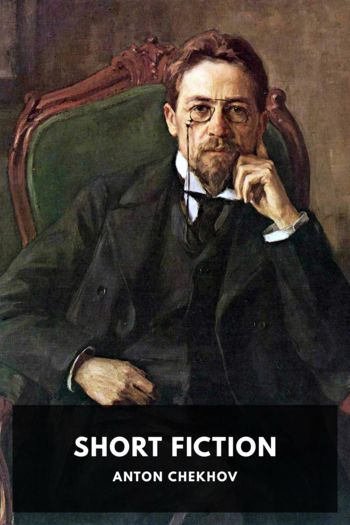
Description
Anton Chekhov is widely considered to be one of the greatest short story writers in history. A physician by day, he’s famously quoted as saying, “Medicine is my lawful wife, and literature is my mistress.” Chekhov wrote nearly 300 short stories in his long writing career; while at first he wrote mainly to make a profit, as his interest in writing—and his skill—grew, he wrote stories that heavily influenced the modern development of the form.
His stories are famous for, among other things, their ambiguous morality and their often inconclusive nature. Chekhov was a firm believer that the role of the artist was to correctly pose a question, but not necessarily to answer it.
This collection contains all of his short stories and two novellas, all translated by Constance Garnett, and arranged by the date they were originally published.
Read free book «Short Fiction by Anton Chekhov (libby ebook reader .txt) 📕» - read online or download for free at americanlibrarybooks.com
- Author: Anton Chekhov
Read book online «Short Fiction by Anton Chekhov (libby ebook reader .txt) 📕». Author - Anton Chekhov
“Well, have you brought your young lady?” the old man asked, and without waiting for an answer, he said, addressing the customer: “ ‘Herewith I beg to inform you, father, that I’m going to marry such and such a young lady.’ Yes. But as for asking for his father’s counsel or blessing, that’s not in the rules nowadays. Now they go their own way. When I married I was over forty, but I went on my knees to my father and asked his advice. Nowadays we’ve none of that.”
The old man was delighted to see his son, but thought it unseemly to show his affection or make any display of his joy. His voice and his manner of saying “your young lady” brought back to Laptev the depression he had always felt in the warehouse. Here every trifling detail reminded him of the past, when he used to be flogged and put on Lenten fare; he knew that even now boys were thrashed and punched in the face till their noses bled, and that when those boys grew up they would beat others. And before he had been five minutes in the warehouse, he always felt as though he were being scolded or punched in the face.
Fyodor slapped the customer on the shoulder and said to his brother:
“Here, Alyosha, I must introduce our Tambov benefactor, Grigory Timofeitch. He might serve as an example for the young men of the day; he’s passed his fiftieth birthday, and he has tiny children.”
The clerks laughed, and the customer, a lean old man with a pale face, laughed too.
“Nature above the normal capacity,” observed the head-clerk, who was standing at the counter close by. “It always comes out when it’s there.”
The head-clerk—a tall man of fifty, in spectacles, with a dark beard, and a pencil behind his ear—usually expressed his ideas vaguely in roundabout hints, while his sly smile betrayed that he attached particular significance to his words. He liked to obscure his utterances with bookish words, which he understood in his own way, and many such words he used in a wrong sense. For instance, the word “except.” When he had expressed some opinion positively and did not want to be contradicted, he would stretch out his hand and pronounce:
“Except!”
And what was most astonishing, the customers and the other clerks understood him perfectly. His name was Ivan Vassilitch Potchatkin, and he came from Kashira. Now, congratulating Laptev, he expressed himself as follows:
“It’s the reward of valour, for the female heart is a strong opponent.”
Another important person in the warehouse was a clerk called Makeitchev—a stout, solid, fair man with whiskers and a perfectly bald head. He went up to Laptev and congratulated him respectfully in a low voice:
“I have the honour, sir … The Lord has heard your parent’s prayer. Thank God.”
Then the other clerks began coming up to congratulate him on his marriage. They were all fashionably dressed, and looked like perfectly well-bred, educated men. Since between every two words they put in a “sir,” their congratulations—something like “Best wishes, sir, for happiness, sir,” uttered very rapidly in a low voice—sounded rather like the hiss of a whip in the air—“Shshsh-s-s-s-s-s!”
Laptev was soon bored and longing to go home, but it was awkward to go away. He was obliged to stay at least two hours at the warehouse to keep up appearances. He walked away from the counter and began asking Makeitchev whether things had gone well while he was away, and whether anything new had turned up, and the clerk answered him respectfully, avoiding his eyes. A boy with a cropped head, wearing a grey blouse, handed Laptev a glass of tea without a saucer; not long afterwards another boy, passing by, stumbled over a box, and almost fell down, and Makeitchev’s face looked suddenly spiteful and ferocious like a wild beast’s, and he shouted at him:
“Keep on your feet!”
The clerks were pleased that their young master was married and had come back at last; they looked at him with curiosity and friendly feeling, and each one thought it his duty to say something agreeable when he passed him. But Laptev was convinced that it was not genuine, and that they were only flattering him because they were afraid of him. He never could forget how fifteen years before, a clerk, who was mentally deranged, had run out into the street with nothing on but his shirt and shaking his fists at the windows, shouted that he had been ill-treated; and how, when the poor fellow had recovered, the clerks had jeered at him for long afterwards, reminding him how he had called his employers “planters” instead of “exploiters.” Altogether the employees at Laptevs’ had a very poor time of it, and this fact was a subject of conversation for the whole market. The worst of it was that the old man, Fyodor Stepanovitch, maintained something of an Asiatic despotism in his attitude to them. Thus, no one knew what wages were paid to the old man’s favourites, Potchatkin and Makeitchev. They received no more than three thousand a year, together with bonuses, but he made out that he paid then seven. The bonuses were given to all the clerks every year, but privately, so that the man who got little was bound from vanity to say he had got more. Not one boy knew when he would be promoted to be a clerk; not one of the men knew whether his employer was satisfied with him or not. Nothing was directly forbidden, and so the clerks never knew what was allowed, and what was not. They were not forbidden to marry, but they did not marry for fear of displeasing their employer and losing their place. They were allowed to have friends and pay visits, but the gates were shut at nine o’clock, and every morning the old man scanned them all suspiciously, and tried to detect any smell of vodka about them:
“Now then, breathe,” he would say.
Every clerk





Comments (0)