Short Fiction by Anton Chekhov (libby ebook reader .txt) 📕
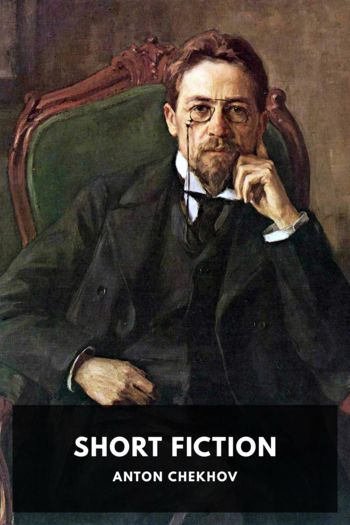
Description
Anton Chekhov is widely considered to be one of the greatest short story writers in history. A physician by day, he’s famously quoted as saying, “Medicine is my lawful wife, and literature is my mistress.” Chekhov wrote nearly 300 short stories in his long writing career; while at first he wrote mainly to make a profit, as his interest in writing—and his skill—grew, he wrote stories that heavily influenced the modern development of the form.
His stories are famous for, among other things, their ambiguous morality and their often inconclusive nature. Chekhov was a firm believer that the role of the artist was to correctly pose a question, but not necessarily to answer it.
This collection contains all of his short stories and two novellas, all translated by Constance Garnett, and arranged by the date they were originally published.
Read free book «Short Fiction by Anton Chekhov (libby ebook reader .txt) 📕» - read online or download for free at americanlibrarybooks.com
- Author: Anton Chekhov
Read book online «Short Fiction by Anton Chekhov (libby ebook reader .txt) 📕». Author - Anton Chekhov
“For God’s sake, Kostya, give them their lessons,” said Laptev, turning to him. “I’m afraid I shall cry, too, and I have to go to the warehouse before dinner.”
“All right.”
Alexey Fyodorovitch went away. Kostya, with a very serious face, sat down to the table and drew the Scripture history towards him.
“Well,” he said; “where have you got to?”
“She knows about the Flood,” said Sasha.
“The Flood? All right. Let’s peg in at the Flood. Fire away about the Flood.” Kostya skimmed through a brief description of the Flood in the book, and said: “I must remark that there really never was a flood such as is described here. And there was no such person as Noah. Some thousands of years before the birth of Christ, there was an extraordinary inundation of the earth, and that’s not only mentioned in the Jewish Bible, but in the books of other ancient peoples: the Greeks, the Chaldeans, the Hindus. But whatever the inundation may have been, it couldn’t have covered the whole earth. It may have flooded the plains, but the mountains must have remained. You can read this book, of course, but don’t put too much faith in it.”
Tears trickled down Lida’s face again. She turned away and suddenly burst into such loud sobs, that Kostya started and jumped up from his seat in great confusion.
“I want to go home,” she said, “to papa and to nurse.”
Sasha cried too. Kostya went upstairs to his own room, and spoke on the telephone to Yulia Sergeyevna.
“My dear soul,” he said, “the little girls are crying again; there’s no doing anything with them.”
Yulia Sergeyevna ran across from the big house in her indoor dress, with only a knitted shawl over her shoulders, and chilled through by the frost, began comforting the children.
“Do believe me, do believe me,” she said in an imploring voice, hugging first one and then the other. “Your papa’s coming today; he has sent a telegram. You’re grieving for mother, and I grieve too. My heart’s torn, but what can we do? We must bow to God’s will!”
When they left off crying, she wrapped them up and took them out for a drive. They stopped near the Iverskoy chapel, put up candles at the shrine, and, kneeling down, prayed. On the way back they went in Filippov’s, and had cakes sprinkled with poppy-seeds.
The Laptevs had dinner between two and three. Pyotr handed the dishes. This Pyotr waited on the family, and by day ran to the post, to the warehouse, to the law courts for Kostya; he spent his evenings making cigarettes, ran to open the door at night, and before five o’clock in the morning was up lighting the stoves, and no one knew where he slept. He was very fond of opening seltzer water bottles and did it easily, without a bang and without spilling a drop.
“With God’s blessing,” said Kostya, drinking off a glass of vodka before the soup.
At first Yulia Sergeyevna did not like Kostya; his bass voice, his phrases such as “Landed him one on the beak,” “filth,” “produce the samovar,” etc., his habit of clinking glasses and making sentimental speeches, seemed to her trivial. But as she got to know him better, she began to feel very much at home with him. He was open with her; he liked talking to her in a low voice in the evening, and even gave her novels of his own composition to read, though these had been kept a secret even from such friends as Laptev and Yartsev. She read these novels and praised them, so that she might not disappoint him, and he was delighted because he hoped sooner or later to become a distinguished author.
In his novels he described nothing but country-house life, though he had only seen the country on rare occasions when visiting friends at a summer villa, and had only been in a real country-house once in his life, when he had been to Volokolamsk on law business. He avoided any love interest as though he were ashamed of it; he put in frequent descriptions of nature, and in them was fond of using such expressions as, “the capricious lines of the mountains, the miraculous forms of the clouds, the harmony of mysterious rhythms. …” His novels had never been published, and this he attributed to the censorship.
He liked the duties of a lawyer, but yet he considered that his most important pursuit was not the law but these novels. He believed that he had a subtle, aesthetic temperament, and he always had leanings towards art. He neither sang nor played on any musical instrument, and was absolutely without an ear for music, but he attended all the symphony and philharmonic concerts, got up concerts for charitable objects, and made the acquaintance of singers. …
They used to talk at dinner.
“It’s a strange thing,” said Laptev, “my Fyodor took my breath away again! He said we must find out the date of the centenary of our firm, so as to try and get raised to noble rank; and he said it quite seriously. What can be the matter with him? I confess I begin to feel worried about him.”
They talked of Fyodor, and of its being the fashion nowadays to adopt some pose or other. Fyodor, for instance, tried to appear like a plain merchant, though he had ceased to be one; and when the teacher came from the school, of which old Laptev was the patron, to ask Fyodor for his salary, the latter changed his voice and deportment, and behaved with the teacher as though he were someone in authority.
There was nothing to be done; after dinner they went into the study. They talked about





Comments (0)