Short Fiction by Anton Chekhov (libby ebook reader .txt) 📕
Description
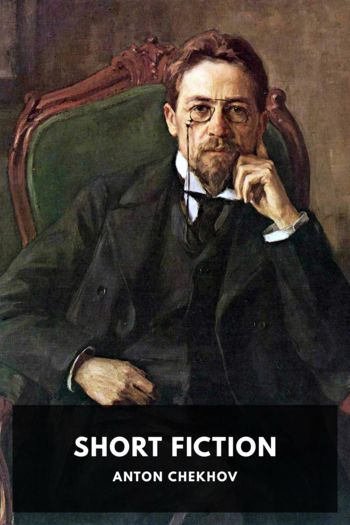
Anton Chekhov is widely considered to be one of the greatest short story writers in history. A physician by day, he’s famously quoted as saying, “Medicine is my lawful wife, and literature is my mistress.” Chekhov wrote nearly 300 short stories in his long writing career; while at first he wrote mainly to make a profit, as his interest in writing—and his skill—grew, he wrote stories that heavily influenced the modern development of the form.
His stories are famous for, among other things, their ambiguous morality and their often inconclusive nature. Chekhov was a firm believer that the role of the artist was to correctly pose a question, but not necessarily to answer it.
This collection contains all of his short stories and two novellas, all translated by Constance Garnett, and arranged by the date they were originally published.
Read free book «Short Fiction by Anton Chekhov (libby ebook reader .txt) 📕» - read online or download for free at americanlibrarybooks.com
- Author: Anton Chekhov
Read book online «Short Fiction by Anton Chekhov (libby ebook reader .txt) 📕». Author - Anton Chekhov
“We must walk about the skating-ground before it gets dark,” said the governor’s wife, who was bored with listening. “Who’s coming with me?”
The governor’s wife went out and the whole company trooped out of the pavilion after her. Only the governor, the bishop, and the mayor remained.
“Queen of Heaven! and what I went through when I was a shopboy in a fish-shop!” Yegor Ivanitch went on, flinging up his arms so that his fox-lined coat fell open. “One would go out to the shop almost before it was light … by eight o’clock I was completely frozen, my face was blue, my fingers were stiff so that I could not fasten my buttons nor count the money. One would stand in the cold, turn numb, and think, ‘Lord, I shall have to stand like this right on till evening!’ By dinnertime my stomach was pinched and my heart was aching. … Yes! And I was not much better afterwards when I had a shop of my own. The frost was intense and the shop was like a mousetrap with draughts blowing in all directions; the coat I had on was, pardon me, mangy, as thin as paper, threadbare. … One would be chilled through and through, half dazed, and turn as cruel as the frost oneself: I would pull one by the ear so that I nearly pulled the ear off; I would smack another on the back of the head; I’d glare at a customer like a ruffian, a wild beast, and be ready to fleece him; and when I got home in the evening and ought to have gone to bed, I’d be ill-humoured and set upon my family, throwing it in their teeth that they were living upon me; I would make a row and carry on so that half a dozen policemen couldn’t have managed me. The frost makes one spiteful and drives one to drink.”
Yegor Ivanitch clasped his hands and went on:
“And when we were taking fish to Moscow in the winter, Holy Mother!” And spluttering as he talked, he began describing the horrors he endured with his shopmen when he was taking fish to Moscow. …
“Yes,” sighed the governor, “it is wonderful what a man can endure! You used to take wagonloads of fish to Moscow, Yegor Ivanitch, while I in my time was at the war. I remember one extraordinary instance. …”
And the governor described how, during the last Russo-Turkish War, one frosty night the division in which he was had stood in the snow without moving for thirteen hours in a piercing wind; from fear of being observed the division did not light a fire, nor make a sound or a movement; they were forbidden to smoke. …
Reminiscences followed. The governor and the mayor grew lively and good-humoured, and, interrupting each other, began recalling their experiences. And the bishop told them how, when he was serving in Siberia, he had travelled in a sledge drawn by dogs; how one day, being drowsy, in a time of sharp frost he had fallen out of the sledge and been nearly frozen; when the Tunguses turned back and found him he was barely alive. Then, as by common agreement, the old men suddenly sank into silence, sat side by side, and mused.
“Ech!” whispered the mayor; “you’d think it would be time to forget, but when you look at the water-carriers, at the schoolboys, at the convicts in their wretched gowns, it brings it all back! Why, only take those musicians who are playing now. I’ll be bound, there is a pain in their hearts; a pinch at their stomachs, and their trumpets are freezing to their lips. … They play and think: ‘Holy Mother! we have another three hours to sit here in the cold.’ ”
The old men sank into thought. They thought of that in man which is higher than good birth, higher than rank and wealth and learning, of that which brings the lowest beggar near to God: of the helplessness of man, of his sufferings and his patience. …
Meanwhile the air was turning blue … the door opened and two waiters from Savatin’s walked in, carrying trays and a big muffled teapot. When the glasses had been filled and there was a strong smell of cinnamon and clove in the air, the door opened again, and there came into the pavilion a beardless young policeman whose nose was crimson, and who was covered all over with frost; he went up to the governor, and, saluting, said: “Her Excellency told me to inform you that she has gone home.”
Looking at the way the policeman put his stiff, frozen fingers to his cap, looking at his nose, his lustreless eyes, and his hood covered with white frost near the mouth, they all for some reason felt that this policeman’s heart must be aching, that his stomach must feel pinched, and his soul numb. …
“I say,” said the governor hesitatingly, “have a drink of mulled wine!”
“It’s all right … it’s all right! Drink it up!” the mayor urged him, gesticulating; “don’t be shy!”
The policeman took the glass in both hands, moved aside, and, trying to drink without making any sound, began discreetly sipping from the glass. He drank and was overwhelmed with embarrassment while the old men looked at him in silence, and they all fancied that the pain was leaving the young policeman’s heart, and that his soul was thawing. The governor heaved a sigh.
“It’s time we were at home,” he said, getting up. “Goodbye! I say,” he added, addressing the policeman, “tell the musicians there to … leave off playing, and ask Pavel Semyonovitch from me to see they are given … beer or vodka.”
The governor and the bishop said goodbye to the mayor and went out of the pavilion.
Yegor Ivanitch attacked the mulled wine, and before the policeman had finished his glass succeeded in telling him a great many interesting things. He could not be silent.
The Beggar“Kind sir, be so good as to notice a poor, hungry




Comments (0)