Short Fiction by Anton Chekhov (libby ebook reader .txt) 📕
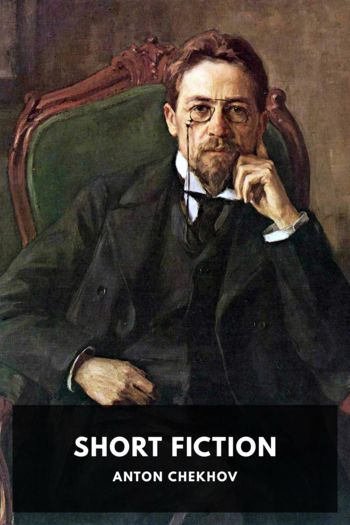
Description
Anton Chekhov is widely considered to be one of the greatest short story writers in history. A physician by day, he’s famously quoted as saying, “Medicine is my lawful wife, and literature is my mistress.” Chekhov wrote nearly 300 short stories in his long writing career; while at first he wrote mainly to make a profit, as his interest in writing—and his skill—grew, he wrote stories that heavily influenced the modern development of the form.
His stories are famous for, among other things, their ambiguous morality and their often inconclusive nature. Chekhov was a firm believer that the role of the artist was to correctly pose a question, but not necessarily to answer it.
This collection contains all of his short stories and two novellas, all translated by Constance Garnett, and arranged by the date they were originally published.
Read free book «Short Fiction by Anton Chekhov (libby ebook reader .txt) 📕» - read online or download for free at americanlibrarybooks.com
- Author: Anton Chekhov
Read book online «Short Fiction by Anton Chekhov (libby ebook reader .txt) 📕». Author - Anton Chekhov
“Most likely we interrupted the woman drinking her coffee,” thought Skvortsov. “What a cross creature she is!”
Then he saw the pseudo-schoolmaster and pseudo-student seat himself on a block of wood, and, leaning his red cheeks upon his fists, sink into thought. The cook flung an axe at his feet, spat angrily on the ground, and, judging by the expression of her lips, began abusing him. The beggar drew a log of wood towards him irresolutely, set it up between his feet, and diffidently drew the axe across it. The log toppled and fell over. The beggar drew it towards him, breathed on his frozen hands, and again drew the axe along it as cautiously as though he were afraid of its hitting his golosh or chopping off his fingers. The log fell over again.
Skvortsov’s wrath had passed off by now, he felt sore and ashamed at the thought that he had forced a pampered, drunken, and perhaps sick man to do hard, rough work in the cold.
“Never mind, let him go on …” he thought, going from the dining room into his study. “I am doing it for his good!”
An hour later Olga appeared and announced that the wood had been chopped up.
“Here, give him half a rouble,” said Skvortsov. “If he likes, let him come and chop wood on the first of every month. … There will always be work for him.”
On the first of the month the beggar turned up and again earned half a rouble, though he could hardly stand. From that time forward he took to turning up frequently, and work was always found for him: sometimes he would sweep the snow into heaps, or clear up the shed, at another he used to beat the rugs and the mattresses. He always received thirty to forty kopecks for his work, and on one occasion an old pair of trousers was sent out to him.
When he moved, Skvortsov engaged him to assist in packing and moving the furniture. On this occasion the beggar was sober, gloomy, and silent; he scarcely touched the furniture, walked with hanging head behind the furniture vans, and did not even try to appear busy; he merely shivered with the cold, and was overcome with confusion when the men with the vans laughed at his idleness, feebleness, and ragged coat that had once been a gentleman’s. After the removal Skvortsov sent for him.
“Well, I see my words have had an effect upon you,” he said, giving him a rouble. “This is for your work. I see that you are sober and not disinclined to work. What is your name?”
“Lushkov.”
“I can offer you better work, not so rough, Lushkov. Can you write?”
“Yes, sir.”
“Then go with this note tomorrow to my colleague and he will give you some copying to do. Work, don’t drink, and don’t forget what I said to you. Goodbye.”
Skvortsov, pleased that he had put a man in the path of rectitude, patted Lushkov genially on the shoulder, and even shook hands with him at parting.
Lushkov took the letter, departed, and from that time forward did not come to the backyard for work.
Two years passed. One day as Skvortsov was standing at the ticket-office of a theatre, paying for his ticket, he saw beside him a little man with a lambskin collar and a shabby cat’s-skin cap. The man timidly asked the clerk for a gallery ticket and paid for it with kopecks.
“Lushkov, is it you?” asked Skvortsov, recognizing in the little man his former woodchopper. “Well, what are you doing? Are you getting on all right?”
“Pretty well. … I am in a notary’s office now. I earn thirty-five roubles.”
“Well, thank God, that’s capital. I rejoice for you. I am very, very glad, Lushkov. You know, in a way, you are my godson. It was I who shoved you into the right way. Do you remember what a scolding I gave you, eh? You almost sank through the floor that time. Well, thank you, my dear fellow, for remembering my words.”
“Thank you too,” said Lushkov. “If I had not come to you that day, maybe I should be calling myself a schoolmaster or a student still. Yes, in your house I was saved, and climbed out of the pit.”
“I am very, very glad.”
“Thank you for your kind words and deeds. What you said that day was excellent. I am grateful to you and to your cook, God bless that kind, noble-hearted woman. What you said that day was excellent; I am indebted to you as long as I live, of course, but it was your cook, Olga, who really saved me.”
“How was that?”
“Why, it was like this. I used to come to you to chop wood and she would begin: ‘Ah, you drunkard! You Godforsaken man! And yet death does not take you!’ and then she would sit opposite me, lamenting, looking into my face and wailing: ‘You unlucky fellow! You have no gladness in this world, and in the next you will burn in hell, poor drunkard! You poor sorrowful creature!’ and she always went on in that style, you know. How often she upset herself, and how many tears she shed over me I can’t tell you. But what affected me most—she chopped the wood for me! Do you know, sir, I never chopped a single log for you—she did it all! How it was she saved me, how it was I changed, looking at her, and gave up drinking, I can’t explain. I only know that what she said and the noble way she behaved brought about a change in my soul, and I shall never forget it. It’s time to go up, though, they are just going to ring the bell.”
Lushkov bowed and went off to the gallery.
EnemiesBetween nine and ten on a dark September evening the only son of the district doctor, Kirilov, a child of six, called Andrey, died of diphtheria. Just as the doctor’s wife sank on her knees by the



Comments (0)