Short Fiction by Anton Chekhov (libby ebook reader .txt) 📕
Description
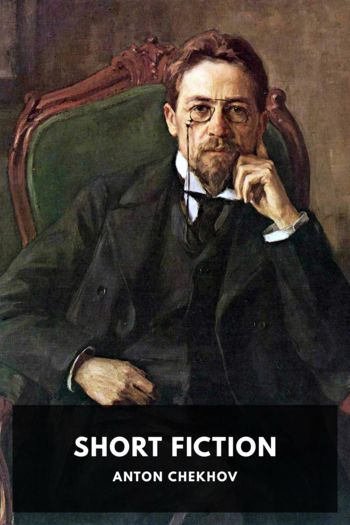
Anton Chekhov is widely considered to be one of the greatest short story writers in history. A physician by day, he’s famously quoted as saying, “Medicine is my lawful wife, and literature is my mistress.” Chekhov wrote nearly 300 short stories in his long writing career; while at first he wrote mainly to make a profit, as his interest in writing—and his skill—grew, he wrote stories that heavily influenced the modern development of the form.
His stories are famous for, among other things, their ambiguous morality and their often inconclusive nature. Chekhov was a firm believer that the role of the artist was to correctly pose a question, but not necessarily to answer it.
This collection contains all of his short stories and two novellas, all translated by Constance Garnett, and arranged by the date they were originally published.
Read free book «Short Fiction by Anton Chekhov (libby ebook reader .txt) 📕» - read online or download for free at americanlibrarybooks.com
- Author: Anton Chekhov
Read book online «Short Fiction by Anton Chekhov (libby ebook reader .txt) 📕». Author - Anton Chekhov
Skvortsov, a Petersburg lawyer, looked at the speaker’s tattered dark blue overcoat, at his muddy, drunken eyes, at the red patches on his cheeks, and it seemed to him that he had seen the man before.
“And now I am offered a post in the Kaluga province,” the beggar continued, “but I have not the means for the journey there. Graciously help me! I am ashamed to ask, but … I am compelled by circumstances.”
Skvortsov looked at his goloshes, of which one was shallow like a shoe, while the other came high up the leg like a boot, and suddenly remembered.
“Listen, the day before yesterday I met you in Sadovoy Street,” he said, “and then you told me, not that you were a village schoolmaster, but that you were a student who had been expelled. Do you remember?”
“N-o. No, that cannot be so!” the beggar muttered in confusion. “I am a village schoolmaster, and if you wish it I can show you documents to prove it.”
“That’s enough lies! You called yourself a student, and even told me what you were expelled for. Do you remember?”
Skvortsov flushed, and with a look of disgust on his face turned away from the ragged figure.
“It’s contemptible, sir!” he cried angrily. “It’s a swindle! I’ll hand you over to the police, damn you! You are poor and hungry, but that does not give you the right to lie so shamelessly!”
The ragged figure took hold of the door-handle and, like a bird in a snare, looked round the hall desperately.
“I … I am not lying,” he muttered. “I can show documents.”
“Who can believe you?” Skvortsov went on, still indignant. “To exploit the sympathy of the public for village schoolmasters and students—it’s so low, so mean, so dirty! It’s revolting!”
Skvortsov flew into a rage and gave the beggar a merciless scolding. The ragged fellow’s insolent lying aroused his disgust and aversion, was an offence against what he, Skvortsov, loved and prized in himself: kindliness, a feeling heart, sympathy for the unhappy. By his lying, by his treacherous assault upon compassion, the individual had, as it were, defiled the charity which he liked to give to the poor with no misgivings in his heart. The beggar at first defended himself, protested with oaths, then he sank into silence and hung his head, overcome with shame.
“Sir!” he said, laying his hand on his heart, “I really was … lying! I am not a student and not a village schoolmaster. All that’s mere invention! I used to be in the Russian choir, and I was turned out of it for drunkenness. But what can I do? Believe me, in God’s name, I can’t get on without lying—when I tell the truth no one will give me anything. With the truth one may die of hunger and freeze without a night’s lodging! What you say is true, I understand that, but … what am I to do?”
“What are you to do? You ask what are you to do?” cried Skvortsov, going close up to him. “Work—that’s what you must do! You must work!”
“Work. … I know that myself, but where can I get work?”
“Nonsense. You are young, strong, and healthy, and could always find work if you wanted to. But you know you are lazy, pampered, drunken! You reek of vodka like a pothouse! You have become false and corrupt to the marrow of your bones and fit for nothing but begging and lying! If you do graciously condescend to take work, you must have a job in an office, in the Russian choir, or as a billiard-marker, where you will have a salary and have nothing to do! But how would you like to undertake manual labour? I’ll be bound, you wouldn’t be a house porter or a factory hand! You are too genteel for that!”
“What things you say, really …” said the beggar, and he gave a bitter smile. “How can I get manual work? It’s rather late for me to be a shopman, for in trade one has to begin from a boy; no one would take me as a house porter, because I am not of that class. … And I could not get work in a factory; one must know a trade, and I know nothing.”
“Nonsense! You always find some justification! Wouldn’t you like to chop wood?”
“I would not refuse to, but the regular woodchoppers are out of work now.”
“Oh, all idlers argue like that! As soon as you are offered anything you refuse it. Would you care to chop wood for me?”
“Certainly I will …”
“Very good, we shall see. … Excellent. We’ll see!” Skvortsov, in nervous haste; and not without malignant pleasure, rubbing his hands, summoned his cook from the kitchen.
“Here, Olga,” he said to her, “take this gentleman to the shed and let him chop some wood.”
The beggar shrugged his shoulders as though puzzled, and irresolutely followed the cook. It was evident from his demeanour that he had consented to go and chop wood, not because he was hungry and wanted to earn money, but simply from shame and amour propre, because he had been taken at his word. It was clear, too, that he was suffering from the effects of vodka, that he was unwell, and felt not the faintest inclination to work.
Skvortsov hurried into the dining room. There from the window which looked out into the yard he could see the woodshed and everything that happened in the yard. Standing at the window, Skvortsov saw the cook and the beggar come by the back way into the yard and go through the muddy snow to the woodshed. Olga scrutinized her companion angrily, and jerking her elbow unlocked the woodshed and angrily banged




Comments (0)