Short Fiction by Anton Chekhov (libby ebook reader .txt) 📕
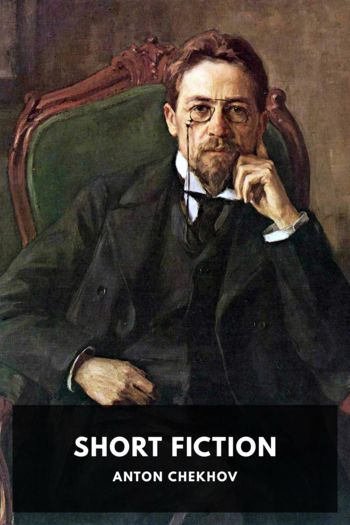
Description
Anton Chekhov is widely considered to be one of the greatest short story writers in history. A physician by day, he’s famously quoted as saying, “Medicine is my lawful wife, and literature is my mistress.” Chekhov wrote nearly 300 short stories in his long writing career; while at first he wrote mainly to make a profit, as his interest in writing—and his skill—grew, he wrote stories that heavily influenced the modern development of the form.
His stories are famous for, among other things, their ambiguous morality and their often inconclusive nature. Chekhov was a firm believer that the role of the artist was to correctly pose a question, but not necessarily to answer it.
This collection contains all of his short stories and two novellas, all translated by Constance Garnett, and arranged by the date they were originally published.
Read free book «Short Fiction by Anton Chekhov (libby ebook reader .txt) 📕» - read online or download for free at americanlibrarybooks.com
- Author: Anton Chekhov
Read book online «Short Fiction by Anton Chekhov (libby ebook reader .txt) 📕». Author - Anton Chekhov
“I admit I have had a drop. … You must excuse me. I went into a beer shop on the way here, and as it was so hot had a couple of bottles. It’s hot, my boy.”
Old Musatov took a nondescript rag out of his pocket and wiped his shaven, battered face with it.
“I have come only for a minute, Borenka, my angel,” he went on, not looking at his son, “about something very important. Excuse me, perhaps I am hindering you. Haven’t you ten roubles, my dear, you could let me have till Tuesday? You see, I ought to have paid for my lodging yesterday, and money, you see! … None! Not to save my life!”
Young Musatov went out without a word, and began whispering the other side of the door with the landlady of the summer villa and his colleagues who had taken the villa with him. Three minutes later he came back, and without a word gave his father a ten-rouble note. The latter thrust it carelessly into his pocket without looking at it, and said:
“Merci. Well, how are you getting on? It’s a long time since we met.”
“Yes, a long time, not since Easter.”
“Half a dozen times I have been meaning to come to you, but I’ve never had time. First one thing, then another. … It’s simply awful! I am talking nonsense though. … All that’s nonsense. Don’t you believe me, Borenka. I said I would pay you back the ten roubles on Tuesday, don’t believe that either. Don’t believe a word I say. I have nothing to do at all, it’s simply laziness, drunkenness, and I am ashamed to be seen in such clothes in the street. You must excuse me, Borenka. Here I have sent the girl to you three times for money and written you piteous letters. Thanks for the money, but don’t believe the letters; I was telling fibs. I am ashamed to rob you, my angel; I know that you can scarcely make both ends meet yourself, and feed on locusts, but my impudence is too much for me. I am such a specimen of impudence—fit for a show! … You must excuse me, Borenka. I tell you the truth, because I can’t see your angel face without emotion.”
A minute passed in silence. The old man heaved a deep sigh and said:
“You might treat me to a glass of beer perhaps.”
His son went out without a word, and again there was a sound of whispering the other side of the door. When a little later the beer was brought in, the old man seemed to revive at the sight of the bottles and abruptly changed his tone.
“I was at the races the other day, my boy,” he began telling him, assuming a scared expression. “We were a party of three, and we pooled three roubles on Frisky. And, thanks to that Frisky, we got thirty-two roubles each for our rouble. I can’t get on without the races, my boy. It’s a gentlemanly diversion. My virago always gives me a dressing over the races, but I go. I love it, and that’s all about it.”
Boris, a fair-haired young man with a melancholy immobile face, was walking slowly up and down, listening in silence. When the old man stopped to clear his throat, he went up to him and said:
“I bought myself a pair of boots the other day, father, which turn out to be too tight for me. Won’t you take them? I’ll let you have them cheap.”
“If you like,” said the old man with a grimace, “only for the price you gave for them, without any cheapening.”
“Very well, I’ll let you have them on credit.”
The son groped under the bed and produced the new boots. The father took off his clumsy, rusty, evidently secondhand boots and began trying on the new ones.
“A perfect fit,” he said. “Right, let me keep them. And on Tuesday, when I get my pension, I’ll send you the money for them. That’s not true, though,” he went on, suddenly falling into the same tearful tone again. “And it was a lie about the races, too, and a lie about the pension. And you are deceiving me, Borenka. … I feel your generous tactfulness. I see through you! Your boots were too small, because your heart is too big. Ah, Borenka, Borenka! I understand it all and feel it!”
“Have you moved into new lodgings?” his son interrupted, to change the conversation.
“Yes, my boy. I move every month. My virago can’t stay long in the same place with her temper.”
“I went to your lodgings, I meant to ask you to stay here with me. In your state of health it would do you good to be in the fresh air.”
“No,” said the old man, with a wave of his hand, “the woman wouldn’t let me, and I shouldn’t care to myself. A hundred times you have tried to drag me out of the pit, and I have tried myself, but nothing came of it. Give it up. I must stick in my filthy hole. This minute, here I am sitting, looking at your angel face, yet something is drawing me home to my hole. Such is my fate. You can’t draw a dung-beetle to a rose. But it’s time I was going, my boy. It’s getting dark.”
“Wait a minute then, I’ll come with you. I have to go to town today myself.”
Both put on their overcoats and went out. When a little while afterwards they were driving in a cab, it was already dark, and lights began to gleam in the windows.
“I’ve robbed you, Borenka!” the father muttered. “Poor children, poor children! It must be a dreadful trouble to have



Comments (0)