Short Fiction by Anton Chekhov (libby ebook reader .txt) 📕
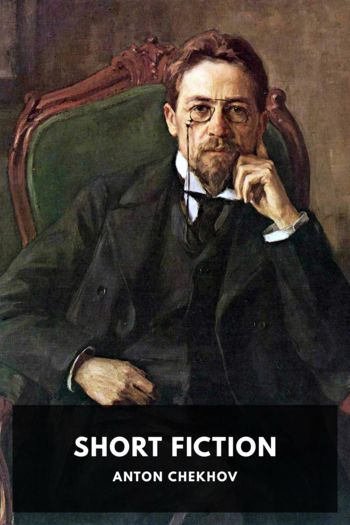
Description
Anton Chekhov is widely considered to be one of the greatest short story writers in history. A physician by day, he’s famously quoted as saying, “Medicine is my lawful wife, and literature is my mistress.” Chekhov wrote nearly 300 short stories in his long writing career; while at first he wrote mainly to make a profit, as his interest in writing—and his skill—grew, he wrote stories that heavily influenced the modern development of the form.
His stories are famous for, among other things, their ambiguous morality and their often inconclusive nature. Chekhov was a firm believer that the role of the artist was to correctly pose a question, but not necessarily to answer it.
This collection contains all of his short stories and two novellas, all translated by Constance Garnett, and arranged by the date they were originally published.
Read free book «Short Fiction by Anton Chekhov (libby ebook reader .txt) 📕» - read online or download for free at americanlibrarybooks.com
- Author: Anton Chekhov
Read book online «Short Fiction by Anton Chekhov (libby ebook reader .txt) 📕». Author - Anton Chekhov
The old man put on his cap and began gazing at the sky.
“It’s a pity,” he sighed, after a brief silence. “O God, what a pity! Of course it is God’s will; the world was not created by us, but yet it is a pity, brother. If a single tree withers away, or let us say a single cow dies, it makes one sorry, but what will it be, good man, if the whole world crumbles into dust? Such blessings, Lord Jesus! The sun, and the sky, and the forest, and the rivers, and the creatures—all these have been created, adapted, and adjusted to one another. Each has been put to its appointed task and knows its place. And all that must perish.”
A mournful smile gleamed on the shepherd’s face, and his eyelids quivered.
“You say—the world is perishing,” said Meliton, pondering. “It may be that the end of the world is near at hand, but you can’t judge by the birds. I don’t think the birds can be taken as a sign.”
“Not the birds only,” said the shepherd. “It’s the wild beasts, too, and the cattle, and the bees, and the fish. … If you don’t believe me ask the old people; every old man will tell you that the fish are not at all what they used to be. In the seas, in the lakes, and in the rivers, there are fewer fish from year to year. In our Pestchanka, I remember, pike used to be caught a yard long, and there were eelpouts, and roach, and bream, and every fish had a presentable appearance; while nowadays, if you catch a wretched little pikelet or perch six inches long you have to be thankful. There are not any gudgeon even worth talking about. Every year it is worse and worse, and in a little while there will be no fish at all. And take the rivers now … the rivers are drying up, for sure.”
“It is true; they are drying up.”
“To be sure, that’s what I say. Every year they are shallower and shallower, and there are not the deep holes there used to be. And do you see the bushes yonder?” the old man asked, pointing to one side. “Beyond them is an old riverbed; it’s called a backwater. In my father’s time the Pestchanka flowed there, but now look; where have the evil spirits taken it to? It changes its course, and, mind you, it will go on changing till such time as it has dried up altogether. There used to be marshes and ponds beyond Kurgasovo, and where are they now? And what has become of the streams? Here in this very wood we used to have a stream flowing, and such a stream that the peasants used to set creels in it and caught pike; wild ducks used to spend the winter by it, and nowadays there is no water in it worth speaking of, even at the spring floods. Yes, brother, look where you will, things are bad everywhere. Everywhere!”
A silence followed. Meliton sank into thought, with his eyes fixed on one spot. He wanted to think of some one part of nature as yet untouched by the all-embracing ruin. Spots of light glistened on the mist and the slanting streaks of rain as though on opaque glass, and immediately died away again—it was the rising sun trying to break through the clouds and peep at the earth.
“Yes, the forests, too …” Meliton muttered.
“The forests, too,” the shepherd repeated. “They cut them down, and they catch fire, and they wither away, and no new ones are growing. Whatever does grow up is cut down at once; one day it shoots up and the next it has been cut down—and so on without end till nothing’s left. I have kept the herds of the commune ever since the time of Freedom, good man; before the time of Freedom I was shepherd of the master’s herds. I have watched them in this very spot, and I can’t remember a summer day in all my life that I have not been here. And all the time I have been observing the works of God. I have looked at them in my time till I know them, and it is my opinion that all things growing are on the decline. Whether you take the rye, or the vegetables, or flowers of any sort, they are all going the same way.”
“But people have grown better,” observed the bailiff.
“In what way better?”
“Cleverer.”
“Cleverer, maybe, that’s true, young man; but what’s the use of that? What earthly good is cleverness to people on the brink of ruin? One can perish without cleverness. What’s the good of cleverness to a huntsman if there is no game? What I think is that God has given men brains and taken away their strength. People have grown weak, exceedingly weak. Take me, for instance … I am not worth a halfpenny, I am the humblest peasant in the whole village, and yet, young man, I have strength. Mind you, I am in my seventies, and I tend my herd day in and day out, and keep the night watch, too, for twenty kopecks, and I don’t sleep, and I don’t feel the cold; my son is cleverer than I am, but put him in my place and he would ask for a raise next day, or would be going to the doctors. There it is. I eat nothing but bread, for ‘Give us this day our daily bread,’ and my father ate nothing but bread, and my grandfather; but the peasant nowadays must have tea and vodka and white loaves, and must sleep from sunset to dawn, and he goes to the doctor and pampers himself in all sorts of ways. And why is it? He has grown weak; he has not the strength to endure. If he wants to stay awake, his eyes close—there is no doing anything.”
“That’s true,” Meliton agreed; “the peasant is good for



Comments (0)