Short Fiction by Anton Chekhov (libby ebook reader .txt) 📕
Description
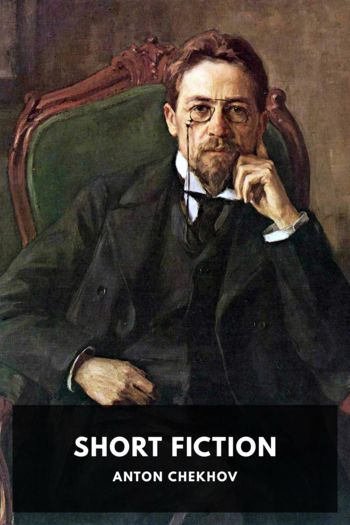
Anton Chekhov is widely considered to be one of the greatest short story writers in history. A physician by day, he’s famously quoted as saying, “Medicine is my lawful wife, and literature is my mistress.” Chekhov wrote nearly 300 short stories in his long writing career; while at first he wrote mainly to make a profit, as his interest in writing—and his skill—grew, he wrote stories that heavily influenced the modern development of the form.
His stories are famous for, among other things, their ambiguous morality and their often inconclusive nature. Chekhov was a firm believer that the role of the artist was to correctly pose a question, but not necessarily to answer it.
This collection contains all of his short stories and two novellas, all translated by Constance Garnett, and arranged by the date they were originally published.
Read free book «Short Fiction by Anton Chekhov (libby ebook reader .txt) 📕» - read online or download for free at americanlibrarybooks.com
- Author: Anton Chekhov
Read book online «Short Fiction by Anton Chekhov (libby ebook reader .txt) 📕». Author - Anton Chekhov
“Tchoo! I hear the cock crowing! Good night. Milord! Lie down!”
The DoctorIt was still in the drawing room, so still that a housefly that had flown in from outside could be distinctly heard brushing against the ceiling. Olga Ivanovna, the lady of the villa, was standing by the window, looking out at the flowerbeds and thinking. Dr. Tsvyetkov, who was her doctor as well as an old friend, and had been sent for to treat her son Misha, was sitting in an easy chair and swinging his hat, which he held in both hands, and he too was thinking. Except them, there was not a soul in the drawing room or in the adjoining rooms. The sun had set, and the shades of evening began settling in the corners under the furniture and on the cornices.
The silence was broken by Olga Ivanovna.
“No misfortune more terrible can be imagined,” she said, without turning from the window. “You know that life has no value for me whatever apart from the boy.”
“Yes, I know that,” said the doctor.
“No value whatever,” said Olga Ivanovna, and her voice quivered. “He is everything to me. He is my joy, my happiness, my wealth. And if, as you say, I cease to be a mother, if he … dies, there will be nothing left of me but a shadow. I cannot survive it.”
Wringing her hands, Olga Ivanovna walked from one window to the other and went on:
“When he was born, I wanted to send him away to the Foundling Hospital, you remember that, but, my God, how can that time be compared with now? Then I was vulgar, stupid, feather-headed, but now I am a mother, do you understand? I am a mother, and that’s all I care to know. Between the present and the past there is an impassable gulf.”
Silence followed again. The doctor shifted his seat from the chair to the sofa and impatiently playing with his hat, kept his eyes fixed upon Olga Ivanovna. From his face it could be seen that he wanted to speak, and was waiting for a fitting moment.
“You are silent, but still I do not give up hope,” said the lady, turning round. “Why are you silent?”
“I should be as glad of any hope as you, Olga, but there is none,” Tsvyetkov answered, “we must look the hideous truth in the face. The boy has a tumour on the brain, and we must try to prepare ourselves for his death, for such cases never recover.”
“Nikolay, are you certain you are not mistaken?”
“Such questions lead to nothing. I am ready to answer as many as you like, but it will make it no better for us.”
Olga Ivanovna pressed her face into the window curtains, and began weeping bitterly. The doctor got up and walked several times up and down the drawing room, then went to the weeping woman, and lightly touched her arm. Judging from his uncertain movements, from the expression of his gloomy face, which looked dark in the dusk of the evening, he wanted to say something.
“Listen, Olga,” he began. “Spare me a minute’s attention; there is something I must ask you. You can’t attend to me now, though. I’ll come later, afterwards. …” He sat down again, and sank into thought. The bitter, imploring weeping, like the weeping of a little girl, continued. Without waiting for it to end, Tsvyetkov heaved a sigh and walked out of the drawing room. He went into the nursery to Misha. The boy was lying on his back as before, staring at one point as though he were listening. The doctor sat down on his bed and felt his pulse.
“Misha, does your head ache?” he asked.
Misha answered, not at once: “Yes. I keep dreaming.”
“What do you dream?”
“All sorts of things. …”
The doctor, who did not know how to talk with weeping women or with children, stroked his burning head, and muttered:
“Never mind, poor boy, never mind. … One can’t go through life without illness. … Misha, who am I—do you know me?”
Misha did not answer.
“Does your head ache very badly?”
“Ve-ery. I keep dreaming.”
After examining him and putting a few questions to the maid who was looking after the sick child, the doctor went slowly back to the drawing room. There it was by now dark, and Olga Ivanovna, standing by the window, looked like a silhouette.
“Shall I light up?” asked Tsvyetkov.
No answer followed. The housefly was still brushing against the ceiling. Not a sound floated in from outside as though the whole world, like the doctor, were thinking, and could not bring itself to speak. Olga Ivanovna was not weeping now, but as before, staring at the flowerbed in profound silence. When Tsvyetkov went up to her, and through the twilight glanced at her pale face, exhausted with grief, her expression was such as he had seen before during her attacks of acute, stupefying, sick headache.
“Nikolay Trofimitch!” she addressed him, “and what do you think about a consultation?”
“Very good; I’ll arrange it tomorrow.”
From the doctor’s tone it could be easily seen that he put little faith in the benefit of a consultation. Olga Ivanovna would have asked him something else, but her sobs prevented her. Again she pressed her face into the window curtain. At that moment, the strains of a band playing at the club floated in distinctly. They could hear not only the wind instruments, but even the violins and the flutes.
“If he is in pain, why is he silent?” asked Olga Ivanovna. “All day long, not a sound, he never complains, and never cries. I know God will take the poor boy from us because we have not known how to prize him. Such a treasure!”
The band finished the march, and a minute later began playing a lively waltz for the opening of the ball.
“Good God, can nothing really be done?” moaned Olga Ivanovna. “Nikolay, you are a doctor and ought to know what to do! You must understand that I



Comments (0)