Short Fiction by Anton Chekhov (libby ebook reader .txt) 📕
Description
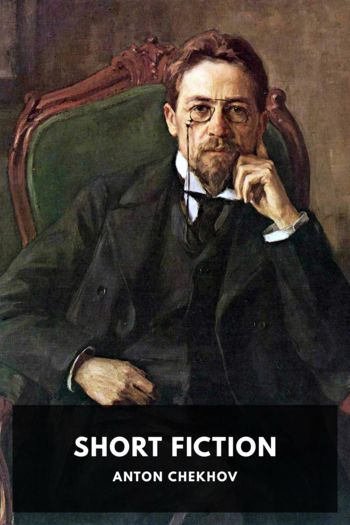
Anton Chekhov is widely considered to be one of the greatest short story writers in history. A physician by day, he’s famously quoted as saying, “Medicine is my lawful wife, and literature is my mistress.” Chekhov wrote nearly 300 short stories in his long writing career; while at first he wrote mainly to make a profit, as his interest in writing—and his skill—grew, he wrote stories that heavily influenced the modern development of the form.
His stories are famous for, among other things, their ambiguous morality and their often inconclusive nature. Chekhov was a firm believer that the role of the artist was to correctly pose a question, but not necessarily to answer it.
This collection contains all of his short stories and two novellas, all translated by Constance Garnett, and arranged by the date they were originally published.
Read free book «Short Fiction by Anton Chekhov (libby ebook reader .txt) 📕» - read online or download for free at americanlibrarybooks.com
- Author: Anton Chekhov
Read book online «Short Fiction by Anton Chekhov (libby ebook reader .txt) 📕». Author - Anton Chekhov
There were birch trees ahead of him where the wood ended, and between their stems and branches he could see the misty distance. Beyond the birch trees someone was playing on a shepherd’s rustic pipe. The player produced no more than five or six notes, dragged them out languidly with no attempt at forming a tune, and yet there was something harsh and extremely dreary in the sound of the piping.
As the copse became sparser, and the pines were interspersed with young birch trees, Meliton saw a herd. Hobbled horses, cows, and sheep were wandering among the bushes and, snapping the dry branches, sniffed at the herbage of the copse. A lean old shepherd, bareheaded, in a torn grey smock, stood leaning against the wet trunk of a birch tree. He stared at the ground, pondering something, and played his pipe, it seemed, mechanically.
“Good day, grandfather! God help you!” Meliton greeted him in a thin, husky voice which seemed incongruous with his huge stature and big, fleshy face. “How cleverly you are playing your pipe! Whose herd are you minding?”
“The Artamonovs’,” the shepherd answered reluctantly, and he thrust the pipe into his bosom.
“So I suppose the wood is the Artamonovs’ too?” Meliton inquired, looking about him. “Yes, it is the Artamonovs’; only fancy … I had completely lost myself. I got my face scratched all over in the thicket.”
He sat down on the wet earth and began rolling up a bit of newspaper into a cigarette.
Like his voice, everything about the man was small and out of keeping with his height, his breadth, and his fleshy face: his smiles, his eyes, his buttons, his tiny cap, which would hardly keep on his big, closely-cropped head. When he talked and smiled there was something womanish, timid, and meek about his puffy, shaven face and his whole figure.
“What weather! God help us!” he said, and he turned his head from side to side. “Folk have not carried the oats yet, and the rain seems as though it had been taken on for good, God bless it.”
The shepherd looked at the sky, from which a drizzling rain was falling, at the wood, at the bailif’s wet clothes, pondered, and said nothing.
“The whole summer has been the same,” sighed Meliton. “A bad business for the peasants and no pleasure for the gentry.”
The shepherd looked at the sky again, thought a moment, and said deliberately, as though chewing each word:
“It’s all going the same way. … There is nothing good to be looked for.”
“How are things with you here?” Meliton inquired, lighting his cigarette. “Haven’t you seen any coveys of grouse in the Artamonovs’ clearing?”
The shepherd did not answer at once. He looked again at the sky and to right and left, thought a little, blinked. … Apparently he attached no little significance to his words, and to increase their value tried to pronounce them with deliberation and a certain solemnity. The expression of his face had the sharpness and staidness of old age, and the fact that his nose had a saddle-shaped depression across the middle and his nostrils turned upwards gave him a sly and sarcastic look.
“No, I believe I haven’t,” he said. “Our huntsman Eryomka was saying that on Elijah’s Day he started one covey near Pustoshye, but I dare say he was lying. There are very few birds.”
“Yes, brother, very few. … Very few everywhere! The shooting here, if one is to look at it with common sense, is good for nothing and not worth having. There is no game at all, and what there is is not worth dirtying your hands over—it is not full-grown. It is such poor stuff that one is ashamed to look at it.”
Meliton gave a laugh and waved his hands.
“Things happen so queerly in this world that it is simply laughable and nothing else. Birds nowadays have become so unaccountable: they sit late on their eggs, and there are some, I declare, that have not hatched them by St. Peter’s Day!”
“It’s all going the same,” said the shepherd, turning his face upwards. “There was little game last year, this year there are fewer birds still, and in another five years, mark my words, there will be none at all. As far as I can see there will soon be not only no game, but no birds at all.”
“Yes,” Meliton assented, after a moment’s thought. “That’s true.”
The shepherd gave a bitter smile and shook his head.
“It’s a wonder,” he said, “what has become of them all! I remember twenty years ago there used to be geese here, and cranes and ducks and grouse—clouds and clouds of them! The gentry used to meet together for shooting, and one heard nothing but pouf-pouf-pouf! pouf-pouf-pouf! There was no end to the woodcocks, the snipe, and the little teals, and the water-snipe were as common as starlings, or let us say sparrows—lots and lots of them! And what has become of them all? We don’t even see the birds of prey. The eagles, the hawks, and the owls have all gone. … There are fewer of every sort of wild beast, too. Nowadays, brother, even the wolf and the fox have grown rare, let alone the bear or the otter. And you know in old days there were even elks! For forty years I have been observing the works of God from year to year, and it is my opinion that everything is going the same way.”
“What way?”
“To the bad, young man. To ruin, we must suppose … The time has come for



Comments (0)