Short Fiction by Anton Chekhov (libby ebook reader .txt) 📕
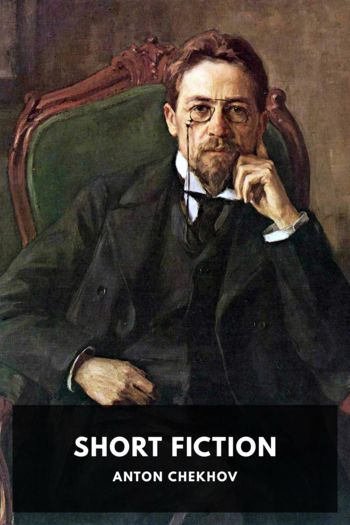
Description
Anton Chekhov is widely considered to be one of the greatest short story writers in history. A physician by day, he’s famously quoted as saying, “Medicine is my lawful wife, and literature is my mistress.” Chekhov wrote nearly 300 short stories in his long writing career; while at first he wrote mainly to make a profit, as his interest in writing—and his skill—grew, he wrote stories that heavily influenced the modern development of the form.
His stories are famous for, among other things, their ambiguous morality and their often inconclusive nature. Chekhov was a firm believer that the role of the artist was to correctly pose a question, but not necessarily to answer it.
This collection contains all of his short stories and two novellas, all translated by Constance Garnett, and arranged by the date they were originally published.
Read free book «Short Fiction by Anton Chekhov (libby ebook reader .txt) 📕» - read online or download for free at americanlibrarybooks.com
- Author: Anton Chekhov
Read book online «Short Fiction by Anton Chekhov (libby ebook reader .txt) 📕». Author - Anton Chekhov
“What the devil’s the meaning of it! The keys ought always to be lying in the hall window! Who has dared to take them away? The bailiff can get a boat of his own if he wants one!”
At last the keys were found. Then it appeared that two oars were missing. Again there was a great hullabaloo. Pyotr Dmitritch, who was weary of pacing about the bank, jumped into a long, narrow boat hollowed out of the trunk of a poplar, and, lurching from side to side and almost falling into the water, pushed off from the bank. The other boats followed him one after another, amid loud laughter and the shrieks of the young ladies.
The white cloudy sky, the trees on the riverside, the boats with the people in them, and the oars, were reflected in the water as in a mirror; under the boats, far away below in the bottomless depths, was a second sky with the birds flying across it. The bank on which the house and gardens stood was high, steep, and covered with trees; on the other, which was sloping, stretched broad green water-meadows with sheets of water glistening in them. The boats had floated a hundred yards when, behind the mournfully drooping willows on the sloping banks, huts and a herd of cows came into sight; they began to hear songs, drunken shouts, and the strains of a concertina.
Here and there on the river fishing-boats were scattered about, setting their nets for the night. In one of these boats was the festive party, playing on homemade violins and violoncellos.
Olga Mihalovna was sitting at the rudder; she was smiling affably and talking a great deal to entertain her visitors, while she glanced stealthily at her husband. He was ahead of them all, standing up punting with one oar. The light sharp-nosed canoe, which all the guests called the “deathtrap”—while Pyotr Dmitritch, for some reason, called it Penderaklia—flew along quickly; it had a brisk, crafty expression, as though it hated its heavy occupant and was looking out for a favourable moment to glide away from under his feet. Olga Mihalovna kept looking at her husband, and she loathed his good looks which attracted everyone, the back of his head, his attitude, his familiar manner with women; she hated all the women sitting in the boat with her, was jealous, and at the same time was trembling every minute in terror that the frail craft would upset and cause an accident.
“Take care, Pyotr!” she cried, while her heart fluttered with terror. “Sit down! We believe in your courage without all that!”
She was worried, too, by the people who were in the boat with her. They were all ordinary good sort of people like thousands of others, but now each one of them struck her as exceptional and evil. In each one of them she saw nothing but falsity. “That young man,” she thought, “rowing, in gold-rimmed spectacles, with chestnut hair and a nice-looking beard: he is a mamma’s darling, rich, and well-fed, and always fortunate, and everyone considers him an honourable, freethinking, advanced man. It’s not a year since he left the University and came to live in the district, but he already talks of himself as ‘we active members of the Zemstvo.’ But in another year he will be bored like so many others and go off to Petersburg, and to justify running away, will tell everyone that the Zemstvos are good-for-nothing, and that he has been deceived in them. While from the other boat his young wife keeps her eyes fixed on him, and believes that he is ‘an active member of the Zemstvo,’ just as in a year she will believe that the Zemstvo is good-for-nothing. And that stout, carefully shaven gentleman in the straw hat with the broad ribbon, with an expensive cigar in his mouth: he is fond of saying, ‘It is time to put away dreams and set to work!’ He has Yorkshire pigs, Butler’s hives, rapeseed, pineapples, a dairy, a cheese factory, Italian bookkeeping by double entry; but every summer he sells his timber and mortgages part of his land to spend the autumn with his mistress in the Crimea. And there’s Uncle Nikolay Nikolaitch, who has quarrelled with Pyotr Dmitritch, and yet for some reason does not go home.”
Olga Mihalovna looked at the other boats, and there, too, she saw only uninteresting, queer creatures, affected or stupid people. She thought of all the people she knew in the district, and could not remember one person of whom one could say or think anything good. They all seemed to her mediocre, insipid, unintelligent, narrow, false, heartless; they all said what they did not think, and did what they did not want to. Dreariness and despair were stifling her; she longed to leave off smiling, to leap up and cry out, “I am sick of you,” and then jump out and swim to the bank.
“I say, let’s take Pyotr Dmitritch in tow!” someone shouted.
“In tow, in tow!” the others chimed in. “Olga Mihalovna, take your husband in tow.”
To take him in tow, Olga Mihalovna, who was steering, had to seize the right moment and to catch bold of his boat by the chain at the beak. When she bent over to the chain Pyotr Dmitritch frowned and looked at her in alarm.
“I hope you won’t catch cold,” he said.
“If you are uneasy about me and the child, why do you torment me?” thought Olga Mihalovna.
Pyotr Dmitritch acknowledged himself vanquished, and, not caring to be towed, jumped from the



Comments (0)