Short Fiction by Anton Chekhov (libby ebook reader .txt) 📕
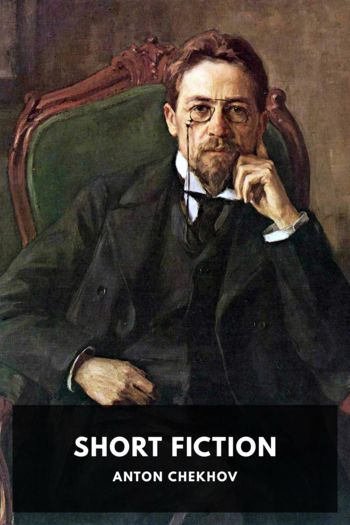
Description
Anton Chekhov is widely considered to be one of the greatest short story writers in history. A physician by day, he’s famously quoted as saying, “Medicine is my lawful wife, and literature is my mistress.” Chekhov wrote nearly 300 short stories in his long writing career; while at first he wrote mainly to make a profit, as his interest in writing—and his skill—grew, he wrote stories that heavily influenced the modern development of the form.
His stories are famous for, among other things, their ambiguous morality and their often inconclusive nature. Chekhov was a firm believer that the role of the artist was to correctly pose a question, but not necessarily to answer it.
This collection contains all of his short stories and two novellas, all translated by Constance Garnett, and arranged by the date they were originally published.
Read free book «Short Fiction by Anton Chekhov (libby ebook reader .txt) 📕» - read online or download for free at americanlibrarybooks.com
- Author: Anton Chekhov
Read book online «Short Fiction by Anton Chekhov (libby ebook reader .txt) 📕». Author - Anton Chekhov
“He did that to please the ladies,” thought Olga Mihalovna; “he knows it’s charming.” Her hands and feet began trembling, as she supposed, from boredom, vexation from the strain of smiling and the discomfort she felt all over her body. And to conceal this trembling from her guests, she tried to talk more loudly, to laugh, to move.
“If I suddenly begin to cry,” she thought, “I shall say I have toothache. …”
But at last the boats reached the “Island of Good Hope,” as they called the peninsula formed by a bend in the river at an acute angle, covered with a copse of old birch trees, oaks, willows, and poplars. The tables were already laid under the trees; the samovars were smoking, and Vassily and Grigory, in their swallowtails and white knitted gloves, were already busy with the tea-things. On the other bank, opposite the Island of Good Hope, there stood the carriages which had come with the provisions. The baskets and parcels of provisions were carried across to the island in a little boat like the Penderaklia. The footmen, the coachmen, and even the peasant who was sitting in the boat, had the solemn expression befitting a name-day such as one only sees in children and servants.
While Olga Mihalovna was making the tea and pouring out the first glasses, the visitors were busy with the liqueurs and sweet things. Then there was the general commotion usual at picnics over drinking tea, very wearisome and exhausting for the hostess. Grigory and Vassily had hardly had time to take the glasses round before hands were being stretched out to Olga Mihalovna with empty glasses. One asked for no sugar, another wanted it stronger, another weak, a fourth declined another glass. And all this Olga Mihalovna had to remember, and then to call, “Ivan Petrovitch, is it without sugar for you?” or, “Gentlemen, which of you wanted it weak?” But the guest who had asked for weak tea, or no sugar, had by now forgotten it, and, absorbed in agreeable conversation, took the first glass that came. Depressed-looking figures wandered like shadows at a little distance from the table, pretending to look for mushrooms in the grass, or reading the labels on the boxes—these were those for whom there were not glasses enough. “Have you had tea?” Olga Mihalovna kept asking, and the guest so addressed begged her not to trouble, and said, “I will wait,” though it would have suited her better for the visitors not to wait but to make haste.
Some, absorbed in conversation, drank their tea slowly, keeping their glasses for half an hour; others, especially some who had drunk a good deal at dinner, would not leave the table, and kept on drinking glass after glass, so that Olga Mihalovna scarcely had time to fill them. One jocular young man sipped his tea through a lump of sugar, and kept saying, “Sinful man that I am, I love to indulge myself with the Chinese herb.” He kept asking with a heavy sigh: “Another tiny dish of tea more, if you please.” He drank a great deal, nibbled his sugar, and thought it all very amusing and original, and imagined that he was doing a clever imitation of a Russian merchant. None of them understood that these trifles were agonizing to their hostess, and, indeed, it was hard to understand it, as Olga Mihalovna went on all the time smiling affably and talking nonsense.
But she felt ill. … She was irritated by the crowd of people, the laughter, the questions, the jocular young man, the footmen harassed and run off their legs, the children who hung round the table; she was irritated at Vata’s being like Nata, at Kolya’s being like Mitya, so that one could not tell which of them had had tea and which of them had not. She felt that her smile of forced affability was passing into an expression of anger, and she felt every minute as though she would burst into tears.
“Rain, my friends,” cried someone.
Everyone looked at the sky.
“Yes, it really is rain …” Pyotr Dmitritch assented, and wiped his cheek.
Only a few drops were falling from the sky—the real rain had not begun yet; but the company abandoned their tea and made haste to get off. At first they all wanted to drive home in the carriages, but changed their minds and made for the boats. On the pretext that she had to hasten home to give directions about the supper, Olga Mihalovna asked to be excused for leaving the others, and went home in the carriage.
When she got into the carriage, she first of all let her face rest from smiling. With an angry face she drove through the village, and with an angry face acknowledged the bows of the peasants she met. When she got home, she went to the bedroom by the back way and lay down on her husband’s bed.
“Merciful God!” she whispered. “What is all this hard labour for? Why do all these people hustle each other here and pretend that they are enjoying themselves? Why do I smile and lie? I don’t understand it.”
She heard steps and voices. The visitors had come back.
“Let them come,” thought Olga Mihalovna; “I shall lie a little longer.”
But a maidservant came and said:
“Marya Grigoryevna is going, madam.”
Olga Mihalovna jumped up, tidied her hair and hurried out of the room.
“Marya Grigoryevna, what is the meaning of this?” she began in an injured voice, going to meet Marya Grigoryevna. “Why are you in such a hurry?”
“I can’t help it, darling! I’ve stayed too long as it is; my children are expecting me home.”
“It’s too bad of you! Why didn’t you bring your children with you?”
“If you will let me, dear, I will bring them on some ordinary day, but today …”
“Oh, please do,” Olga Mihalovna interrupted; “I shall be delighted! Your children





Comments (0)