Short Fiction by Anton Chekhov (libby ebook reader .txt) 📕
Description
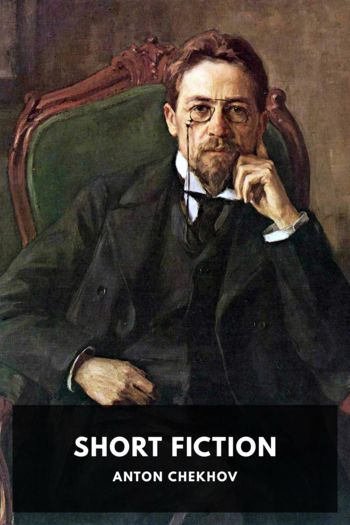
Anton Chekhov is widely considered to be one of the greatest short story writers in history. A physician by day, he’s famously quoted as saying, “Medicine is my lawful wife, and literature is my mistress.” Chekhov wrote nearly 300 short stories in his long writing career; while at first he wrote mainly to make a profit, as his interest in writing—and his skill—grew, he wrote stories that heavily influenced the modern development of the form.
His stories are famous for, among other things, their ambiguous morality and their often inconclusive nature. Chekhov was a firm believer that the role of the artist was to correctly pose a question, but not necessarily to answer it.
This collection contains all of his short stories and two novellas, all translated by Constance Garnett, and arranged by the date they were originally published.
Read free book «Short Fiction by Anton Chekhov (libby ebook reader .txt) 📕» - read online or download for free at americanlibrarybooks.com
- Author: Anton Chekhov
Read book online «Short Fiction by Anton Chekhov (libby ebook reader .txt) 📕». Author - Anton Chekhov
“What are you telling me all this for? I have no desire to hear it! I have no desire to!” he shouted and brought his fist down on the table. “I don’t want your vulgar secrets! Damnation take them! Don’t dare to tell me of such vulgar doings! Do you consider that I have not been insulted enough already? That I am a flunkey whom you can insult without restraint? Is that it?”
Abogin staggered back from Kirilov and stared at him in amazement.
“Why did you bring me here?” the doctor went on, his beard quivering. “If you are so puffed up with good living that you go and get married and then act a farce like this, how do I come in? What have I to do with your love affairs? Leave me in peace! Go on squeezing money out of the poor in your gentlemanly way. Make a display of humane ideas, play (the doctor looked sideways at the violoncello case) play the bassoon and the trombone, grow as fat as capons, but don’t dare to insult personal dignity! If you cannot respect it, you might at least spare it your attention!”
“Excuse me, what does all this mean?” Abogin asked, flushing red.
“It means that it’s base and low to play with people like this! I am a doctor; you look upon doctors and people generally who work and don’t stink of perfume and prostitution as your menials and mauvais ton; well, you may look upon them so, but no one has given you the right to treat a man who is suffering as a stage property!”
“How dare you say that to me!” Abogin said quietly, and his face began working again, and this time unmistakably from anger.
“No, how dared you, knowing of my sorrow, bring me here to listen to these vulgarities!” shouted the doctor, and he again banged on the table with his fist. “Who has given you the right to make a mockery of another man’s sorrow?”
“You have taken leave of your senses,” shouted Abogin. “It is ungenerous. I am intensely unhappy myself and … and …”
“Unhappy!” said the doctor, with a smile of contempt. “Don’t utter that word, it does not concern you. The spendthrift who cannot raise a loan calls himself unhappy, too. The capon, sluggish from overfeeding, is unhappy, too. Worthless people!”
“Sir, you forget yourself,” shrieked Abogin. “For saying things like that … people are thrashed! Do you understand?”
Abogin hurriedly felt in his side pocket, pulled out a pocketbook, and extracting two notes flung them on the table.
“Here is the fee for your visit,” he said, his nostrils dilating. “You are paid.”
“How dare you offer me money?” shouted the doctor and he brushed the notes off the table on to the floor. “An insult cannot be paid for in money!”
Abogin and the doctor stood face to face, and in their wrath continued flinging undeserved insults at each other. I believe that never in their lives, even in delirium, had they uttered so much that was unjust, cruel, and absurd. The egoism of the unhappy was conspicuous in both. The unhappy are egoistic, spiteful, unjust, cruel, and less capable of understanding each other than fools. Unhappiness does not bring people together but draws them apart, and even where one would fancy people should be united by the similarity of their sorrow, far more injustice and cruelty is generated than in comparatively placid surroundings.
“Kindly let me go home!” shouted the doctor, breathing hard.
Abogin rang the bell sharply. When no one came to answer the bell he rang again and angrily flung the bell on the floor; it fell on the carpet with a muffled sound, and uttered a plaintive note as though at the point of death. A footman came in.
“Where have you been hiding yourself, the devil take you?” His master flew at him, clenching his fists. “Where were you just now? Go and tell them to bring the victoria round for this gentleman, and order the closed carriage to be got ready for me. Stay,” he cried as the footman turned to go out. “I won’t have a single traitor in the house by tomorrow! Away with you all! I will engage fresh servants! Reptiles!”
Abogin and the doctor remained in silence waiting for the carriage. The first regained his expression of sleekness and his refined elegance. He paced up and down the room, tossed his head elegantly, and was evidently meditating on something. His anger had not cooled, but he tried to appear not to notice his enemy. … The doctor stood, leaning with one hand on the edge of the table, and looked at Abogin with that profound and somewhat cynical, ugly contempt only to be found in the eyes of sorrow and indigence when they are confronted with well-nourished comfort and elegance.
When a little later the doctor got into the victoria and drove off there was still




Comments (0)