Short Fiction by Anton Chekhov (libby ebook reader .txt) 📕
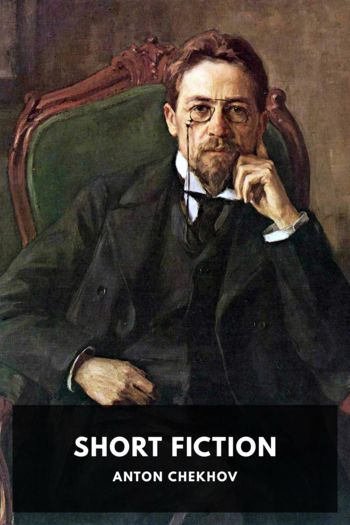
Description
Anton Chekhov is widely considered to be one of the greatest short story writers in history. A physician by day, he’s famously quoted as saying, “Medicine is my lawful wife, and literature is my mistress.” Chekhov wrote nearly 300 short stories in his long writing career; while at first he wrote mainly to make a profit, as his interest in writing—and his skill—grew, he wrote stories that heavily influenced the modern development of the form.
His stories are famous for, among other things, their ambiguous morality and their often inconclusive nature. Chekhov was a firm believer that the role of the artist was to correctly pose a question, but not necessarily to answer it.
This collection contains all of his short stories and two novellas, all translated by Constance Garnett, and arranged by the date they were originally published.
Read free book «Short Fiction by Anton Chekhov (libby ebook reader .txt) 📕» - read online or download for free at americanlibrarybooks.com
- Author: Anton Chekhov
Read book online «Short Fiction by Anton Chekhov (libby ebook reader .txt) 📕». Author - Anton Chekhov
Oh, that is the last straw! Trying a man’s patience like that can but have a fatal ending. I am not to blame if something terrible happens. I allow no one to make a laughing stock of me, and, God knows, when I am furious, I advise nobody to come near me, damn it all! There’s nothing I might not do! One of the young ladies, probably noticing from my face what a rage I am in, and anxious to propitiate me, says:
“I did exactly what you told me, Nikolay Andreitch; I watched the animals. I saw the grey dog chasing the cat just before the eclipse, and wagging his tail for a long while afterwards.”
So nothing came of the eclipse after all.
I go home. Thanks to the rain, I work indoors instead of on the balcony. The wounded officer has risked it, and has again got as far as “I was born in …” when I see one of the variegated young ladies pounce down on him and bear him off to her villa.
I cannot work, for I am still in a fury and suffering from palpitation of the heart. I do not go to the arbour. It is impolite not to, but, after all, I can’t be expected to go in the rain.
At twelve o’clock I receive a letter from Mashenka, a letter full of reproaches and entreaties to go to the arbour, addressing me as “thou.” At one o’clock I get a second letter, and at two, a third. … I must go. … But before going I must consider what I am to say to her. I will behave like a gentleman.
To begin with, I will tell her that she is mistaken in supposing that I am in love with her. That’s a thing one does not say to a lady as a rule, though. To tell a lady that one’s not in love with her, is almost as rude as to tell an author he can’t write.
The best thing will be to explain my views of marriage.
I put on my winter overcoat, take an umbrella, and walk to the arbour.
Knowing the hastiness of my temper, I am afraid I may be led into speaking too strongly; I will try to restrain myself.
I find Nadenka still waiting for me. She is pale and in tears. On seeing me she utters a cry of joy, flings herself on my neck, and says:
“At last! You are trying my patience. … Listen, I have not slept all night. … I have been thinking and thinking. … I believe that when I come to know you better I shall learn to love you. …”
I sit down, and begin to unfold my views of marriage. To begin with, to clear the ground of digressions and to be as brief as possible, I open with a short historical survey. I speak of marriage in ancient Egypt and India, then pass to more recent times, a few ideas from Schopenhauer. Mashenka listens attentively, but all of a sudden, through some strange incoherence of ideas, thinks fit to interrupt me:
“Nicolas, kiss me!” she says.
I am embarrassed and don’t know what to say to her. She repeats her request. There seems no avoiding it. I get up and bend over her long face, feeling as I do so just as I did in my childhood when I was lifted up to kiss my grandmother in her coffin. Not content with the kiss, Mashenka leaps up and impulsively embraces me. At that instant, Mashenka’s maman appears in the doorway of the arbour. … She makes a face as though in alarm, and saying “sh-sh” to someone with her, vanishes like Mephistopheles through the trapdoor.
Confused and enraged, I return to our villa. At home I find Varenka’s maman embracing my maman with tears in her eyes. And my maman weeps and says:
“I always hoped for it!”
And then, if you please, Nadenka’s maman comes up to me, embraces me, and says:
“May God bless you! … Mind you love her well. … Remember the sacrifice she is making for your sake!”
And here I am at my wedding. At the moment I write these last words, my best man is at my side, urging me to make haste. These people have no idea of my character! I have a violent temper, I cannot always answer for myself! Hang it all! God knows what will come of it! To lead a violent, desperate man to the altar is as unwise as to thrust one’s hand into the cage of a ferocious tiger. We shall see, we shall see!
And so, I am married. Everybody congratulates me and Varenka keeps clinging to me and saying:
“Now you are mine, mine; do you understand that? Tell me that you love me!” And her nose swells as she says it.
I learn from my best man that the wounded officer has very cleverly escaped the snares of Hymen. He showed the variegated young lady a medical certificate that owing to the wound in his temple he was at times mentally deranged and incapable of contracting a valid marriage. An inspiration! I might have got a certificate too. An uncle of mine drank himself to death, another uncle was extremely absentminded (on one occasion he put a lady’s muff on his head in mistake for his hat), an aunt of mine played a great deal on the piano, and used to put out her tongue at gentlemen she did not like. And my ungovernable temper is a very suspicious symptom.
But why do these great ideas always come too late? Why?
Uprooted An Incident of My TravelsI was on my way back from evening service. The clock in the belfry of the Svyatogorsky Monastery pealed out its soft melodious chimes by way of prelude and then struck twelve. The great courtyard of the monastery stretched out at the foot of the Holy Mountains on the banks of the Donets, and, enclosed by the





Comments (0)