Short Fiction by Anton Chekhov (libby ebook reader .txt) 📕
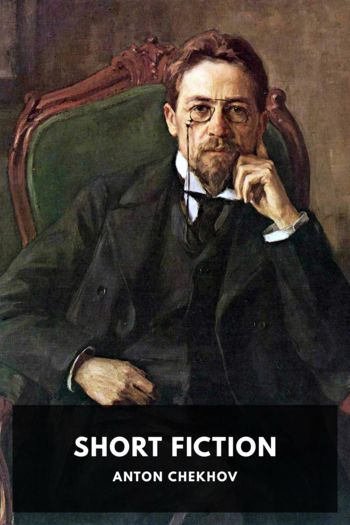
Description
Anton Chekhov is widely considered to be one of the greatest short story writers in history. A physician by day, he’s famously quoted as saying, “Medicine is my lawful wife, and literature is my mistress.” Chekhov wrote nearly 300 short stories in his long writing career; while at first he wrote mainly to make a profit, as his interest in writing—and his skill—grew, he wrote stories that heavily influenced the modern development of the form.
His stories are famous for, among other things, their ambiguous morality and their often inconclusive nature. Chekhov was a firm believer that the role of the artist was to correctly pose a question, but not necessarily to answer it.
This collection contains all of his short stories and two novellas, all translated by Constance Garnett, and arranged by the date they were originally published.
Read free book «Short Fiction by Anton Chekhov (libby ebook reader .txt) 📕» - read online or download for free at americanlibrarybooks.com
- Author: Anton Chekhov
Read book online «Short Fiction by Anton Chekhov (libby ebook reader .txt) 📕». Author - Anton Chekhov
Moisey Moisevitch was at first dumb with excess of feeling on recognizing the travellers, then he clasped his hands and uttered a moan. His coat swung its skirts, his back bent into a bow, and his pale face twisted into a smile that suggested that to see the chaise was not merely a pleasure to him, but actually a joy so sweet as to be painful.
“Oh dear! oh dear!” he began in a thin singsong voice, breathless, fussing about and preventing the travellers from getting out of the chaise by his antics. “What a happy day for me! Oh, what am I to do now? Ivan Ivanitch! Father Christopher! What a pretty little gentleman sitting on the box, God strike me dead! Oh, my goodness! why am I standing here instead of asking the visitors indoors? Please walk in, I humbly beg you. … You are kindly welcome! Give me all your things. … Oh, my goodness me!”
Moisey Moisevitch, who was rummaging in the chaise and assisting the travellers to alight, suddenly turned back and shouted in a voice as frantic and choking as though he were drowning and calling for help:
“Solomon! Solomon!”
“Solomon! Solomon!” a woman’s voice repeated indoors.
The swing-door creaked, and in the doorway appeared a rather short young Jew with a big beak-like nose, with a bald patch surrounded by rough red curly hair; he was dressed in a short and very shabby reefer jacket, with rounded lappets and short sleeves, and in short serge trousers, so that he looked skimpy and short-tailed like an unfledged bird. This was Solomon, the brother of Moisey Moisevitch. He went up to the chaise, smiling rather queerly, and did not speak or greet the travellers.
“Ivan Ivanitch and Father Christopher have come,” said Moisey Moisevitch in a tone as though he were afraid his brother would not believe him. “Dear, dear! What a surprise! Such honoured guests to have come us so suddenly! Come, take their things, Solomon. Walk in, honoured guests.”
A little later Kuzmitchov, Father Christopher, and Yegorushka were sitting in a big gloomy empty room at an old oak table. The table was almost in solitude, for, except a wide sofa covered with torn American leather and three chairs, there was no other furniture in the room. And, indeed, not everybody would have given the chairs that name. They were a pitiful semblance of furniture, covered with American leather that had seen its best days, and with backs bent backwards at an unnaturally acute angle, so that they looked like children’s sledges. It was hard to imagine what had been the unknown carpenter’s object in bending the chairbacks so mercilessly, and one was tempted to imagine that it was not the carpenter’s fault, but that some athletic visitor had bent the chairs like this as a feat, then had tried to bend them back again and had made them worse. The room looked gloomy, the walls were grey, the ceilings and the cornices were grimy; on the floor were chinks and yawning holes that were hard to account for (one might have fancied they were made by the heel of the same athlete), and it seemed as though the room would still have been dark if a dozen lamps had hung in it. There was nothing approaching an ornament on the walls or the windows. On one wall, however, there hung a list of regulations of some sort under a two-headed eagle in a grey wooden frame, and on another wall in the same sort of frame an engraving with the inscription, “The Indifference of Man.” What it was to which men were indifferent it was impossible to make out, as the engraving was very dingy with age and was extensively flyblown. There was a smell of something decayed and sour in the room.
As he led the visitors into the room, Moisey Moisevitch went on wriggling, gesticulating, shrugging and uttering joyful exclamations; he considered these antics necessary in order to seem polite and agreeable.
“When did our wagons go by?” Kuzmitchov asked.
“One party went by early this morning, and the other, Ivan Ivanitch, put up here for dinner and went on towards evening.”
“Ah! … Has Varlamov been by or not?”
“No, Ivan Ivanitch. His clerk, Grigory Yegoritch, went by yesterday morning and said that he had to be today at the Molokans’ farm.”
“Good! so we will go after the wagons directly and then on to the Molokans’.”
“Mercy on us, Ivan Ivanitch!” Moisey Moisevitch cried in horror, flinging up his hands. “Where are you going for the night? You will have a nice little supper and stay the night, and tomorrow morning, please God, you can go on and overtake anyone you like.”
“There is no time for that. … Excuse me, Moisey Moisevitch,



Comments (0)