Short Fiction by Anton Chekhov (libby ebook reader .txt) 📕
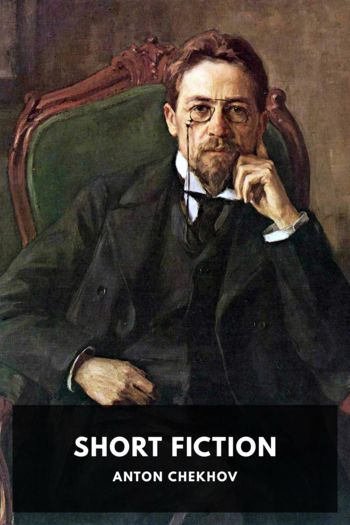
Description
Anton Chekhov is widely considered to be one of the greatest short story writers in history. A physician by day, he’s famously quoted as saying, “Medicine is my lawful wife, and literature is my mistress.” Chekhov wrote nearly 300 short stories in his long writing career; while at first he wrote mainly to make a profit, as his interest in writing—and his skill—grew, he wrote stories that heavily influenced the modern development of the form.
His stories are famous for, among other things, their ambiguous morality and their often inconclusive nature. Chekhov was a firm believer that the role of the artist was to correctly pose a question, but not necessarily to answer it.
This collection contains all of his short stories and two novellas, all translated by Constance Garnett, and arranged by the date they were originally published.
Read free book «Short Fiction by Anton Chekhov (libby ebook reader .txt) 📕» - read online or download for free at americanlibrarybooks.com
- Author: Anton Chekhov
Read book online «Short Fiction by Anton Chekhov (libby ebook reader .txt) 📕». Author - Anton Chekhov
“A quarter of an hour!” squealed Moisey Moisevitch. “Have you no fear of God, Ivan Ivanitch? You will compel me to hide your caps and lock the door! You must have a cup of tea and a snack of something, anyway.”
“We have no time for tea,” said Kuzmitchov.
Moisey Moisevitch bent his head on one side, crooked his knees, and put his open hands before him as though warding off a blow, while with a smile of agonized sweetness he began imploring:
“Ivan Ivanitch! Father Christopher! Do be so good as to take a cup of tea with me. Surely I am not such a bad man that you can’t even drink tea in my house? Ivan Ivanitch!”
“Well, we may just as well have a cup of tea,” said Father Christopher, with a sympathetic smile; “that won’t keep us long.”
“Very well,” Kuzmitchov assented.
Moisey Moisevitch, in a fluster uttered an exclamation of joy, and shrugging as though he had just stepped out of cold weather into warm, ran to the door and cried in the same frantic voice in which he had called Solomon:
“Rosa! Rosa! Bring the samovar!”
A minute later the door opened, and Solomon came into the room carrying a large tray in his hands. Setting the tray on the table, he looked away sarcastically with the same queer smile as before. Now, by the light of the lamp, it was possible to see his smile distinctly; it was very complex, and expressed a variety of emotions, but the predominant element in it was undisguised contempt. He seemed to be thinking of something ludicrous and silly, to be feeling contempt and dislike, to be pleased at something and waiting for the favourable moment to turn something into ridicule and to burst into laughter. His long nose, his thick lips, and his sly prominent eyes seemed tense with the desire to laugh. Looking at his face, Kuzmitchov smiled ironically and asked:
“Solomon, why did you not come to our fair at N⸺ this summer, and act some Jewish scenes?”
Two years before, as Yegorushka remembered very well, at one of the booths at the fair at N⸺, Solomon had performed some scenes of Jewish life, and his acting had been a great success. The allusion to this made no impression whatever upon Solomon. Making no answer, he went out and returned a little later with the samovar.
When he had done what he had to do at the table he moved a little aside, and, folding his arms over his chest and thrusting out one leg, fixed his sarcastic eyes on Father Christopher. There was something defiant, haughty, and contemptuous in his attitude, and at the same time it was comic and pitiful in the extreme, because the more impressive his attitude the more vividly it showed up his short trousers, his bobtail coat, his caricature of a nose, and his birdlike plucked-looking little figure.
Moisey Moisevitch brought a footstool from the other room and sat down a little way from the table.
“I wish you a good appetite! Tea and sugar!” he began, trying to entertain his visitors. “I hope you will enjoy it. Such rare guests, such rare ones; it is years since I last saw Father Christopher. And will no one tell me who is this nice little gentleman?” he asked, looking tenderly at Yegorushka.
“He is the son of my sister, Olga Ivanovna,” answered Kuzmitchov.
“And where is he going?”
“To school. We are taking him to a high school.”
In his politeness, Moisey Moisevitch put on a look of wonder and wagged his head expressively.
“Ah, that is a fine thing,” he said, shaking his finger at the samovar. “That’s a fine thing. You will come back from the high school such a gentleman that we shall all take off our hats to you. You will be wealthy and wise and so grand that your mamma will be delighted. Oh, that’s a fine thing!”
He paused a little, stroked his knees, and began again in a jocose and deferential tone.
“You must excuse me, Father Christopher, but I am thinking of writing to the bishop to tell him you are robbing the merchants of their living. I shall take a sheet of stamped paper and write that I suppose Father Christopher is short of pence, as he has taken up with trade and begun selling wool.”
“H’m, yes … it’s a queer notion in my old age,” said Father Christopher, and he laughed. “I have turned from priest to merchant, brother. I ought to be at home now saying my prayers, instead of galloping about the country like a Pharaoh in his chariot. … Vanity!”
“But it will mean a lot of pence!”
“Oh, I dare say! More kicks than halfpence, and serve me right. The wool’s not mine, but my son-in-law Mikhail’s!”
“Why doesn’t he go himself?”
“Why, because … His mother’s milk is scarcely dry upon his lips. He can buy wool all right, but when it comes to selling, he has no sense; he is young yet. He has wasted all his money; he wanted to grow rich and cut a dash, but he tried here and there, and no one would give him his price. And so the lad went on like that for a year, and then he came to me and said, ‘Daddy, you sell the wool for me; be kind and do it! I am no good at the business!’ And that is true enough. As soon as there is anything wrong then it’s ‘Daddy,’ but till then they could get on without their dad. When he was buying he did not consult me, but now when he is in difficulties it’s Daddy’s turn. And what does his dad know about it? If it were not for Ivan Ivanitch, his dad could do nothing. I have a lot of worry with them.”
“Yes; one has a lot of worry with one’s children, I can tell you



Comments (0)