Short Fiction by Anton Chekhov (libby ebook reader .txt) 📕
Description
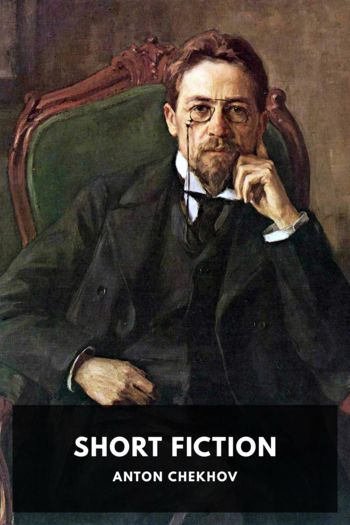
Anton Chekhov is widely considered to be one of the greatest short story writers in history. A physician by day, he’s famously quoted as saying, “Medicine is my lawful wife, and literature is my mistress.” Chekhov wrote nearly 300 short stories in his long writing career; while at first he wrote mainly to make a profit, as his interest in writing—and his skill—grew, he wrote stories that heavily influenced the modern development of the form.
His stories are famous for, among other things, their ambiguous morality and their often inconclusive nature. Chekhov was a firm believer that the role of the artist was to correctly pose a question, but not necessarily to answer it.
This collection contains all of his short stories and two novellas, all translated by Constance Garnett, and arranged by the date they were originally published.
Read free book «Short Fiction by Anton Chekhov (libby ebook reader .txt) 📕» - read online or download for free at americanlibrarybooks.com
- Author: Anton Chekhov
Read book online «Short Fiction by Anton Chekhov (libby ebook reader .txt) 📕». Author - Anton Chekhov
“Do you know what those endless lights are like? They make me think of something long dead, that lived thousands of years ago, something like the camps of the Amalekites or the Philistines. It is as though some people of the Old Testament had pitched their camp and were waiting for morning to fight with Saul or David. All that is wanting to complete the illusion is the blare of trumpets and sentries calling to one another in some Ethiopian language.”
And, as though of design, the wind fluttered over the line and brought a sound like the clank of weapons. A silence followed. I don’t know what the engineer and the student were thinking of, but it seemed to me already that I actually saw before me something long dead and even heard the sentry talking in an unknown tongue. My imagination hastened to picture the tents, the strange people, their clothes, their armour.
“Yes,” muttered the student pensively, “once Philistines and Amalekites were living in this world, making wars, playing their part, and now no trace of them remains. So it will be with us. Now we are making a railway, are standing here philosophising, but two thousand years will pass—and of this embankment and of all those men, asleep after their hard work, not one grain of dust will remain. In reality, it’s awful!”
“You must drop those thoughts …” said the engineer gravely and admonishingly.
“Why?”
“Because. … Thoughts like that are for the end of life, not for the beginning of it. You are too young for them.”
“Why so?” repeated the student.
“All these thoughts of the transitoriness, the insignificance and the aimlessness of life, of the inevitability of death, of the shadows of the grave, and so on, all such lofty thoughts, I tell you, my dear fellow, are good and natural in old age when they come as the product of years of inner travail, and are won by suffering and really are intellectual riches; for a youthful brain on the threshold of real life they are simply a calamity! A calamity!” Ananyev repeated with a wave of his hand. “To my mind it is better at your age to have no head on your shoulders at all than to think on these lines. I am speaking seriously, Baron. And I have been meaning to speak to you about it for a long time, for I noticed from the very first day of our acquaintance your partiality for these damnable ideas!”
“Good gracious, why are they damnable?” the student asked with a smile, and from his voice and his face I could see that he asked the question from simple politeness, and that the discussion raised by the engineer did not interest him in the least.
I could hardly keep my eyes open. I was dreaming that immediately after our walk we should wish each other good night and go to bed, but my dream was not quickly realised. When we had returned to the hut the engineer put away the empty bottles and took out of a large wicker hamper two full ones, and uncorking them, sat down to his worktable with the evident intention of going on drinking, talking, and working. Sipping a little from his glass, he made pencil notes on some plans and went on pointing out to the student that the latter’s way of thinking was not what it should be. The student sat beside him checking accounts and saying nothing. He, like me, had no inclination to speak or to listen. That I might not interfere with their work, I sat away from the table on the engineer’s crooked-legged travelling bedstead, feeling bored and expecting every moment that they would suggest I should go to bed. It was going on for one o’clock.
Having nothing to do, I watched my new acquaintances. I had never seen Ananyev or the student before. I had only made their acquaintance on the night I have described. Late in the evening I was returning on horseback from a fair to the house of a landowner with whom I was staying, had got on the wrong road in the dark and lost my way. Going round and round by the railway line and seeing how dark the night was becoming, I thought of the “barefoot railway roughs,” who lie in wait for travellers on foot and on horseback, was frightened, and knocked at the first hut I came to. There I was cordially received by Ananyev and the student. As is usually the case with strangers casually brought together, we quickly became acquainted, grew friendly and at first over the tea and afterward over the wine, began to feel as though we had known each other for years. At the end of an hour or so, I knew who they were and how fate had brought them from town to the faraway steppe; and they knew who I was, what my occupation and my way of thinking.
Nikolay Anastasyevitch Ananyev, the engineer, was a broad-shouldered, thickset man, and, judging from his appearance, he had, like Othello, begun the “descent into the vale of years,” and was growing rather too stout. He was just at that stage which old matchmaking women mean when they speak of “a man in the prime of his age,” that is, he was neither young nor old, was fond of good fare, good liquor, and praising the past, panted a little as he walked, snored loudly when he was asleep, and in his manner with those surrounding him displayed that calm imperturbable good humour which is always acquired by decent people by the time they have reached the grade of a staff officer and begun to grow stout. His hair and beard were far from being grey, but already, with a condescension of which he was unconscious, he addressed young men as “my dear boy”




Comments (0)