Short Fiction by Anton Chekhov (libby ebook reader .txt) 📕
Description
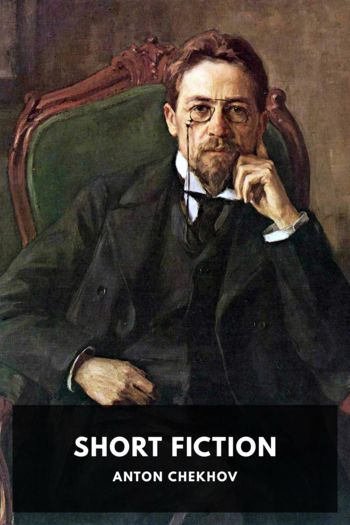
Anton Chekhov is widely considered to be one of the greatest short story writers in history. A physician by day, he’s famously quoted as saying, “Medicine is my lawful wife, and literature is my mistress.” Chekhov wrote nearly 300 short stories in his long writing career; while at first he wrote mainly to make a profit, as his interest in writing—and his skill—grew, he wrote stories that heavily influenced the modern development of the form.
His stories are famous for, among other things, their ambiguous morality and their often inconclusive nature. Chekhov was a firm believer that the role of the artist was to correctly pose a question, but not necessarily to answer it.
This collection contains all of his short stories and two novellas, all translated by Constance Garnett, and arranged by the date they were originally published.
Read free book «Short Fiction by Anton Chekhov (libby ebook reader .txt) 📕» - read online or download for free at americanlibrarybooks.com
- Author: Anton Chekhov
Read book online «Short Fiction by Anton Chekhov (libby ebook reader .txt) 📕». Author - Anton Chekhov
Baron Von Schtenberg, a student of the Institute of Transport, was a young man of about three or four and twenty. Only his fair hair and scanty beard, and, perhaps, a certain coarseness and frigidity in his features showed traces of his descent from Barons of the Baltic provinces; everything else—his name, Mihail Mihailovitch, his religion, his ideas, his manners, and the expression of his face were purely Russian. Wearing, like Ananyev, a cotton shirt and high boots, with his round shoulders, his hair left uncut, and his sunburnt face, he did not look like a student or a Baron, but like an ordinary Russian workman. His words and gestures were few, he drank reluctantly without relish, checked the accounts mechanically, and seemed all the while to be thinking of something else. His movements and voice were calm, and smooth too, but his calmness was of a different kind from the engineer’s. His sunburnt, slightly ironical, dreamy face, his eyes which looked up from under his brows, and his whole figure were expressive of spiritual stagnation—mental sloth. He looked as though it did not matter to him in the least whether the light were burning before him or not, whether the wine were nice or nasty, and whether the accounts he was checking were correct or not. … And on his intelligent, calm face I read: “I don’t see so far any good in definite work, a secure living, and a settled outlook. It’s all nonsense. I was in Petersburg, now I am sitting here in this hut, in the autumn I shall go back to Petersburg, then in the spring here again. … What sense there is in all that I don’t know, and no one knows. … And so it’s no use talking about it. …”
He listened to the engineer without interest, with the condescending indifference with which cadets in the senior classes listen to an effusive and good-natured old attendant. It seemed as though there were nothing new to him in what the engineer said, and that if he had not himself been too lazy to talk, he would have said something newer and cleverer. Meanwhile Ananyev would not desist. He had by now laid aside his good-humoured, jocose tone and spoke seriously, even with a fervour which was quite out of keeping with his expression of calmness. Apparently he had no distaste for abstract subjects, was fond of them, indeed, but had neither skill nor practice in the handling of them. And this lack of practice was so pronounced in his talk that I did not always grasp his meaning at once.
“I hate those ideas with all my heart!” he said, “I was infected by them myself in my youth, I have not quite got rid of them even now, and I tell you—perhaps because I am stupid and such thoughts were not the right food for my mind—they did me nothing but harm. That’s easy to understand! Thoughts of the aimlessness of life, of the insignificance and transitoriness of the visible world, Solomon’s ‘vanity of vanities’ have been, and are to this day, the highest and final stage in the realm of thought. The thinker reaches that stage and—comes to a halt! There is nowhere further to go. The activity of the normal brain is completed with this, and that is natural and in the order of things. Our misfortune is that we begin thinking at that end. What normal people end with we begin with. From the first start, as soon as the brain begins working independently, we mount to the very topmost, final step and refuse to know anything about the steps below.”
“What harm is there in that?” said the student.
“But you must understand that it’s abnormal,” shouted Ananyev, looking at him almost wrathfully. “If we find means of mounting to the topmost step without the help of the lower ones, then the whole long ladder, that is the whole of life, with its colours, sounds, and thoughts, loses all meaning for us. That at your age such reflections are harmful and absurd, you can see from every step of your rational independent life. Let us suppose you sit down this minute to read Darwin or Shakespeare, you have scarcely read a page before the poison shows itself; and your long life, and Shakespeare, and Darwin, seem to you nonsense, absurdity, because you know you will die, that Shakespeare and Darwin have died too, that their thoughts have not saved them, nor the earth, nor you, and that if life is deprived of meaning in that way, all science, poetry, and exalted thoughts seem only useless diversions, the idle playthings of grown up people; and you leave off reading at the second page. Now, let us suppose that people come to you as an intelligent man and ask your opinion about war, for instance: whether it is desirable, whether it is morally justifiable or not. In answer to that terrible question you merely shrug your shoulders and confine yourself to some commonplace, because for you, with your way of thinking, it makes absolutely no difference whether



Comments (0)