Short Fiction by Anton Chekhov (libby ebook reader .txt) 📕
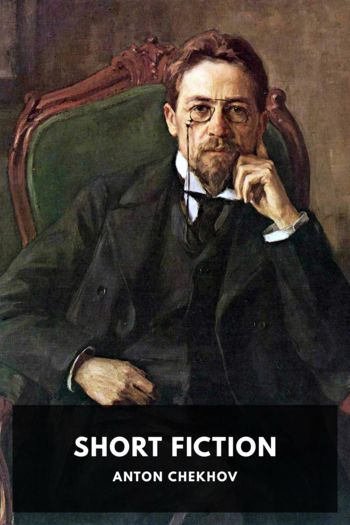
Description
Anton Chekhov is widely considered to be one of the greatest short story writers in history. A physician by day, he’s famously quoted as saying, “Medicine is my lawful wife, and literature is my mistress.” Chekhov wrote nearly 300 short stories in his long writing career; while at first he wrote mainly to make a profit, as his interest in writing—and his skill—grew, he wrote stories that heavily influenced the modern development of the form.
His stories are famous for, among other things, their ambiguous morality and their often inconclusive nature. Chekhov was a firm believer that the role of the artist was to correctly pose a question, but not necessarily to answer it.
This collection contains all of his short stories and two novellas, all translated by Constance Garnett, and arranged by the date they were originally published.
Read free book «Short Fiction by Anton Chekhov (libby ebook reader .txt) 📕» - read online or download for free at americanlibrarybooks.com
- Author: Anton Chekhov
Read book online «Short Fiction by Anton Chekhov (libby ebook reader .txt) 📕». Author - Anton Chekhov
“I was sad and a little bored. Boredom, the stillness, and the purring of the sea gradually brought me to the line of thought we have been discussing. At that period, towards the end of the ’seventies, it had begun to be fashionable with the public, and later, at the beginning of the ’eighties, it gradually passed from the general public into literature, science, and politics. I was no more than twenty-six at the time, but I knew perfectly well that life was aimless and had no meaning, that everything was a deception and an illusion, that in its essential nature and results a life of penal servitude in Sahalin was not in any way different from a life spent in Nice, that the difference between the brain of a Kant and the brain of a fly was of no real significance, that no one in this world is righteous or guilty, that everything was stuff and nonsense and damn it all! I lived as though I were doing a favour to some unseen power which compelled me to live, and to which I seemed to say: ‘Look, I don’t care a straw for life, but I am living!’ I thought on one definite line, but in all sorts of keys, and in that respect I was like the subtle gourmand who could prepare a hundred appetising dishes from nothing but potatoes. There is no doubt that I was one-sided and even to some extent narrow, but I fancied at the time that my intellectual horizon had neither beginning nor end, and that my thought was as boundless as the sea. Well, as far as I can judge by myself, the philosophy of which we are speaking has something alluring, narcotic in its nature, like tobacco or morphia. It becomes a habit, a craving. You take advantage of every minute of solitude to gloat over thoughts of the aimlessness of life and the darkness of the grave. While I was sitting in the summerhouse, Greek children with long noses were decorously walking about the avenues. I took advantage of the occasion and, looking at them, began reflecting in this style:
“ ‘Why are these children born, and what are they living for? Is there any sort of meaning in their existence? They grow up, without themselves knowing what for; they will live in this Godforsaken, comfortless hole for no sort of reason, and then they will die. …’
“And I actually felt vexed with those children because they were walking about decorously and talking with dignity, as though they did not hold their little colourless lives so cheap and knew what they were living for. … I remember that far away at the end of an avenue three feminine figures came into sight. Three young ladies, one in a pink dress, two in white, were walking arm-in-arm, talking and laughing. Looking after them, I thought:
“ ‘It wouldn’t be bad to have an affair with some woman for a couple of days in this dull place.’
“I recalled by the way that it was three weeks since I had visited my Petersburg lady, and thought that a passing love affair would come in very appropriately for me just now. The young lady in white in the middle was rather younger and better looking than her companions, and judging by her manners and her laugh, she was a high school girl in an upper form. I looked, not without impure thoughts, at her bust, and at the same time reflected about her: ‘She will be trained in music and manners, she will be married to some Greek—God help us!—will lead a grey, stupid, comfortless life, will bring into the world a crowd of children without knowing why, and then will die. An absurd life!’
“I must say that as a rule I was a great hand at combining my lofty ideas with the lowest prose.
“Thoughts of the darkness of the grave did not prevent me from giving busts and legs their full due. Our dear Baron’s exalted ideas do not prevent him from going on Saturdays to Vukolovka on amatory expeditions. To tell the honest truth, as far as I remember, my attitude to women was most insulting. Now, when I think of that high school girl, I blush for my thoughts then, but at the time my conscience was perfectly untroubled. I, the son of honourable parents, a Christian, who had received a superior education, not naturally wicked or stupid, felt not the slightest uneasiness when I paid women blutgeld, as the Germans call it, or when I followed high school girls with insulting looks. … The trouble is that youth makes its demands, and our philosophy has nothing in principle against those demands, whether they are good or whether they are loathsome. One who knows that life is aimless and death inevitable is not interested in the struggle against nature or the conception of sin: whether you struggle or whether you don’t, you will die and rot just the same. … Secondly, my friends, our philosophy instils even into very young people what is called reasonableness. The predominance of reason over the heart is simply overwhelming amongst us. Direct feeling, inspiration—everything is choked by petty analysis. Where there is reasonableness there is coldness, and cold people—it’s no use to disguise it—know nothing of chastity. That virtue is only known to those who are warm, affectionate, and capable of love. Thirdly, our philosophy denies the significance of each individual personality. It’s easy to see that if I deny the personality of some Natalya Stepanovna, it’s absolutely nothing to me whether she



Comments (0)