Short Fiction by Anton Chekhov (libby ebook reader .txt) 📕
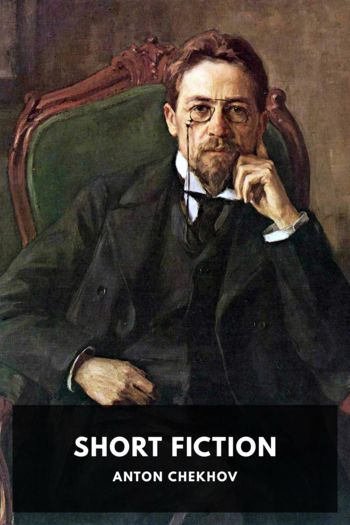
Description
Anton Chekhov is widely considered to be one of the greatest short story writers in history. A physician by day, he’s famously quoted as saying, “Medicine is my lawful wife, and literature is my mistress.” Chekhov wrote nearly 300 short stories in his long writing career; while at first he wrote mainly to make a profit, as his interest in writing—and his skill—grew, he wrote stories that heavily influenced the modern development of the form.
His stories are famous for, among other things, their ambiguous morality and their often inconclusive nature. Chekhov was a firm believer that the role of the artist was to correctly pose a question, but not necessarily to answer it.
This collection contains all of his short stories and two novellas, all translated by Constance Garnett, and arranged by the date they were originally published.
Read free book «Short Fiction by Anton Chekhov (libby ebook reader .txt) 📕» - read online or download for free at americanlibrarybooks.com
- Author: Anton Chekhov
Read book online «Short Fiction by Anton Chekhov (libby ebook reader .txt) 📕». Author - Anton Chekhov
“ ‘All you have been told is true,’ she said. ‘My cousin Sonya ran away from her husband with an actor. Of course, it is wrong. … Everyone ought to bear the lot that fate has laid on him, but I do not condemn them or blame them. … Circumstances are sometimes too strong for anyone!’
“ ‘That is so, Kisotchka, but what circumstances can produce a regular epidemic?’
“ ‘It’s very simple and easy to understand,’ replied Kisotchka, raising her eyebrows. ‘There is absolutely nothing for us educated girls and women to do with ourselves. Not everyone is able to go to the University, to become a teacher, to live for ideas, in fact, as men do. They have to be married. … And whom would you have them marry? You boys leave the high school and go away to the University, never to return to your native town again, and you marry in Petersburg or Moscow, while the girls remain. … To whom are they to be married? Why, in the absence of decent cultured men, goodness knows what sort of men they marry—stockbrokers and such people of all kinds, who can do nothing but drink and get into rows at the club. … A girl married like that, at random. … And what is her life like afterwards? You can understand: a well-educated, cultured woman is living with a stupid, boorish man; if she meets a cultivated man, an officer, an actor, or a doctor—well, she gets to love him, her life becomes unbearable to her, and she runs away from her husband. And one can’t condemn her!’
“ ‘If that is so, Kisotchka, why get married?’ I asked.
“ ‘Yes, of course,’ said Kisotchka with a sigh, ‘but you know every girl fancies that any husband is better than nothing. … Altogether life is horrid here, Nikolay Anastasyevitch, very horrid! Life is stifling for a girl and stifling when one is married. … Here they laugh at Sonya for having run away from her husband, but if they could see into her soul they would not laugh. …’ ”
Azorka began barking outside again. He growled angrily at someone, then howled miserably and dashed with all his force against the wall of the hut. … Ananyev’s face was puckered with pity; he broke off his story and went out. For two minutes he could be heard outside comforting his dog. “Good dog! poor dog!”
“Our Nikolay Anastasyevitch is fond of talking,” said Von Schtenberg, laughing. “He is a good fellow,” he added after a brief silence.
Returning to the hut, the engineer filled up our glasses and, smiling and stroking his chest, went on:
“And so my attack was unsuccessful. There was nothing for it, I put off my unclean thoughts to a more favourable occasion, resigned myself to my failure and, as the saying is, waved my hand. What is more, under the influence of Kisotchka’s voice, the evening air, and the stillness, I gradually myself fell into a quiet sentimental mood. I remember I sat in an easy chair by the wide-open window and glanced at the trees and darkened sky. The outlines of the acacias and the lime trees were just the same as they had been eight years before; just as then, in the days of my childhood, somewhere far away there was the tinkling of a wretched piano, and the public had just the same habit of sauntering to and fro along the avenues, but the people were not the same. Along the avenues there walked now not my comrades and I and the object of my adoration, but schoolboys and young ladies who were strangers. And I felt melancholy. When to my inquiries about acquaintances I five times received from Kisotchka the answer, ‘He is dead,’ my melancholy changed into the feeling one has at the funeral service of a good man. And sitting there at the window, looking at the promenading public and listening to the tinkling piano, I saw with my own eyes for the first time in my life with what eagerness one generation hastens to replace another, and what a momentous significance even some seven or eight years may have in a man’s life!
“Kisotchka put a bottle of red wine on the table. I drank it off, grew sentimental, and began telling a long story about something or other. Kisotchka listened as before, admiring me and my cleverness. And time passed. The sky was by now so dark that the outlines of the acacias and lime trees melted into one, the public was no longer walking up and down the avenues, the piano was silent and the only sound was the even murmur of the sea.
“Young people are all alike. Be friendly to a young man, make much of him, regale him with wine, let him understand that he is attractive and he will sit on and on, forget that it is time to go, and talk and talk and talk. … His hosts cannot keep their eyes open, it’s past their bedtime, and he still stays and talks. That was what I did. Once I chanced to look at the clock; it was half-past ten. I began saying goodbye.
“ ‘Have another glass before your walk,’ said Kisotchka.
“I took another glass, again I began talking at length, forgot it was time to go, and sat down. Then there came the sound of men’s voices, footsteps and the clank of spurs.
“ ‘I think my husband has come in. …’ said Kisotchka listening.
“The door creaked, two voices came now from the passage and I saw two men pass the door that led into the dining room: one a stout, solid, dark man with a hooked nose, wearing a straw hat, and the other a young officer in a white tunic.



Comments (0)