Short Fiction by Anton Chekhov (libby ebook reader .txt) 📕
Description
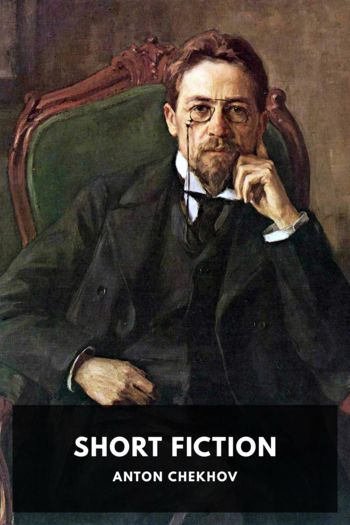
Anton Chekhov is widely considered to be one of the greatest short story writers in history. A physician by day, he’s famously quoted as saying, “Medicine is my lawful wife, and literature is my mistress.” Chekhov wrote nearly 300 short stories in his long writing career; while at first he wrote mainly to make a profit, as his interest in writing—and his skill—grew, he wrote stories that heavily influenced the modern development of the form.
His stories are famous for, among other things, their ambiguous morality and their often inconclusive nature. Chekhov was a firm believer that the role of the artist was to correctly pose a question, but not necessarily to answer it.
This collection contains all of his short stories and two novellas, all translated by Constance Garnett, and arranged by the date they were originally published.
Read free book «Short Fiction by Anton Chekhov (libby ebook reader .txt) 📕» - read online or download for free at americanlibrarybooks.com
- Author: Anton Chekhov
Read book online «Short Fiction by Anton Chekhov (libby ebook reader .txt) 📕». Author - Anton Chekhov
“They say you have been in the province of Poltava?” Lubotchka questioned him.
“Yes,” answered Pyotr Dmitritch. “I came back the day before yesterday.”
“I expect it is very nice there.”
“Yes, it is very nice, very nice indeed; in fact, I arrived just in time for the haymaking, I must tell you, and in the Ukraine the haymaking is the most poetical moment of the year. Here we have a big house, a big garden, a lot of servants, and a lot going on, so that you don’t see the haymaking; here it all passes unnoticed. There, at the farm, I have a meadow of forty-five acres as flat as my hand. You can see the men mowing from any window you stand at. They are mowing in the meadow, they are mowing in the garden. There are no visitors, no fuss nor hurry either, so that you can’t help seeing, feeling, hearing nothing but the haymaking. There is a smell of hay indoors and outdoors. There’s the sound of the scythes from sunrise to sunset. Altogether Little Russia is a charming country. Would you believe it, when I was drinking water from the rustic wells and filthy vodka in some Jew’s tavern, when on quiet evenings the strains of the Little Russian fiddle and the tambourines reached me, I was tempted by a fascinating idea—to settle down on my place and live there as long as I chose, far away from Circuit Courts, intellectual conversations, philosophizing women, long dinners. …”
Pyotr Dmitritch was not lying. He was unhappy and really longed to rest. And he had visited his Poltava property simply to avoid seeing his study, his servants, his acquaintances, and everything that could remind him of his wounded vanity and his mistakes.
Lubotchka suddenly jumped up and waved her hands about in horror.
“Oh! A bee, a bee!” she shrieked. “It will sting!”
“Nonsense; it won’t sting,” said Pyotr Dmitritch. “What a coward you are!”
“No, no, no,” cried Lubotchka; and looking round at the bees, she walked rapidly back.
Pyotr Dmitritch walked away after her, looking at her with a softened and melancholy face. He was probably thinking, as he looked at her, of his farm, of solitude, and—who knows?—perhaps he was even thinking how snug and cosy life would be at the farm if his wife had been this girl—young, pure, fresh, not corrupted by higher education, not with child. …
When the sound of their footsteps had died away, Olga Mihalovna came out of the shanty and turned towards the house. She wanted to cry. She was by now acutely jealous. She could understand that her husband was worried, dissatisfied with himself and ashamed, and when people are ashamed they hold aloof, above all from those nearest to them, and are unreserved with strangers; she could understand, also, that she had nothing to fear from Lubotchka or from those women who were now drinking coffee indoors. But everything in general was terrible, incomprehensible, and it already seemed to Olga Mihalovna that Pyotr Dmitritch only half belonged to her.
“He has no right to do it!” she muttered, trying to formulate her jealousy and her vexation with her husband. “He has no right at all. I will tell him so plainly!”
She made up her mind to find her husband at once and tell him all about it: it was disgusting, absolutely disgusting, that he was attractive to other women and sought their admiration as though it were some heavenly manna; it was unjust and dishonourable that he should give to others what belonged by right to his wife, that he should hide his soul and his conscience from his wife to reveal them to the first pretty face he came across. What harm had his wife done him? How was she to blame? Long ago she had been sickened by his lying: he was forever posing, flirting, saying what he did not think, and trying to seem different from what he was and what he ought to be. Why this falsity? Was it seemly in a decent man? If he lied he was demeaning himself and those to whom he lied, and slighting what he lied about. Could he not understand that if he swaggered and posed at the judicial table, or held forth at dinner on the prerogatives of government, that he, simply to provoke her uncle, was showing thereby that he had not a ha’p’orth of respect for the Court, or himself, or any of the people who were listening and looking at him?
Coming out into the big avenue, Olga Mihalovna assumed an expression of face as though she had just gone away to look after some domestic matter. In the verandah the gentlemen were drinking liqueur and eating strawberries: one of them, the Examining Magistrate—a stout elderly man, blagueur and wit—must have been telling some rather free anecdote, for, seeing their hostess, he suddenly clapped his hands over his fat lips, rolled his eyes, and sat down. Olga Mihalovna did not like the local officials. She did not care for their clumsy, ceremonious wives, their scandal-mongering, their frequent visits, their flattery of her husband, whom they all hated. Now, when they were drinking, were replete with food and showed no signs of going away, she felt their presence an agonizing weariness; but not to appear impolite, she smiled cordially to the Magistrate, and shook her finger at him. She walked across the dining room and drawing room smiling, and looking as though she had gone to give some order and make some arrangement. “God grant no one stops me,” she thought, but she forced herself to stop in the drawing room to listen from politeness to




Comments (0)