Short Fiction by Anton Chekhov (libby ebook reader .txt) 📕
Description
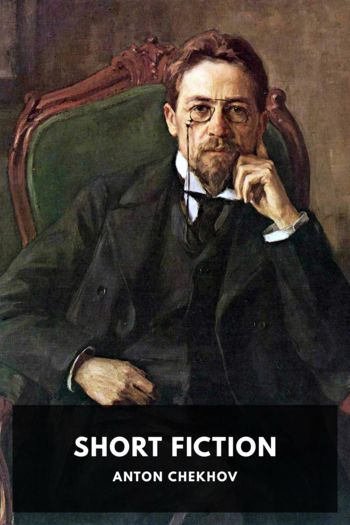
Anton Chekhov is widely considered to be one of the greatest short story writers in history. A physician by day, he’s famously quoted as saying, “Medicine is my lawful wife, and literature is my mistress.” Chekhov wrote nearly 300 short stories in his long writing career; while at first he wrote mainly to make a profit, as his interest in writing—and his skill—grew, he wrote stories that heavily influenced the modern development of the form.
His stories are famous for, among other things, their ambiguous morality and their often inconclusive nature. Chekhov was a firm believer that the role of the artist was to correctly pose a question, but not necessarily to answer it.
This collection contains all of his short stories and two novellas, all translated by Constance Garnett, and arranged by the date they were originally published.
Read free book «Short Fiction by Anton Chekhov (libby ebook reader .txt) 📕» - read online or download for free at americanlibrarybooks.com
- Author: Anton Chekhov
Read book online «Short Fiction by Anton Chekhov (libby ebook reader .txt) 📕». Author - Anton Chekhov
“The vile hussy!” sighed Dyudya.
“I swore at her, stamped my foot, and dragging her into the passage, I fastened the door with the hook. ‘Go to your husband,’ I cried. ‘Don’t shame me before folks. Fear God!’ And every day there was a scene of that sort.
“One morning I was standing in my yard near the stable cleaning a bridle. All at once I saw her running through the little gate into my yard, with bare feet, in her petticoat, and straight towards me; she clutched at the bridle, getting all smeared with the pitch, and shaking and weeping, she cried: ‘I can’t stand him; I loathe him; I can’t bear it! If you don’t love me, better kill me!’ I was angry, and I struck her twice with the bridle, but at that instant Vasya ran in at the gate, and in a despairing voice he shouted: ‘Don’t beat her! Don’t beat her!’ But he ran up himself, and waving his arms, as though he were mad, he let fly with his fists at her with all his might, then flung her on the ground and kicked her. I tried to defend her, but he snatched up the reins and thrashed her with them, and all the while, like a colt’s whinny, he went: ‘He—he—he!’ ”
“I’d take the reins and let you feel them,” muttered Varvara, moving away; “murdering our sister, the damned brutes! …”
“Hold your tongue, you jade!” Dyudya shouted at her.
“ ‘He—he—he!’ ” Matvey Savitch went on. “A carrier ran out of his yard; I called to my workman, and the three of us got Mashenka away from him and carried her home in our arms. The disgrace of it! The same day I went over in the evening to see how things were. She was lying in bed, all wrapped up in bandages, nothing but her eyes and nose to be seen; she was looking at the ceiling. I said: ‘Good evening, Marya Semyonovna!’ She did not speak. And Vasya was sitting in the next room, his head in his hands, crying and saying: ‘Brute that I am! I’ve ruined my life! O God, let me die!’ I sat for half an hour by Mashenka and gave her a good talking-to. I tried to frighten her a bit. ‘The righteous,’ said I, ‘after this life go to Paradise, but you will go to a Gehenna of fire, like all adulteresses. Don’t strive against your husband, go and lay yourself at his feet.’ But never a word from her; she didn’t so much as blink an eyelid, for all the world as though I were talking to a post. The next day Vasya fell ill with something like cholera, and in the evening I heard that he was dead. Well, so they buried him, and Mashenka did not go to the funeral; she didn’t care to show her shameless face and her bruises. And soon there began to be talk all over the district that Vasya had not died a natural death, that Mashenka had made away with him. It got to the ears of the police; they had Vasya dug up and cut open, and in his stomach they found arsenic. It was clear he had been poisoned; the police came and took Mashenka away, and with her the innocent Kuzka. They were put in prison. … The woman had gone too far—God punished her. … Eight months later they tried her. She sat, I remember, on a low stool, with a little white kerchief on her head, wearing a grey gown, and she was so thin, so pale, so sharp-eyed it made one sad to look at her. Behind her stood a soldier with a gun. She would not confess her guilt. Some in the court said she had poisoned her husband and others declared he had poisoned himself for grief. I was one of the witnesses. When they questioned me, I told the whole truth according to my oath. ‘Hers,’ said I, ‘is the guilt. It’s no good to conceal it; she did not love her husband, and she had a will of her own. …’ The trial began in the morning and towards night they passed this sentence: to send her to hard labour in Siberia for thirteen years. After that sentence Mashenka remained three months longer in prison. I went to see her, and from Christian charity I took her a little tea and sugar. But as soon as she set eyes on me she began to shake all over, wringing her hands and muttering: ‘Go away! go away!’ And Kuzka she clasped to her as though she were afraid I would take him away. ‘See,’ said I, ‘what you have come to! Ah, Masha, Masha! you would not listen to me when I gave you good advice, and now you must repent it. You are yourself to blame,’ said I; ‘blame yourself!’ I was giving her good counsel, but she: ‘Go away, go away!’ huddling herself and Kuzka against the wall, and trembling all over.
“When they were taking her away to the chief town of our province, I walked by the escort as far as the station and slipped a rouble into her bundle for my soul’s salvation. But she did not get as far as Siberia. … She fell sick of fever and died in prison.”
“Live like a dog and you must die a dog’s death,” said Dyudya.
“Kuzka was sent back home. … I thought it over and took him to bring up. After all—though a convict’s child—still he was a living soul, a Christian. … I was sorry for him. I shall make him my clerk, and if I have no children of my own, I’ll make a merchant of him. Wherever I go now, I take him with me; let him learn his work.”
All the while Matvey Savitch had been telling his story, Kuzka had sat on a little stone near the gate. His head propped in both



Comments (0)