Short Fiction by Anton Chekhov (libby ebook reader .txt) 📕
Description
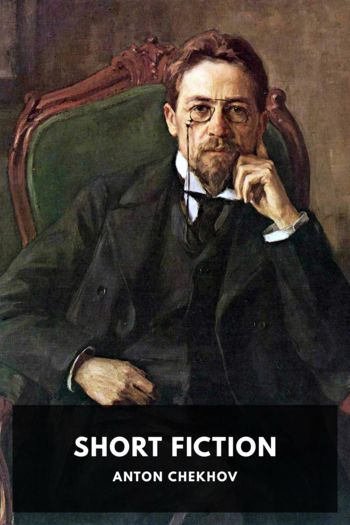
Anton Chekhov is widely considered to be one of the greatest short story writers in history. A physician by day, he’s famously quoted as saying, “Medicine is my lawful wife, and literature is my mistress.” Chekhov wrote nearly 300 short stories in his long writing career; while at first he wrote mainly to make a profit, as his interest in writing—and his skill—grew, he wrote stories that heavily influenced the modern development of the form.
His stories are famous for, among other things, their ambiguous morality and their often inconclusive nature. Chekhov was a firm believer that the role of the artist was to correctly pose a question, but not necessarily to answer it.
This collection contains all of his short stories and two novellas, all translated by Constance Garnett, and arranged by the date they were originally published.
Read free book «Short Fiction by Anton Chekhov (libby ebook reader .txt) 📕» - read online or download for free at americanlibrarybooks.com
- Author: Anton Chekhov
Read book online «Short Fiction by Anton Chekhov (libby ebook reader .txt) 📕». Author - Anton Chekhov
In the churchyard they heard twelve strokes beaten on the watchman’s board.
“It’s time we were asleep,” said Sofya, getting up, “or, maybe, we shall catch it from Dyudya.”
They both went softly into the yard.
“I went away without hearing what he was telling about Mashenka,” said Varvara, making herself a bed under the window.
“She died in prison, he said. She poisoned her husband.”
Varvara lay down beside Sofya a while, and said softly:
“I’d make away with my Alyoshka and never regret it.”
“You talk nonsense; God forgive you.”
When Sofya was just dropping asleep, Varvara, coming close, whispered in her ear:
“Let us get rid of Dyudya and Alyoshka!”
Sofya started and said nothing. Then she opened her eyes and gazed a long while steadily at the sky.
“People would find out,” she said.
“No, they wouldn’t. Dyudya’s an old man, it’s time he did die; and they’d say Alyoshka died of drink.”
“I’m afraid … God would chastise us.”
“Well, let Him. …”
Both lay awake thinking in silence.
“It’s cold,” said Sofya, beginning to shiver all over. “It will soon be morning. … Are you asleep?”
“No. … Don’t you mind what I say, dear,” whispered Varvara; “I get so mad with the damned brutes, I don’t know what I do say. Go to sleep, or it will be daylight directly. … Go to sleep.”
Both were quiet and soon they fell asleep.
Earlier than all woke the old woman. She waked up Sofya and they went together into the cowshed to milk the cows. The hunchback Alyoshka came in hopelessly drunk without his concertina; his breast and knees had been in the dust and straw—he must have fallen down in the road. Staggering, he went into the cowshed, and without undressing he rolled into a sledge and began to snore at once. When first the crosses on the church and then the windows were flashing in the light of the rising sun, and shadows stretched across the yard over the dewy grass from the trees and the top of the well, Matvey Savitch jumped up and began hurrying about:
“Kuzka! get up!” he shouted. “It’s time to put in the horses! Look sharp!”
The bustle of morning was beginning. A young Jewess in a brown gown with flounces led a horse into the yard to drink. The pulley of the well creaked plaintively, the bucket knocked as it went down. …
Kuzka, sleepy, tired, covered with dew, sat up in the cart, lazily putting on his little overcoat, and listening to the drip of the water from the bucket into the well as he shivered with the cold.
“Auntie!” shouted Matvey Savitch to Sofya, “tell my lad to hurry up and to harness the horses!”
And Dyudya at the same instant shouted from the window:
“Sofya, take a farthing from the Jewess for the horse’s drink! They’re always in here, the mangy creatures!”
In the street sheep were running up and down, baaing; the peasant women were shouting at the shepherd, while he played his pipes, cracked his whip, or answered them in a thick sleepy bass. Three sheep strayed into the yard, and not finding the gate again, pushed at the fence.
Varvara was waked by the noise, and bundling her bedding up in her arms, she went into the house.
“You might at least drive the sheep out!” the old woman bawled after her, “my lady!”
“I dare say! As if I were going to slave for you Herods!” muttered Varvara, going into the house.
Dyudya came out of the house with his accounts in his hands, sat down on the step, and began reckoning how much the traveller owed him for the night’s lodging, oats, and watering his horses.
“You charge pretty heavily for the oats, my good man,” said Matvey Savitch.
“If it’s too much, don’t take them. There’s no compulsion, merchant.”
When the travellers were ready to start, they were detained for a minute. Kuzka had lost his cap.
“Little swine, where did you put it?” Matvey Savitch roared angrily. “Where is it?”
Kuzka’s face was working with terror; he ran up and down near the cart, and not finding it there, ran to the gate and then to the shed. The old woman and Sofya helped him look.
“I’ll pull your ears off!” yelled Matvey Savitch. “Dirty brat!”
The cap was found at the bottom of the cart.
Kuzka brushed the hay off it with his sleeve, put it on, and timidly he crawled into the cart, still with an expression of terror on his face as though he were afraid of a blow from behind.
Matvey Savitch crossed himself. The driver gave a tug at the reins and the cart rolled out of the yard.
The Wife II received the following letter:
“Dear Sir, Pavel Andreitch!
“Not far from you—that is to say, in the village of Pestrovo—very distressing incidents are taking place, concerning which I feel it my duty to write to you. All the peasants of that village sold their cottages and all their belongings, and set off for the province of Tomsk, but did not succeed in getting there, and have come back. Here, of course, they have nothing now; everything belongs to other people. They have settled three or four families in a hut, so that there are no less than fifteen persons of both sexes in each hut, not counting the young children; and the long and the short of it is, there is nothing to eat. There is famine and there is a terrible pestilence of hunger, or spotted, typhus; literally everyone is stricken. The doctor’s assistant says one goes into a cottage and what does one see? Everyone is sick, everyone delirious, some laughing, others frantic; the huts are filthy; there is no one to fetch them water, no one to give them a drink, and nothing to eat but frozen potatoes.



Comments (0)